


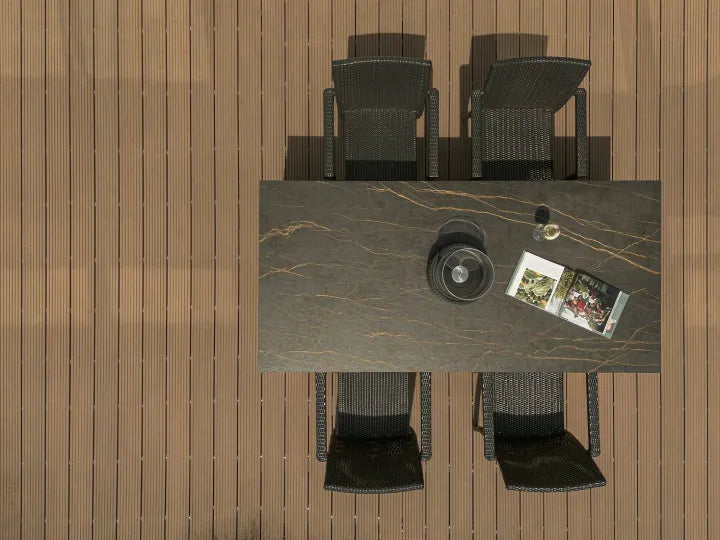


Sintered stone countertops are a strong choice when a project needs heat resistance, stain resistance, UV stability, low maintenance, and a modern large-slab appearance. They are especially useful for kitchen islands, bathroom vanities, outdoor kitchens, reception counters, bar tops, and commercial interiors.
But sintered stone is not a magic material. It can still chip at exposed edges, crack under heavy impact, or fail when sink openings, cooktop cutouts, overhangs, and mitered edges are poorly planned. This guide explains the benefits, limits, thickness choices, fabrication details, and supplier checks that matter before ordering slabs.
How We Prepared This Guide
This article is written from a supplier-side countertop project perspective. It combines Funtek’s day-to-day work with large-format sintered stone slabs, common buyer questions about countertop thickness and edge appearance, and publicly available guidance from countertop and workplace-safety sources. The goal is not to claim that sintered stone is perfect, but to help buyers understand where it performs well and where careful fabrication is required.
- We focus on practical project questions: slab size, thickness, finish, edge profile, sink cutout, support, packing, and sample approval.
- We explain both advantages and limitations, including chipping risk, difficult repair, and professional installation requirements.
- We do not treat “scratch resistant,” “heat resistant,” or “non-porous” as permission for careless use.
- For safety-related points, especially engineered stone restrictions and dust control, buyers should confirm local regulations and product documents before fabrication.
Quick answer: sintered stone is good for countertops when the buyer wants a durable, low-maintenance, premium slab surface — but the final result depends heavily on skilled fabrication, safe handling, and correct project detailing.
Project-page boundary: Looking for slab formats, application options and supply support rather than a specification tutorial? Use the sintered stone countertops and kitchen islands project page. This guide stays focused on specification, fabrication and ordering decisions.
Useful next steps: Browse all sintered stone slabs, compare sintered stone with other surface materials, or send a project quote request if you already have a countertop size, thickness, or application in mind.
What Is a Sintered Stone Countertop?
A sintered stone countertop is a compact mineral surface made by pressing and firing natural raw materials at very high temperatures. If you need the broader material background first, start with our what is sintered stone guide. This process bonds mineral particles into a dense slab without the resin binders commonly used in many engineered quartz surfaces.
For countertop buyers, the important point is simple: sintered stone is designed to offer the look of marble-look stone, travertine-look stone, limestone, concrete-look stone, granite, or solid-color stone with a surface that is non-porous, heat resistant, UV stable, and easy to clean.
It is commonly used for kitchen countertops, kitchen islands, backsplashes, waterfall sides, bathroom vanities, outdoor kitchen counters, reception desks, and commercial worktops. For related applications, you can also compare sintered stone countertop slabs, bathroom wall slabs, interior wall panels, and outdoor facade slabs.

Large-format sintered stone slabs are often selected for modern kitchens because they can create clean countertop, island, backsplash, and waterfall-side designs.
Is Sintered Stone Good for Kitchen Countertops?
Yes. Sintered stone is a good countertop material for kitchens when the project has the right slab thickness, fabrication plan, and support structure. It is especially suitable for buyers who want a hard, non-porous, stain-resistant, UV-stable, and low-maintenance surface.
It is less suitable when the project requires the cheapest countertop option, DIY installation, rushed jobsite cutting, or a fabricator with no experience handling large-format mineral slabs. For more detailed installation requirements, review the sintered stone installation guide before confirming a jobsite plan.
| Best suited for | Kitchen countertops, islands, outdoor kitchens, bathroom vanities, bar tops, hotel counters, restaurant counters, reception desks, and project worktops. |
|---|---|
| Less suitable for | DIY installation, very low-budget projects, unsupported overhangs, poorly planned sink openings, or jobs without an experienced countertop fabricator. |
| Main strength | Heat, stain, moisture, UV, and daily-use resistance in a large-format premium surface. |
| Main risk | Edge chipping, impact damage, difficult repair, poor cutout design, or cracking during careless handling and installation. |
Main Benefits of Sintered Stone Countertops
1. Strong heat resistance
Sintered stone has strong heat resistance because it is a mineral-based surface rather than a resin-heavy surface. This is one reason it is frequently considered for kitchen counters, cooktop areas, outdoor and exterior-facing projects, and commercial food-service surfaces.
However, “heat resistant” should not be understood as “impossible to damage.” In real kitchens and commercial spaces, using trivets or heat pads is still a good habit, especially near polished areas, edges, seams, and adhesive joints.
2. Non-porous and stain resistant
Sintered stone has very low water absorption, so it resists everyday stains from coffee, tea, wine, sauces, cooking oil, and bathroom products. This also makes daily cleaning easier for hotels, apartments, rental properties, restaurants, and busy family kitchens.
Unlike many natural stones, sintered stone usually does not need sealing. This is a major advantage for buyers who want lower maintenance after installation.
3. Scratch and abrasion resistance
Sintered stone is hard and resistant to normal countertop abrasion from plates, cups, trays, and daily kitchen activity. This is useful for islands and counters that receive frequent use.
Even so, a cutting board is still recommended. Cutting directly on the surface can dull knives and may affect some finishes over time. Good care habits help preserve the countertop and reduce unnecessary disputes after installation.
4. UV stability for outdoor and sunny areas
Because sintered stone does not rely on the same type of resin content as quartz, it is usually a stronger choice for outdoor kitchens, sunny rooms, rooftop counters, barbecue areas, and semi-outdoor commercial spaces.
For outdoor projects, buyers should still confirm the finish, slab thickness, support system, drainage, local climate, and installation method before approving the material.
5. Large-format design with fewer visible joints
Large slabs help create modern kitchen islands, long countertops, matching backsplashes, and waterfall sides with fewer joints. This is one of the strongest design reasons to choose sintered stone.
For marble-look or travertine-look slabs, ask the supplier to confirm vein direction, bookmatch options, batch consistency, and whether the edge appearance is full-body, body-matched, or surface printed.
The Downside of Sintered Stone Countertops
A trustworthy countertop guide should not only list advantages. If you want a deeper risk review, read our professional evaluation of sintered stone disadvantages. Sintered stone performs very well as a surface, but it can still fail in the details. The most common risks are exposed edges, cutouts, heavy impact, poor support, and inexperienced fabrication.
The biggest downside of sintered stone is fabrication risk. The slab may be strong, but the project can still fail if edges, corners, sink openings, cooktop cutouts, or overhangs are poorly designed.
1. Edges can chip under impact
Hard mineral surfaces can be brittle at exposed points. Outside corners, sink edges, island corners, mitered returns, and thin exposed edges should be protected during transport, fabrication, and installation.
For high-use kitchens and commercial counters, avoid extremely sharp edges. A small bevel, eased edge, or micro-radius can help reduce chipping risk.
2. It requires skilled fabrication
Sintered stone countertops should be cut with proper tools, water cooling, stable worktables, and trained handling. Our installation guide explains why substrate, adhesive, cutting method, and handling details matter across different surfaces. It is not a good DIY countertop material.
Complex work such as undermount sinks, hob openings, faucet holes, drainage grooves, mitered edges, and waterfall sides should be planned before cutting starts.
3. Repair can be difficult
Small chips may sometimes be improved with professional repair, but damage is not always invisible after repair. Severe cracks, broken corners, or failed cutouts may require replacement. This is why preventive planning matters more than after-sales repair.
4. It can cost more than standard materials
Sintered stone can cost more than many standard quartz, laminate, or ceramic options. Fabrication cost may also be higher because the material needs proper handling and specialist cutting.
For B2B buyers, the key question should be total project cost, not only slab price. Consider slab cost, cutting, edge finishing, wastage, packing, shipping, installation, support structure, and breakage control.
5. Some designs are surface printed
Many marble-look and stone-look slabs are printed on the surface. This can look excellent from above, but the cut edge may not match the top if the slab is not full-body or body-matched.
This is not always a problem, especially with mitered edges or edge treatment. But buyers should check a real sample, side-view photo, or cut-edge photo before ordering visible-edge countertops.

For countertop projects, the slab surface is only one part of the decision. Edge details, cutouts, support, and installation method decide the final result.
Sintered Stone vs Quartz vs Granite vs Marble vs Porcelain
The right countertop material depends on the project. For a broader side-by-side material overview, see our sintered stone material comparison. Sintered stone is not automatically the best choice for every buyer. It is strongest when heat resistance, UV stability, low maintenance, and large-slab design are important. Quartz may be easier to fabricate and source; for a dedicated countertop comparison, read sintered stone vs quartz countertops. Granite and marble offer natural variation; buyers comparing several stone families can also review sintered stone vs porcelain slab vs granite and our marble alternatives guide. Porcelain is close in performance, but slab size, thickness, body structure, and edge behavior vary by manufacturer.
| Material | Best for | Strengths | Weak points | Maintenance |
|---|---|---|---|---|
| Sintered stone | Premium kitchens, islands, outdoor kitchens, commercial counters | Heat resistant, UV stable, non-porous, stain resistant, large-format design | Needs skilled fabrication; edges can chip under impact; repairs can be difficult | Low; usually no sealing |
| Quartz | Indoor residential kitchens with standard fabrication needs | Consistent colors, widely available, low maintenance | Lower heat and UV resistance because of resin content; not ideal outdoors | Low; avoid direct heat |
| Granite | Natural-stone kitchens and traditional projects | Natural variation, strong stone feel, heat resistance | Porosity and color variation differ by stone; sealing may be needed | Medium; sealing often recommended |
| Marble | Luxury interiors where natural beauty matters more than easy care | Unique veining and classic high-end appearance | Can stain, etch, scratch, and require careful maintenance | High; sealing and careful use needed |
| Porcelain | Modern counters, walls, furniture, outdoor surfaces | Heat resistant, UV stable, stain resistant, low maintenance | Can be brittle at edges; quality and thickness vary by brand | Low |
What Thickness Is Best for Sintered Stone Countertops?
For most countertop projects, 12mm and 20mm are the most practical starting points. If your buyer is asking whether 9mm can work, read the separate countertop thickness guide. Thinner slabs can work in selected applications, but they need the right backing, support, and fabrication method.
| Thickness | Recommended use | What buyers should confirm |
|---|---|---|
| 6mm | Wall panels, backsplashes, furniture fronts, lightweight cladding | Not normally recommended as a standalone kitchen countertop unless fully supported by a suitable substrate. |
| 9mm | Light-duty counters, vanities, furniture tops, supported surfaces | Can work in some projects, but support and edge method must be confirmed with the fabricator. |
| 12mm | Common kitchen countertops, bathroom vanities, modern islands with proper support | A balanced choice for many projects. Suitable for thin modern edges or mitered edge build-ups. |
| 20mm | Premium countertops, commercial counters, thicker edge appearance, heavy-use kitchens | Stronger visual presence and more traditional countertop feel. Heavier and usually more expensive. |
| Mitered edge build-up | Waterfall islands, thick visual edges, luxury kitchens | A 12mm slab can be mitered to create the look of a thicker slab. Accuracy is critical. |
Supplier-side recommendation: For a standard kitchen countertop, start with 12mm or 20mm. For a large island, long overhang, waterfall side, heavy commercial counter, or complex cutout, confirm the thickness and support plan before confirming production.
Fabrication Details That Buyers Often Miss
Most countertop problems happen after the slab is chosen. This is why material selection should be connected with the installation method and the actual fabrication drawing. The design may look good in a rendering, but fabrication and installation decide whether the countertop performs well on site.
Edge profiles
A sharp 90-degree edge may look clean, but it is not always the safest choice for a busy kitchen. Straight eased edges, small bevels, pencil rounds, and properly made mitered edges are usually more practical.
Sink cutouts
Undermount and integrated sinks look premium, but the opening exposes the slab edge to water, impact, and daily cleaning. Avoid sharp inside corners. A proper radius, clean polishing, and support around the sink opening are important.
Cooktop and hob openings
Cooktop openings should follow the appliance drawing. The opening should not be too close to the slab edge or a joint. Fabricators should confirm clearances before cutting.
Overhangs and support
Long unsupported overhangs are risky. Breakfast bars, floating island edges, service counters, and commercial worktops may need brackets, cabinet reinforcement, steel frames, or substrate support.
Waterfall sides and mitered corners
Waterfall islands can look excellent with sintered stone, but they require accurate miter cutting, careful alignment, strong adhesive work, and protection during transport and installation.
How to Choose the Right Color and Finish
For B2B countertop projects, select by application first and appearance second. For a broader style overview, use our types of sintered stone patterns guide. A design that looks excellent in a showroom may not be the best choice for every kitchen, hotel, or commercial counter.
| Design type | Good for | Buyer note |
|---|---|---|
| Marble look | Luxury kitchens, islands, hotel vanities, reception counters | Check whether the edge is full-body, body-matched, or surface printed. |
| Travertine / limestone look | Warm interiors, hospitality projects, feature kitchens | Confirm vein direction and slab layout before cutting. |
| Concrete / micro-cement look | Minimalist kitchens, commercial interiors, apartments | Matte finishes often feel more architectural and hide daily marks better than glossy finishes. |
| Pure color | Clean kitchens, laboratories, retail counters, modern worktops | Light colors need careful packing, handling, and jobsite protection. |
| Bookmatched slabs | High-end islands, backsplashes, hotel feature counters | Confirm the bookmatch pair, installation direction, and slab numbering before production. |
How to Clean and Maintain Sintered Stone Countertops
Daily cleaning is simple. For a more detailed surface-care comparison, see our sintered stone vs quartz cleaning guide. Use a soft cloth, warm water, and mild detergent for normal stains. For tougher marks, use a suitable non-abrasive cleaner and rinse the surface afterward.
- Use a cutting board instead of cutting directly on the countertop.
- Use trivets for very hot cookware, especially near edges, seams, and polished surfaces.
- Clean acidic or strongly colored spills in reasonable time, even though the surface is stain resistant.
- Avoid hitting exposed edges with heavy pots, pans, tools, or metal appliances.
- Do not use the installed countertop as a workbench during construction.
- Protect the surface before final handover on construction or renovation sites.
Sintered stone usually does not need sealing. This is one of its main advantages over marble, granite, and many natural stones.
Is Sintered Stone Affected by the Engineered Stone Ban?
In Australia, engineered stone benchtops, panels, and slabs are banned because of worker health risks linked to respirable crystalline silica exposure during processing. Safe Work Australia explains that engineered stone does not include sintered stone or porcelain products if they do not contain resin.
This distinction matters when buyers compare resin-based engineered stone, quartz, sintered stone, and porcelain slabs. However, it does not mean fabrication is risk-free. Cutting, grinding, drilling, and polishing stone products can still create dust. Fabricators should follow local rules, use wet cutting or dust control, wear required protection, and check product documents before processing.
For regulated markets, do not rely on product names alone. Confirm resin content, safety data, silica information, and local compliance requirements before importing or fabricating countertop slabs.
B2B Buying Checklist Before Ordering Slabs
For importers, distributors, contractors, and fabricators, a countertop order should be checked beyond color and price. Overseas buyers can also use our sintered stone buying guide for overseas buyers and sourcing guide before confirming a supplier. Use this list before confirming production or shipping.
- Slab size: Can the size cover the island or countertop with minimal joints? Use the area and slab quantity calculator for early planning.
- Thickness: Is 12mm, 20mm, or another supported thickness better for the project?
- Finish: Is the surface matte, polished, honed, textured, or anti-slip where required?
- Edge appearance: Is the slab full-body, body-matched, or surface printed?
- Cut-edge proof: Has the buyer reviewed side-view photos, cut-edge photos, or a physical sample?
- Fabrication drawings: Are sink, hob, faucet, drain groove, and edge profile details confirmed?
- Support plan: Are overhangs, waterfall sides, and cabinet structure properly supported?
- Batch control: Are all slabs from a consistent batch for multi-slab projects? For MOQ and batch-control issues, review the sourcing blueprint.
- Packing: Is export A-frame packing, slab protection, labeling, and loading method confirmed? See our global shipping guide for export slab handling.
- After-sales expectation: Is the buyer clear that installation damage and edge impact are fabrication/jobsite risks, not always material defects?

For B2B orders, batch consistency, packing, edge planning, and slab approval can matter as much as the visible pattern.
Common Mistakes to Avoid
- Choosing by online photo only. Request a real sample or detailed slab video before a bulk order; you can contact Funtek for samples before confirming the final slab.
- Ignoring the cut edge. A surface-printed slab may not match the top pattern at exposed edges.
- Using an inexperienced fabricator. Large-format sintered stone requires trained cutting and handling.
- Using sharp inside corners. Sink and cooktop openings should have suitable radius corners.
- Forgetting support. Islands, overhangs, and waterfall sides need proper structural planning.
- Only comparing slab price. Total cost includes cutting, wastage, edge work, packaging, shipping, and installation risk.
- Overpromising performance to the end user. Say “heat resistant” and “scratch resistant,” not “impossible to damage.”
Final Recommendation
Sintered stone is one of the most practical premium countertop materials for modern kitchens and commercial interiors. It is a strong choice for buyers who want a non-porous, heat-resistant, stain-resistant, UV-stable surface with a clean large-slab appearance.
It is not the cheapest material, and it is not the easiest material to fabricate. If the project includes complex cutouts, mitered edges, waterfall sides, or long overhangs, the supplier and fabricator should review the details before production. When the slab, thickness, edge profile, support, and installation method are chosen correctly, sintered stone can deliver a durable and professional countertop result.
Need Sintered Stone Countertop Slabs for a Project?
Funtek supplies large-format sintered stone slabs for kitchen countertops, islands, bathroom vanities, outdoor kitchens, commercial counters, and project applications. We support sample checking, color selection, thickness suggestions, technical document requests, export packing, and project supply for importers, distributors, contractors, and fabricators.
- Real sintered stone samples for color, finish, and edge checking
- Marble, travertine, stone, concrete, wood, onyx, and solid-color slab options
- Thickness and application suggestions for countertop projects
- Export packing and B2B project supply support
References and Further Reading
The following sources were checked while preparing this guide. Buyers should still confirm product-specific technical data with the supplier and follow local fabrication safety rules.