





When a new overseas buyer writes to me, the first message is often one sentence: “Please send your best price for 12 mm sintered stone.” I understand why. Price feels like the fastest way to compare suppliers. But it leaves out the decisions that usually create the expensive problems: which exact slab, which batch, what the sample approves, who carries risk at each transport point, what evidence releases the balance payment, and who can unload a three-metre slab when the container arrives.
My practical rule is to buy through three approval gates: before the deposit, before the balance payment, and before accepting the cargo at destination. Each gate needs its own documents and photographs. If a question is still unresolved when money or risk moves to the buyer, the order is not ready to move forward.
The 60-Second Overseas Buying Plan
Before the deposit: freeze the application, product code, finish, thickness, usable slab size, sample status, Incoterm with a named place, destination requirements and acceptance criteria.
Before the balance: approve the actual batch, inspection record, slab labels, quantity, packing construction, container loading plan and draft shipping documents.
Before signing clean delivery: prepare unloading equipment, record the seal and container condition, inspect the racks and visible damage, and follow the carrier or insurer’s notice procedure.
First, Decide Whether Overseas Buying Fits This Order
Direct overseas sourcing is not automatically the best route. It tends to make sense when you need repeat supply, wholesale quantities, project-specific formats, several coordinated colors, cut-to-size capability, or a price structure that justifies sea freight and local handling. For one residential countertop that still needs measurement, templating and installation, a qualified local fabricator or distributor is often the lower-risk choice.
| Your requirement | Usually the more practical route | Reason |
|---|---|---|
| One finished kitchen with local measurement and installation | Local fabricator or distributor | Local responsibility for templating, cutouts, delivery and installation matters more than slab price. |
| Small replacement quantity needed quickly | Local stockist | Freight, port charges and minimum packing can overwhelm the material saving. |
| Wholesale slabs or repeat projects | Direct manufacturer/export supplier | Batch planning, mixed designs, technical documents and repeat supply can justify the import process. |
| Hotel, retail or multi-unit project | Manufacturer plus local fabricator | The manufacturer controls material; the local partner controls site measurement, fabrication and installation. |
| Custom furniture parts or precut panels | Supplier with verified processing capability | Finished dimensions, edge quality, packing by piece and replacement terms become part of the product. |

This article is about controlling one overseas purchase. For deeper detail on MOQ, mixed loading and long-term batch planning, use our separate sintered-stone sourcing blueprint. Keeping those subjects separate also prevents a buying checklist from turning into another generic material guide.
Gate 1: What I Freeze Before the Deposit
1. Turn the color name into an exact product specification
A purchase order should not say only “Calacatta white sintered stone.” I want the supplier name, product code, face design, finish, nominal and actual thickness, nominal and finished slab dimensions, edge condition, backing or mesh if any, quantity, batch rule and intended application. If the project needs bookmatching, continuous veins or a directional finish, that requirement belongs in the order too.
I also ask for the current product datasheet and application or fabrication manual. A test report is useful only when the tested product can be connected to the product being shipped. A certificate with a company name but no product identification is not the same thing.
2. Define what the sample actually approves
A courier sample can approve color family, texture and basic cleaning behavior. It usually cannot approve full-slab vein placement, bookmatch continuity, batch shade, flatness or the appearance of a three-metre panel under project lighting. I write the sample status into the order: reference sample, color limit sample, or production approval sample. Those phrases should have an agreed meaning, not sit in an email without consequences.
For visually sensitive work, I ask for full-slab images with a scale reference and batch labels before production approval. For countertops, I also want to see a cut edge, because the body color and printed face may not look the same. If you are unsure whether a quoted slab is porcelain or sintered stone, use our product-level porcelain slab comparison rather than relying on the sales label.
3. Compare landed usable cost—not FOB price per square metre
The number I care about is the cost per usable square metre at the warehouse or project. My worksheet includes slab cost, expected yield, spare quantity, packing, origin handling, freight, insurance, destination charges, customs duty and tax, broker fees, inspection, unloading, inland delivery and a realistic damage or remake allowance.
4. Write the Incoterm with a named place
“FOB,” “CIF” or “DDP” alone is incomplete. The order should name the rule, the precise port or place and the applicable version—for example, the parties may refer to Incoterms® 2020. The ICC explains that Incoterms rules clarify tasks, costs and risks between seller and buyer. They do not replace the sales contract, product specification, inspection terms, payment conditions or remedies for non-conforming slabs.
I ask the buyer’s forwarder or broker to review the trade term before deposit, not after production. DDP can be convenient, but the buyer still needs to know who will act as importer of record, what taxes are included, which address is covered, whether unloading is included and what happens if customs requests additional evidence.

5. Confirm customs classification and destination requirements early
There is no honest universal HS-code answer for every product and country in one blog paragraph. Classification can depend on composition, manufacturing, water absorption, size, finish, use and the destination tariff schedule. I provide the commercial description and available technical data, but I ask the buyer’s licensed customs broker to confirm the destination code, duty rate, trade remedies, licenses, labeling and supporting documents before the deposit.
This is especially important when the order is described variously as sintered stone, large-format porcelain, ceramic slab, wall panel or countertop material. The invoice, packing list, product literature and customs entry should not tell contradictory stories.
The Gate 1 Evidence Pack
| Document or evidence | What I check | Why it matters |
|---|---|---|
| Quotation and pro forma invoice | Exact scope, currency, validity, payment stages, Incoterm and named place | Prevents hidden scope differences between suppliers. |
| Product datasheet | Code, size, thickness, finish, declared properties and application | Connects the purchase to a defined product. |
| Physical sample and slab images | What the sample approves; batch and full-pattern limitations | A small sample cannot approve every visual characteristic. |
| Fabrication/installation information | Local fabricator confirms tools, cutouts, edges, support and warranty conditions | Imported material has little value if it cannot be fabricated safely. |
| Packing proposal | Rack material, separators, edge protection, slab count, dimensions and gross weight | Determines freight, handling and damage exposure. |
| Customs review | Broker confirms classification and destination requirements | Avoids learning about duties or restrictions after the cargo sails. |
Gate 2: What Releases the Balance Payment
The balance payment is the buyer’s strongest remaining control point. I would not release it because production is “finished.” I release it when the agreed evidence shows that the right material is finished, inspected, packed and documented for the right shipment.
1. Inspect against the purchase order—not against memory
The inspection sheet should repeat the product codes, batch identifiers, finish, dimensions, thickness, quantity and acceptance rules. For decorative slabs, record the face of each slab or a defined sampling plan. Check edge condition, surface contamination, obvious print or glaze defects, flatness under the agreed method, labeling and count. For processed pieces, add finished dimensions, hole locations, edge profile and piece identification.
One habit has saved many arguments: keep a defect map or numbered photo set. “Several slabs have issues” is difficult to resolve. “Slab B07, upper-left corner, 35 mm edge chip, shown next to its label” gives both parties something specific to accept, replace or credit.
2. Approve the packing as a structure
Large slabs are heavy, brittle at edges and awkward to restrain. I want the packing drawing or clear photographs to show how the slab faces are separated, how edges are protected, how pieces are restrained to the A-frame or crate, and how the structure is blocked and lashed inside the container. The load plan must respect container and road weight limits at both ends; a container can reach its legal weight before it looks full.
When raw solid wood packaging or dunnage is used, the destination may require treatment and marking under ISPM 15. The IPPC notes that the standard covers raw-wood packaging and dunnage, while processed wood such as plywood is excluded from that scope. The buyer should still have the broker confirm local implementation and inspect the actual marks where required.

3. Review draft shipping documents before issue
I ask the buyer or broker to check the commercial invoice, packing list and draft transport document before final issue. Product description, quantity, package count, net and gross weight, consignee, notify party, ports, marks and numbers should agree. Depending on the route and contract, the file may also require a certificate of origin, insurance document, fumigation or treatment evidence, test reports or destination-specific declarations.
Do not assume the supplier or forwarder knows every destination requirement. Customs responsibility belongs with the party identified by the contract and local law, and the broker should confirm the final list.
1. Signed inspection report and defect resolution
2. Batch labels and numbered slab photographs
3. Final quantity and packing list
4. Photographs of separators, edge protection and closed racks
5. Container number, seal number and loading photographs
6. Gross weight and load plan
7. Buyer-approved draft shipping documents
8. Written confirmation of replacements, credits or retained spares
Gate 3: What Happens Before You Accept the Cargo
Prepare the receiving site before the vessel arrives
A three-metre slab should not arrive before anyone has decided how to remove the rack. Confirm container access, unloading appointment, forklift or crane capacity, fork length, lifting points, floor condition, temporary storage frame and the people responsible. If the cargo must be stripped at a terminal rather than at your warehouse, clarify this before booking inland delivery.
Our global slab shipping page covers the basic route and receiving questions, but the final method must match the actual crate, weight, container and local safety rules.
Record condition before moving the evidence
At arrival, photograph the container exterior, doors, seal number and any visible impact or water entry. After opening, record the racks and restraints before removing them. If damage is visible or suspected, notify the carrier, insurer and supplier according to their required procedure and deadlines, and avoid signing a clean receipt without recording exceptions where local practice allows.
Then connect any damaged slab to its label and packing position. A photograph of a broken corner on the warehouse floor is weak evidence because it does not show when or where the damage occurred. A sequence—from sealed container to rack position to slab label to close-up—helps the parties investigate origin packing, transport or unloading.
The Risks I Price Before Choosing the Cheapest Supplier
| Risk | Early control | Evidence at the decision point |
|---|---|---|
| Wrong finish or thickness | Exact product code and signed specification | Labels, caliper photos and inspection record |
| Sample does not match production | Define sample status and batch acceptance | Actual-batch slab photos under agreed lighting |
| Local shop cannot fabricate it | Fabricator reviews manual and sample before deposit | Test cut or written fabrication plan |
| Transit edge damage | Approve packing construction and load plan | Pre-close rack photos, lashing and loading sequence |
| Customs delay or unexpected duty | Broker confirms classification and documents | Approved drafts before vessel departure |
| Damage claim is rejected | Agree notice and evidence procedure | Seal-to-slab photo sequence and timely written notice |
Three Slabs, Three Questions for an Overseas Order
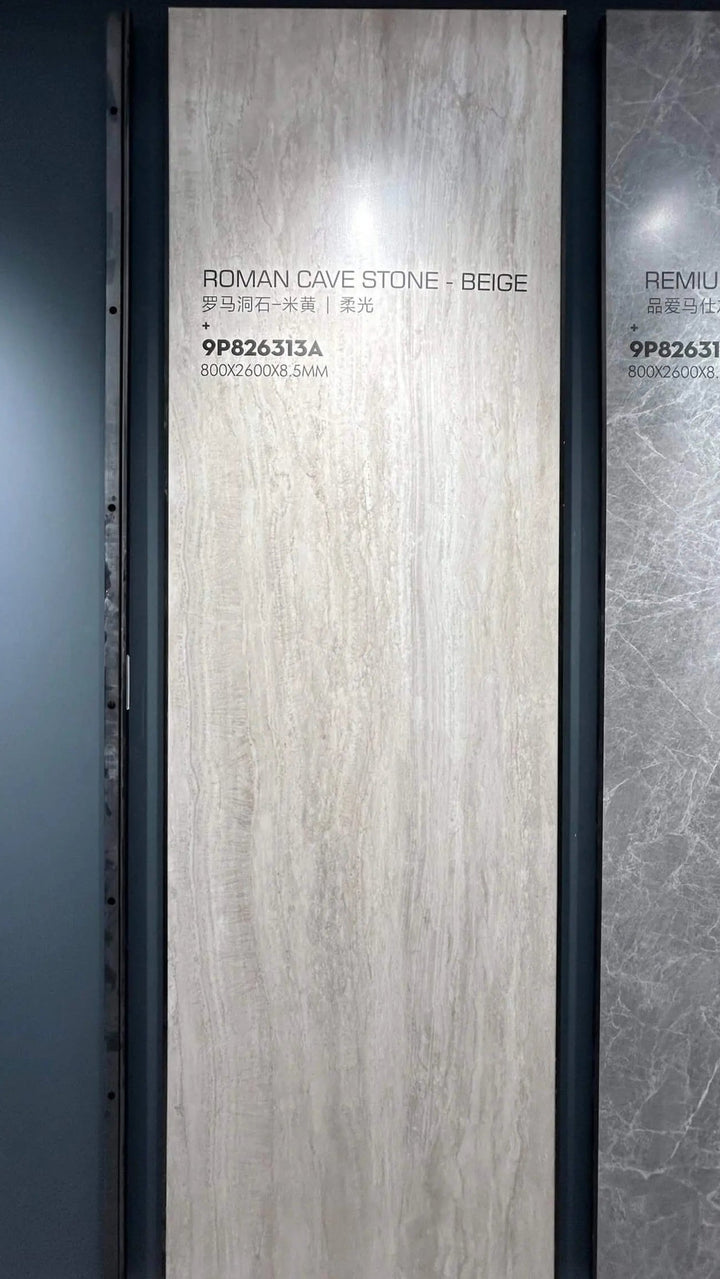
These Funtek products are examples to practice product-level questions, not a universal “best three” list. Click each image to view its product page.


A Copy-and-Paste Inquiry That Produces a Useful Quote
Project location and destination: country, city and preferred port
Required material: product code or visual direction
Slab specification: size, thickness, finish and backing
Quantity: slabs or square metres by product; mixed loading required?
Visual requirement: random / directional / continuous vein / bookmatch
Processing: full slabs or cut-to-size; edge and hole drawings attached?
Documents: datasheet, test reports and destination-specific requirements
Trade term: requested Incoterm, named port/place and version
Timeline: sample date, production deadline and required arrival date
Inspection: buyer, third party or supplier report; balance-release evidence
Receiving: unloading equipment and delivery constraints
This brief lets a supplier quote the same project you are planning. “Best price for one container” does not.
My Final Rule for Overseas Buyers
I do not judge a supplier by how quickly they say yes. I judge them by how clearly they turn a visual product into a controlled order: exact specification, traceable batch, realistic fabrication advice, agreed inspection, engineered packing and documents that match the cargo. For a company-specific verification path, review how Funtek documents its manufacturing and sourcing controls.
The three approval gates are deliberately simple. Before the deposit, prove the order is correctly defined. Before the balance, prove the correct goods are ready and protected. Before accepting delivery, preserve the evidence needed to receive safely and resolve damage. If each gate is documented, overseas sourcing becomes a managed project instead of a long-distance gamble.
Send the Project Brief, Not Only a Color Name
Share the application, slab size, thickness, finish, quantity, destination, required arrival date and whether you need full slabs or processed pieces. We can prepare product options, sample steps and the information needed for a comparable shipping quotation.
Request an Overseas Project ReviewTrade References
The trade and packing sections were checked against the International Chamber of Commerce Incoterms® resources and the IPPC ISPM 15 standard for wood packaging material. Customs classification, duties, notices, insurance and unloading requirements vary by destination and contract; confirm them with the buyer’s customs broker, carrier, insurer and local safety professionals.