


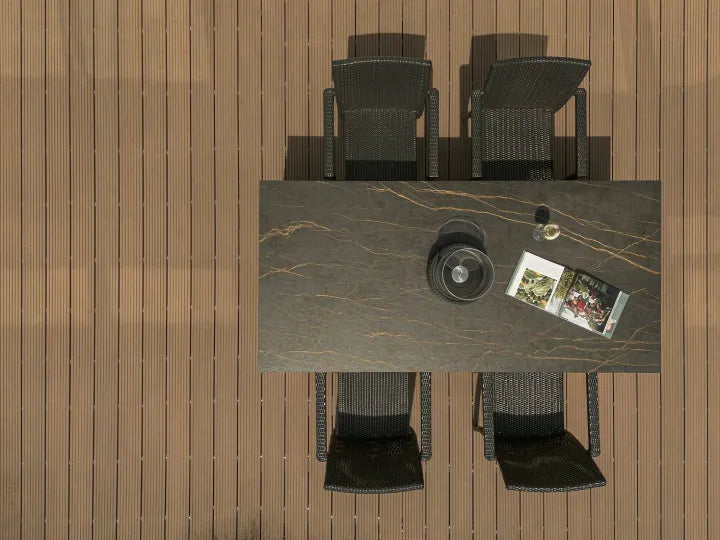


The reception desk at a five-star hotel in Dubai tells two stories. The one guests see: warm beige stone, soft sedimentary lines, an atmosphere of quiet luxury. The one the facilities manager lives: sealing schedules every six months, wine-stain panic calls, and a growing file of replacement tiles. That gap between beauty and burden is exactly why architects and specifiers are searching for a limestone alternative—a surface that delivers the same calm, natural aesthetic without the maintenance debt.
You know the feeling. You spec limestone for a project because nothing else has that muted warmth. Then the change orders start rolling in. Sealing. Staining. Cracking under foot traffic. And suddenly that "affordable" natural stone isn't so affordable anymore.
The good news? You no longer have to choose between appearance and performance. Limestone look sintered stone—the leading limestone alternative on the market today—replicates the tonal range and tactile quality of natural limestone in a slab that absorbs virtually no water, needs zero sealing, and ships in formats up to 1600×3200 mm. This guide walks through the technical comparison, real-world applications, and total-cost logic behind this limestone alternative material—so you can decide whether it makes sense for your next project.

Why Look for a Limestone Alternative?
Picture this. A medical clinic in Munich specifies Jura limestone for its lobby walls—classic German stone, local, beautiful. Within 18 months, the cleaning staff notices dark patches spreading near the entrance. Water infiltration. The limestone's pores, measured by ASTM C97 at up to 15% absorption by weight, had been drinking in tracked rainwater for two winters. The clinic ended up replacing the lower 600 mm of every wall panel.
That's not an outlier. It's the scenario playing out in commercial projects worldwide—and the primary reason specifiers seek a limestone alternative. According to the Natural Stone Institute's own technical guidelines, most limestone varieties require sealing every 6–12 months in commercial settings. Miss a cycle? Stains set. Spills penetrate. And in high-traffic or moisture-prone environments—hotel lobbies, spa bathrooms, restaurant floors—the clock starts ticking the moment the stone is installed. A reliable limestone alternative eliminates this cycle entirely.
Here's where the math gets uncomfortable:
- Water absorption: Natural limestone ranges from 1% to 15% depending on density and origin. That porosity is what makes it vulnerable to staining, efflorescence, and biological growth.
- Sealing frequency: Most commercial specifiers budget for sealing every 6–12 months. At $2–5 per square foot per application, a 5,000 sq ft hotel lobby costs $10,000–25,000 annually just in sealer labor and materials.
- Scratch susceptibility: With a Mohs hardness of only 3–4, limestone can be scratched by a copper coin. Drag a chair across a limestone floor and you'll see the marks.
- Slab size limits: Natural limestone typically maxes out around 800×1200 mm per piece. Cover a large wall or floor and you're looking at a grid of joints—each one a potential maintenance point.
None of this makes limestone a bad material. It makes limestone the wrong material for the wrong context. And that's the distinction that matters. When the spec calls for limestone's warmth in a setting that demands durability, you need a limestone alternative. The right limestone alternative doesn't ask you to give up the aesthetic—it gives you the same look with engineering that matches the reality of how buildings actually get used.
What Is Limestone Look Sintered Stone?
Limestone look sintered stone is a manufactured large-format slab engineered to replicate the color, texture, and tactile quality of natural limestone—without using any limestone at all. It's the limestone alternative that designers reach for when the spec demands limestone aesthetics but the environment won't tolerate limestone's limitations. It's not a coating. It's not a thin veneer. It's a solid, through-body slab produced from 100% natural minerals.
The process works like this. Raw minerals—feldspar, quartz, and clay—are ground to a fine powder, mixed, and then compressed under extreme pressure. The pressed slab then enters a roller kiln, where it's fired at temperatures exceeding 1,200°C. At those temperatures, the mineral particles undergo solid-phase diffusion—they fuse together at a molecular level without any resin, cement, or chemical binder. What comes out the other end is a dense, vitrified slab with the structural integrity of engineered ceramic and the visual program of whatever pattern was digitally printed onto its surface before firing.

Want the full technical walkthrough? Read our guide to What Is Sintered Stone? for a deeper dive into the chemistry and manufacturing process.
The limestone look specifically is achieved through high-resolution digital printing that deposits mineral-based inks onto the slab body before sintering. These inks—also 100% mineral—become permanently fused into the surface during firing. The result? Warm beige, soft cream, light grey, and taupe tones with the subtle sedimentary lines and gentle color movement that make limestone visually distinctive. For a broader look at pattern possibilities, explore our guide to Types of Sintered Stone Patterns, where limestone-look ranks among the most requested aesthetics.
Crucially, this is not a printed image sitting on top of the slab. The pattern becomes part of the surface itself—permanent, UV-stable, and resistant to fading even under decades of sunlight exposure.
Featured limestone-look slab
New Lime Sintered Stone
New Lime is a soft limestone-look sintered stone with warm neutral movement, suitable for wall cladding, bathroom surfaces, showroom displays, and calm commercial interiors.

Showroom Slab Display
Shows the full limestone-inspired movement and warm neutral tone.

Surface Detail
Close-up texture for checking tone, sedimentary lines, and finish feel.

Grey Reference Tone
Useful for projects that need a cooler limestone-inspired palette.
Curious how limestone look compares to other stone aesthetics? Browse the full Stone Look Sintered Stone collection or see all available options in our All Sintered Stone Slabs catalog.
Sintered Stone vs Limestone: Complete Comparison
Let's get specific. Marketing language about "better performance" means nothing without numbers. This is the sintered stone vs limestone comparison that actually matters—how limestone look sintered stone stacks up against natural limestone across the properties that affect your project:
| Property | Natural Limestone | Limestone Look Sintered Stone | What This Means for Your Project |
|---|---|---|---|
| Water Absorption | 1–15% (ASTM C97) | <0.1% (ISO 10545-3) | Sintered stone is effectively waterproof; limestone drinks spills. |
| Mohs Hardness | 3–4 | 6–8 | Sintered stone resists scratches from daily use; limestone does not. |
| Flexural Strength | 7–15 MPa | >50 MPa | Sintered stone can span larger areas without cracking. |
| Max Slab Size | ~800×1200 mm | 1600×3200 mm | Far fewer joints and a cleaner visual surface. |
| Sealing Required | Every 6–12 months | Never | Zero sealing cost and zero downtime. |
| Stain Resistance | Low–moderate because it is porous | Very high because it is virtually non-porous | Coffee, wine, and oil stay on the surface. |
| UV / Fading | Can yellow or darken over time | UV-stable mineral pigments | More stable color over long-term exposure. |
| Fire Rating | Varies by stone type | A1 non-combustible under EN 13501 | Supports stricter commercial fire-code requirements. |
For independent verification of technical benchmarks, AZMater publishes comparative material data used by engineers and specifiers worldwide. You can also explore our full Sintered Stone Material Comparison page for side-by-side data across multiple surface types.
The difference that matters most depends on your project. For a wet area—bathrooms, spas, pool surrounds—the water absorption gap alone is decisive in any sintered stone vs limestone evaluation. For commercial flooring, hardness and flexural strength determine whether the surface survives year one. And for large walls or feature installations, slab size dictates how many joints you're dealing with and how visible they'll be. Across every dimension, this limestone alternative delivers where natural limestone falls short.

Ready to see how these numbers translate to real slabs? Start with our All Sintered Stone Slabs collection to explore available sizes and finishes.
Key Benefits of Limestone Look Sintered Stone
Every limestone alternative promises to be "better" than natural stone. But better how, exactly? Here are the specific, measurable advantages that make limestone look sintered stone the preferred limestone alternative for commercial and residential specifiers:
Zero Sealing, Zero Worry
Natural limestone demands a sealing ritual: clean the surface, wait for it to dry, apply sealer, wait again, buff. Repeat every six to twelve months. In a 10,000 sq ft commercial project, that's not a minor maintenance item—it's a line item. One that compounds over the building's lifetime.
Limestone look sintered stone eliminates this entirely—arguably the single biggest day-to-day advantage of this limestone alternative. With water absorption below 0.1%, there are no pores to protect. No sealer to schedule. No missed maintenance cycle that turns into permanent staining. For facilities managers juggling dozens of maintenance tasks, removing one from the list is the difference between proactive and reactive building management.
Water That Stays on the Surface
Spill a glass of red wine on limestone and you have approximately 15 minutes before it becomes a permanent resident. Spill the same glass on sintered stone and you have as long as you need. The <0.1% absorption rate means liquids cannot penetrate the surface. They sit on top, waiting to be wiped away with ordinary cleaner.
This is not just about convenience. In healthcare and hospitality environments, moisture penetration creates conditions for mold and bacteria. The Natural Stone Institute warns about biological growth in porous stone installations in damp settings. Sintered stone's virtual impermeability removes that risk at the material level.

Slabs That Cover More with Fewer Joints
Here's a number that doesn't get enough attention: 75% fewer joints. A natural limestone wall clad in 800×1200 mm tiles produces roughly 1 joint per 0.96 m². The same wall in 1600×3200 mm sintered stone slabs? One joint per 5.12 m². That's not just a visual improvement—fewer joints mean fewer failure points, less grout maintenance, and a cleaner architectural line.
For feature walls, reception areas, and any surface where visual continuity matters, this limestone alternative is transformative. The stone appears as a single, uninterrupted plane rather than a mosaic of tiles. At FUNTEK, our standard large-format sizes include 900×1800 mm, 1200×2400 mm, 1200×2600 mm, and the full 1600×3200 mm—giving specifiers a range of options to match project scale.
Color You Can Count On
A common complaint with natural limestone: the slab you approved in the showroom doesn't look like the slab that arrives on site. Natural stone varies. That's part of its charm—and part of its risk. When you're cladding 3,000 sq ft of wall in a single project, "character variation" can read as "the installer made a mistake."
Sintered stone eliminates this gamble. Digital printing with mineral-based inks delivers consistent, repeatable patterns across every slab in the order. The limestone-look tones—warm beige, soft cream, light grey, taupe—match from panel to panel and from order to order. And because the pigments are mineral-based and fired into the surface at over 1,200°C, they're permanently UV-stable.
Hard Enough for Real-World Use
Mohs 3–4. That's limestone. On the same scale, a steel knife blade is 5.5. A copper penny is 3.5. Which means limestone can literally be scratched by pocket change. For residential applications where you baby the surface, that might be acceptable. For commercial floors carrying foot traffic, rolling carts, and moved furniture? It's a liability.
Limestone look sintered stone rates Mohs 6–8. That puts this limestone alternative in the same hardness range as quartzite and well above everyday abrasives. A dragged chair, a dropped key, a rolling service cart—none of them leave the same type of mark you would expect on softer limestone. For high-traffic commercial interiors, this is a performance requirement.
Recommended Sizes and Thicknesses
Choosing the right slab thickness isn't about budget—it's about application. Each thickness range is engineered for specific structural demands. Here's how to think about it:
Wall Cladding: 6–9 mm
For vertical surfaces, weight matters more than impact resistance. A 6 mm sintered stone slab weighs approximately 14–15 kg/m²—light enough for standard wall substrates without special reinforcement. The 9 mm option adds structural margin for high-traffic walls such as hotel corridors and retail display walls while still keeping the load manageable. Both thicknesses allow the full range of large-format sizes, meaning a single 1600×3200 mm limestone alternative slab can cover over 5 m² of wall in one piece. See our Sintered Stone Interior Walls page for installation details and project photos.
Flooring: 9–12 mm
Floor slabs need to resist point loads, impact, and thermal stress. The 9 mm thickness works for residential and light commercial floors; 12 mm is the standard for high-traffic commercial spaces such as hotel lobbies, retail stores, and office buildings. The flexural strength of sintered stone means a 12 mm slab on a properly prepared substrate can handle commercial foot traffic without cracking, even at the largest 1600×3200 mm format.
Countertops & Furniture: 12–20 mm
Countertops need edge integrity, overhang support, and resistance to thermal shock from hot pans or boiling water. The 12 mm thickness is the minimum for vanity tops and light-duty surfaces; 20 mm is standard for kitchen islands, bar tops, and commercial reception desks. At FUNTEK, we offer multiple surface finishes in these thicknesses—polished for luxury verticals and vanities, honed for high-traffic floors, and silk for countertops where you want warmth without glare. For detailed specs, visit our Sintered Stone Countertops page.

Who Should Choose Limestone Look Sintered Stone?
Not every project needs a limestone alternative. If you're cladding a protected interior wall in a low-traffic residential setting, natural limestone works fine. But for projects where the gap between limestone's beauty and its performance becomes a problem, this limestone alternative is worth serious consideration.
- Hotel renovations: Limestone warmth across bathrooms or lobbies without annual sealing and stain-related maintenance calls.
- Medical facilities: Non-porous surfaces that support hygiene requirements while preserving a calmer natural stone aesthetic.
- Multi-family residential projects: Premium-looking bathrooms and shared spaces with manageable lifecycle costs.
- Luxury retail fit-outs: Limestone-style feature walls available in large slab formats with faster installation and no post-install sealing.
For wet-area specifications, explore our Sintered Stone Bathroom Walls page. For a broader view of alternatives your clients might consider, see our guide to the 7 Best Tile Alternatives for Floors, Walls & Countertops.
Environmental and Cost Considerations
The Environmental Case
Sintered stone isn't just a performance upgrade as a limestone alternative—it's a genuinely different environmental profile. Consider:
- No chemical sealers: Natural limestone needs repeated topical or penetrating sealers. Sintered stone requires none.
- Recyclable mineral body: Sintered stone is made from natural minerals with zero resin or cement content.
- Longer service life: A surface that doesn't stain, scratch, or fade as easily lasts longer and reduces replacement waste.
- Reduced quarry dependence: Every limestone slab begins with a cut into a natural formation. Sintered stone relies on abundant mineral inputs and controlled manufacturing.
The Total Cost of Ownership Perspective
Here's where the conversation usually gets stuck: "Sintered stone costs more upfront." True. Depending on the market, limestone look sintered stone can cost more per square foot than natural limestone at the material level. But upfront cost is only the down payment.
Consider a 5,000 sq ft commercial lobby over 10 years:
| Cost Category | Natural Limestone | Limestone Look Sintered Stone |
|---|---|---|
| Material cost | $15–25/sq ft | $20–35/sq ft |
| Installation | $8–15/sq ft | $8–12/sq ft because larger format can speed installation |
| Sealing over 10 years | $2–5/sq ft × 10 = $20–50/sq ft | $0 |
| Stain repair / polishing | $3–8/sq ft estimated over 10 years | $0–1/sq ft |
| 10-year total | $46–98/sq ft | $28–48/sq ft |
Same aesthetic. Radically different financial trajectory. For a 5,000 sq ft space, that's a potential saving of $90,000–250,000 over a decade—not including the intangible cost of facility downtime during maintenance cycles.
This is why more specifiers are evaluating surfaces on total cost of ownership rather than material unit price. The limestone alternative isn't simply more expensive or cheaper. The cost is differently timed. And in the sintered stone vs limestone cost analysis, the long-run math consistently favors the alternative.
The Bottom Line
Natural limestone has earned its place in architectural history. Its warmth, its subtlety, its connection to geological time—these qualities are real and valuable. But so are the realities of maintaining a porous, soft stone in environments that demand durability.
Limestone look sintered stone closes that gap. As a limestone alternative, it lets you keep the aesthetic—the soft beige tones, the sedimentary texture, the understated warmth. You gain waterproof performance, scratch resistance, structural strength, large-format availability, zero sealing requirements, and a lower total cost of ownership over the building's life.
Explore Limestone Look Sintered Stone for Your Project
For your next project that calls for limestone's beauty but can't afford its maintenance burden, this limestone alternative is the choice that doesn't ask you to compromise.


