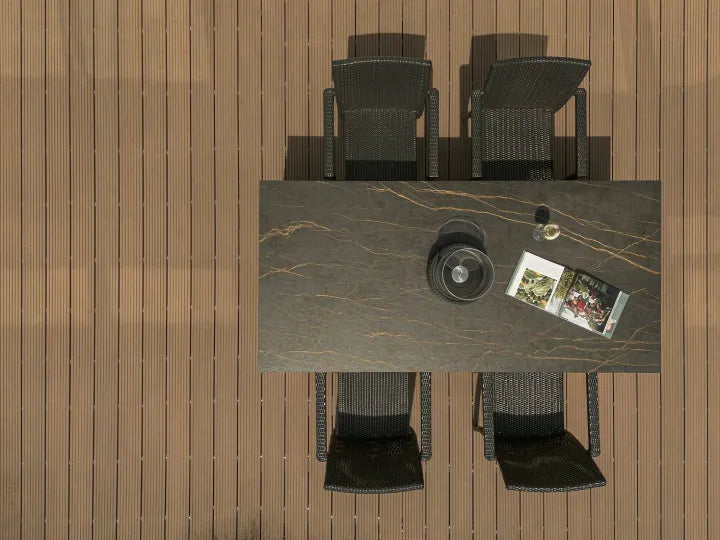
Sintered stone edge profiles

Countertop Edge Profiles for Sintered Stone

Compare 18 countertop edge profiles with realistic visuals, cross-section diagrams, comfort notes, and fabrication guidance for sintered stone projects.

Explore 18 edge profiles

Edge finder

Get a quick recommendation without hiding the full library.

Pick the project situation. The page highlights useful profiles below while keeping all 18 visible for comparison.

Application
Visual style
Edge visibility

18 edge profiles

Compare the complete edge library in one page.

Each visual combines a realistic countertop edge render with a cross-section diagram. Use the notes to decide which profiles are practical before drawings, sampling, or quoting.

Most used for sintered stone

Practical profiles that usually work well for kitchens, vanities, islands, and project counters.

Eased sintered stone countertop edge with a lightly softened square profile and matching cross-section diagram

Eased Edge

A clean straight profile with lightly softened corners for everyday projects.

Best forModern kitchens, vanities, worktops
Edge feelStraight and practical
Sintered stone noteGood default for sintered stone because it is easy to clean and visually quiet.
Beveled sintered stone countertop edge with an angled chamfer and matching cross-section diagram

Beveled Edge

A crisp angled chamfer that makes the edge look intentional without becoming decorative.

Best forKitchens, bathrooms, commercial counters
Edge feelSharp but refined
Sintered stone noteConfirm the bevel size before fabrication so the line stays consistent along long runs.
Pencil sintered stone countertop edge with a small rounded corner and matching cross-section diagram

Pencil Edge

A small roundover that softens touch points while keeping a slim modern look.

Best forFamily kitchens, vanities, tables
Edge feelSoft and compact
Sintered stone noteUseful when the client wants a safer feel without a heavy bullnose profile.
Mitered sintered stone countertop edge showing a thick built-up profile and matching cross-section diagram

Mitered Edge

A 45-degree built edge that creates a thicker premium look from thinner slabs.

Best forWaterfall islands, reception desks, table tops
Edge feelThick and architectural
Sintered stone noteBest when edge visibility is high or the slab pattern should wrap visually.

Rounded comfort edges

Softer profiles for family spaces, high-touch counters, and projects where hand feel matters.

Half bullnose sintered stone countertop edge with a rounded top profile and matching cross-section diagram

Half Bullnose Edge

A rounded upper front edge with a flatter lower face for a softer hand feel.

Best forResidential kitchens, bathroom vanities
Edge feelComfortable rounded top
Sintered stone noteWorks when comfort matters but a full rounded edge feels too traditional.
Full bullnose sintered stone countertop edge with a fully rounded front profile and matching cross-section diagram

Full Bullnose Edge

A continuous round front edge that feels soft and safe from top to underside.

Best forFamily kitchens, high-touch counters
Edge feelVery soft
Sintered stone noteCheck whether the selected slab thickness and fabrication shop support the radius.
Demi bullnose sintered stone countertop edge with a medium rounded profile and matching cross-section diagram

Demi Bullnose Edge

A medium rounded profile between pencil and bullnose for a balanced residential feel.

Best forKitchens, islands, bathroom counters
Edge feelSoft but not heavy
Sintered stone noteA practical choice when the edge is visible but the design should stay simple.
Oversize radius sintered stone countertop edge with a large softened corner and matching cross-section diagram

Oversize Radius Edge

A larger softened radius that gives a more generous touch point than pencil round.

Best forFamily counters, public counters, tables
Edge feelLarge soft radius
Sintered stone noteUseful for comfort-focused projects, but radius availability should be confirmed early.

Decorative classic profiles

More detailed profiles for traditional, luxury, hospitality, and furniture-style surfaces.

Small ogee sintered stone countertop edge with a subtle S-curve profile and matching cross-section diagram

Small Ogee Edge

A restrained S-curve profile for clients who want a light decorative detail.

Best forClassic kitchens, vanities, furniture
Edge feelSubtle decorative
Sintered stone noteUse carefully with sintered stone because detailed shaping needs experienced fabrication.
Large ogee sintered stone countertop edge with a deep decorative S-curve and matching cross-section diagram

Large Ogee Edge

A deeper decorative S-curve that creates a more traditional luxury edge.

Best forTraditional kitchens, statement vanities
Edge feelDecorative and formal
Sintered stone noteBetter for projects where the edge is a design feature, not a background detail.
Dupont sintered stone countertop edge with a stepped decorative profile and matching cross-section diagram

Dupont Edge

A stepped profile with a rounded lower curve for a polished classic appearance.

Best forPremium vanities, counters, hospitality
Edge feelStepped decorative
Sintered stone noteConfirm tooling and sample approval before using it on long sintered stone runs.
Cove ogee sintered stone countertop edge with layered curved detail and matching cross-section diagram

Cove Ogee Edge

A layered profile combining a concave cove with an ogee curve for extra depth.

Best forLuxury counters, bars, reception tops
Edge feelLayered decorative
Sintered stone noteRecommended only when the fabricator can show a finished sample in the same material.
Cove sintered stone countertop edge with a concave shadow-line profile and matching cross-section diagram

Cove Edge

A concave cut that creates a shadow line under the top surface.

Best forClassic vanities, bars, furniture
Edge feelConcave detail
Sintered stone noteKeep the cove simple for sintered stone to reduce dirt traps and fabrication risk.

Thick and special profiles

Built-up, textured, faceted, and statement edges for highly visible project details.

Chiseled sintered stone countertop edge with a textured natural-style face and matching cross-section diagram

Chiseled Edge

A controlled textured edge for a more natural stone-like or handcrafted look.

Best forFeature counters, rustic interiors, displays
Edge feelTextured edge
Sintered stone noteUse only where the edge texture is intentional and comfortable enough for the user.
Platner sintered stone countertop edge with a faceted geometric profile and matching cross-section diagram

Platner Edge

A geometric angled profile that feels modern, architectural, and more sculptural.

Best forDesign-led islands, desks, display counters
Edge feelFaceted modern
Sintered stone noteBest for projects that want a visible edge form without ornate curves.
Triple waterfall sintered stone countertop edge with layered step detail and matching cross-section diagram

Triple Waterfall Edge

A layered cascading profile with multiple small steps for a decorative statement.

Best forHospitality counters, feature islands, bars
Edge feelLayered statement
Sintered stone noteUse when the edge itself is a focal point and fabrication tolerance is confirmed.
6cm chisel sintered stone countertop edge with a thick textured built-up profile and matching cross-section diagram

6cm Chisel Edge

A thick built-up edge with a controlled chiseled face for a substantial look.

Best forFeature islands, bars, display tables
Edge feelThick textured
Sintered stone noteNeeds shop drawing review because the built-up edge changes weight, seams, and handling.
6cm ogee bullnose sintered stone countertop edge with a thick decorative rounded profile and matching cross-section diagram

6cm Ogee Bullnose Edge

A thick decorative built-up profile combining ogee movement with a rounded bullnose.

Best forLuxury counters, hospitality, reception desks
Edge feelThick decorative
Sintered stone noteUse for statement work where sample approval and fabrication capability are clear.

Decision table

Compare style, comfort, cleaning, and fabrication.

Use this table for early selection. Final details should be confirmed with samples, cutting drawings, slab thickness, and fabricator capability.

ProfileStyleComfortCleaningFabricationBest use
Eased / Pencil / BeveledModern, quietMedium to softEasyLower complexityKitchens, vanities, worktops
Half / Full / Demi BullnoseRounded, friendlyHighEasy to mediumRequires radius toolingFamily kitchens, tables, high-touch counters
Ogee / Dupont / CoveDecorative, classicMediumMediumHigher complexityLuxury counters, vanities, hospitality
Mitered / 6cm profilesThick, premiumDepends on corner detailEasy to mediumRequires accurate joiningWaterfall islands, reception desks, feature edges
Chiseled / Platner / Triple WaterfallStatement, specialVaries by profileMedium to higher careSample approval recommendedFeature counters, bars, display surfaces

Sintered stone notes

The edge choice should follow the slab, not just the style name.

Check the body color when the edge is exposed.

Surface printed slabs can still be excellent, but visible straight edges, cutouts, and table edges should be reviewed from the side.

Use mitering for thick visual edges and waterfall details.

A mitered edge helps a thin slab look substantial and can make dramatic marble-look patterns feel more continuous.

Confirm detailed profiles before quoting.

Ogee, cove, chiseled, and 6cm built-up edges need sample approval, tooling confirmation, and shop drawings.

Beveled sintered stone countertop edge with an angled chamfer and matching cross-section diagram

FAQ

Questions buyers ask before choosing an edge.

What countertop edge is best for sintered stone?

For most modern projects, eased, pencil, beveled, and mitered edges are the safest starting points. The best choice depends on edge visibility, slab thickness, body color, and the fabricator's tooling.

Is a mitered edge good for sintered stone countertops?

Yes, especially for waterfall islands, reception desks, table tops, and projects that need a thicker premium look. Mitered edges should be planned with accurate cutting and sample approval.

Which countertop edge is easiest to clean?

Straight, eased, pencil, and simple beveled edges are usually easiest to clean because they have fewer grooves and shadow lines.

Can surface printed sintered stone have exposed edges?

It can, but the buyer should check the cut edge and body color first. If the body color is different from the surface, a mitered detail may create a better visual result.

Should decorative edges be used on sintered stone?

They can be used when the fabricator has suitable tooling and can show a finished sample. Detailed profiles should be confirmed before final quotation.

Need help choosing the right countertop edge?

Send your application, slab thickness, edge visibility, and preferred surface look. Funtek can help you compare practical edge options before quotation.