


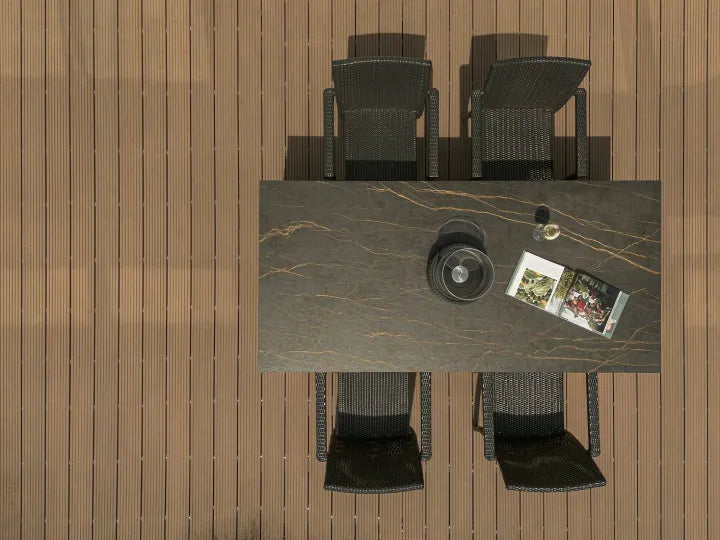

Full slab
Mark the top and bottom, main vein direction, quiet zones, dense color areas and repeated elements. Confirm the exact design and current production size before calculating cuts.

Full-slab selection / rare stone character


Before material approval
Mark the top and bottom, main vein direction, quiet zones, dense color areas and repeated elements. Confirm the exact design and current production size before calculating cuts.
Use a physical sample to verify base color, printed detail, gloss level, surface feel and cleaning appearance under the project's warm or cool lighting. The sample does not approve the full pattern.
Overlay the slab on the finished elevation. Deduct openings, edge trims and unusable margins; then mark seams, returns, sink or hob cut-outs and the focal viewing area before confirming quantity.
Plan the finished panels

Send the finished wall width and height plus the positions of doors, screens, sockets, corners and trims. Mark the main viewing direction and any joint lines that must align with the architecture. We can then place the strongest movement, check usable cutting areas and estimate the required slabs and spare panels.

Provide the finished dimensions for the front, worktop, side returns, access doors and plinth. Tell us which face is seen first and whether the main vein should continue across a corner or waterfall edge. We will review seam positions, edge build-up and the order in which visible panels should be cut.

Send the worktop length and depth, end-panel height, overhang, edge thickness and sink or hob cut-out sizes. We will check whether a vein passes through a vulnerable cut-out, where a seam can be hidden, and whether the top and waterfall end can be cut as a continuous composition.

List each finished panel size and identify visible edges, substrate thickness, hardware holes and grain direction. Smaller pieces can use selected areas of a bold slab, but the cut plan must reserve suitable zones for doors, drawer fronts, tops and replacement pieces.
Before the quotation
A PDF elevation, CAD screenshot, phone photo or hand sketch is enough to begin. Include finished dimensions, the surface application, approximate quantity and destination country or port. If information is missing, we will mark it on a short checklist rather than asking you to complete a new specification.
Send the product names or screenshots you prefer. Tell us whether you need a single focal slab, continuous movement across several panels or an A/B bookmatch. We will confirm the current full-slab image, available size, finish and matching option before you order a sample.
We review thickness, finish, backing or support, visible edge build-up, cut-outs, joint widths and panel orientation against the application. These details determine whether the selected design can be cut safely and whether extra allowance is needed around edges or openings.
The quotation separates usable slabs, matching requirements, cutting allowance and recommended spares. We also confirm crate or frame packing, loading method, trade term, destination port and target shipment window. Your dedicated sales contact follows the order through production, inspection and receipt.
Practical answers
A sample is useful for confirming color, finish and surface feel, but it cannot show the complete visual movement. For an expressive design, review the current full-slab image or video and map the intended cutting area before final approval.
No. Some designs are supplied as single slabs, some have continuous movement, and selected products are produced as A/B bookmatched pairs. Tell us the wall size and desired composition so we can confirm the current production option.
Start from the finished visible area, not the slab alone. A smaller room often benefits from one controlled focal surface and quieter surrounding materials. We can help identify a calmer cutting zone or a product with more balanced movement.
Send the selected product or reference image, application, finished panel dimensions, approximate quantity, destination country or port and target date. If available, include the preferred thickness, finish, edge detail and drawings. Rough details are acceptable; your dedicated sales contact will return a clear list of what is still needed.
Yes. Send a wall elevation, countertop drawing or marked photo showing openings, corners and focal areas. We can discuss slab orientation, visible seams, matched effects, cutting allowance and panel numbering before production.
The packing method depends on slab size, quantity, container plan and route. Before shipment we confirm the slab list, protective separation, reinforced crate or steel frame, loading method, trade term and destination documents. Your dedicated sales contact shares inspection and loading updates and follows the shipment until you receive the goods.
A rough brief is enough