






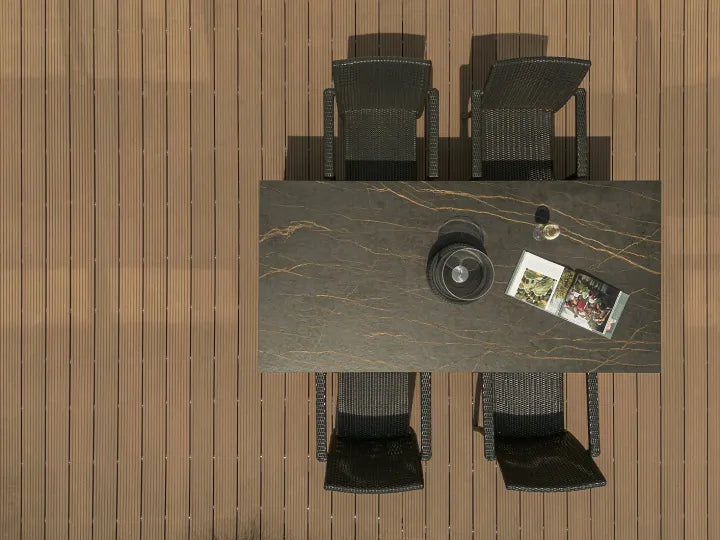


Yes. A Japanese company can buy large-format porcelain slabs directly from a Chinese manufacturer and act as the importer in Japan. The company can appoint a licensed Japanese customs broker to file the import declaration on its behalf. Before you pay a deposit, send the broker the slab datasheet and a sample packing list, and ask your fabricator or warehouse if it can accept the proposed crate.
Direct buying makes sense when you have a receiving team, can use enough slabs to spread the fixed shipment charges, and need control over the finish or production lot. For a few slabs on a tight schedule, ask a Japanese stockist for a delivered quote first. It gives you a price and an availability date to compare against importing.
In this guide, “porcelain slabs” means large-format ceramic slabs. Some related products are marketed as “sintered stone”. Check the composition and specifications for the exact product, then have your customs broker confirm the tariff classification.
Before You Import
Do Japanese Buyers Need a Local Distributor?
You can order directly from Funtek in China. If you want to buy through a Japanese distributor or see local stock, ask Funtek which purchasing routes are currently available for your city and chosen design. If a Japanese supplier offers the slab, ask for the exact model, available lot, delivery date and a written description of who handles fabrication, returns and replacements.
Start with a local stockist when you need a few slabs quickly or want one supplier to coordinate fabrication and delivery. Consider buying direct when you want a particular design, thickness or lot across multiple pieces and have a Japanese company ready to clear, receive and fabricate the slabs. Compare both prices through delivery and unloading at the same address.
Funtek’s standard minimum order quantity (MOQ) is 300 m². Project and trial orders are reviewed by product. Mixed shipments depend on stock, slab specifications and packing requirements. If you’re sourcing several designs for a showroom, send us an estimated quantity for each so we can confirm what can ship together.
How Can Japanese Buyers Get Slab Samples Quickly?
Ask Funtek for the digital catalogue and labeled full-slab photos first. Send a color, reference image or slab code to narrow the options. Request a small physical sample for color and finish, or a cut-edge sample in the intended thickness and finish when the body will show. Use the sample approval guide to match the sample to your decision.
Funtek provides standard small samples free of charge. The buyer pays international courier charges. Ask for preparation time and any charge for larger, fabricated or custom samples. For courier delivery to Tokyo, Yokohama or elsewhere in Japan, provide the company and receiver name, street address, postal code and phone number once you’re ready to arrange shipment. Ask for the earliest dispatch date and a courier estimate if you have a decision deadline.
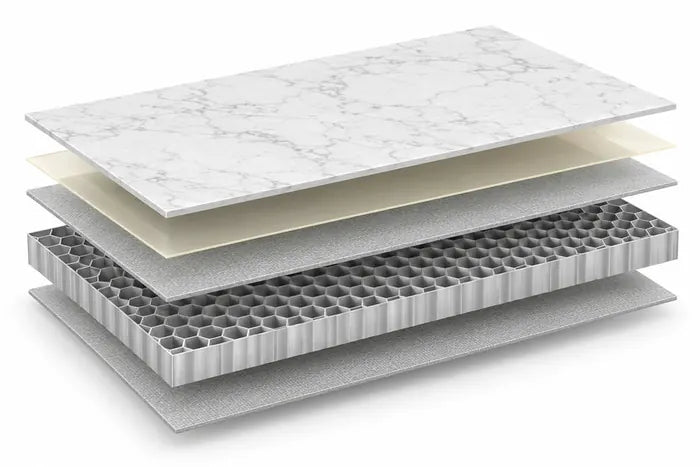
If the top should have a marble pattern, start with the Marble-Look Collection. If the edge will show on a countertop, sink cutout or tabletop, compare the face and cut edge in the Full-Body Collection. Through-body color and veining vary by design. Approve the actual cut edge or a finished edge sample for the model you are considering.
Ask for the catalogue or a sample with a product reference or the look you want to compare.
1. Decide who buys, clears and receives the slabs
In a factory-direct order, your company places the purchase order with the Chinese supplier. The Japanese importer is responsible for the declaration and import payments, a broker can handle the clearance, and a forwarder can coordinate freight and local delivery. One logistics firm may arrange both services. Ask who will actually file the declaration and whose company name will appear as importer before approving the shipping documents. Japan Customs describes the import permit procedure and the importer details on the declaration.
If your project team has no receiving facility, ask a Japanese slab fabricator or importer to price the material through its own supply arrangement. A direct order is easier to manage once you have an importer, a broker and a receiving address that can handle full slabs.


For the supplier and payment checks common to international orders, see the step-by-step guide to importing from China.
2. Confirm what Japan Customs will classify
Send the broker the material composition, dimensions, thickness, water absorption test, intended use and a photo of the goods in the form they will enter Japan. Specify whether they are full slabs, cut panels or fabricated pieces. For ceramic paving or wall tiles within heading 6907, the water absorption thresholds help determine the subheading. For example, 6907.21 covers qualifying goods in that heading with water absorption by weight of 0.5% or less. The product description and physical form still matter. A finished worktop or a panel bonded to a backing warrants a separate classification check. See the Japan Customs tariff schedule for ceramic products.
Ask the broker for the Japanese tariff line, duty rate and import consumption tax estimate for the item you are buying. If the classification is unclear and the order depends on the rate, use Japan Customs’ written advance ruling procedure. If you expect to claim a preferential rate under RCEP, have the broker check the product-specific origin rule, acceptable proof of origin and direct-consignment conditions before shipment. See the Japan Customs RCEP guide.

For clearance, reconcile the commercial invoice, packing list and bill of lading or sea waybill. The product description and quantities should match, with crate numbers and gross weights clear on the packing list. Ask the broker whether they also need freight or insurance statements, origin evidence or any product-specific approvals. Use the Japan Customs document list when preparing the file.
3. Compare costs at the same Japanese warehouse
Request a quote with the named Incoterm and place, packing inclusions, currency and quantity unit. For example, under FCA at a named terminal in China your forwarder arranges the main transport. Under CIF Yokohama the seller pays the sea freight and arranges insurance to Yokohama, while risk passes when the goods are on board at the shipment port. Ask what the insurance covers for breakage and whether destination terminal charges are prepaid. Under CIF, the Japanese importer still handles import clearance and should budget the onward delivery. Use the ICC Incoterms 2020 checklist to check the handoff.
Put both quotes on one basis: approved slabs delivered and unloaded at the same warehouse. Include the slab price, packing, freight and insurance, customs duty, import consumption tax, brokerage, terminal charges, local trucking and unloading. Add fabrication and any replacement allowance on both sides if the comparison is for finished pieces.

How one damaged slab changes the cost
Suppose ten slabs have a customs value of ¥400,000, and brokerage, destination handling, trucking and unloading add ¥90,000. The table assumes 0% duty solely for illustration. Your broker should confirm the applicable rate for the actual slabs. With the standard 10% import consumption tax, the example includes ¥40,000 in tax and ¥530,000 in cash outlay.
Swipe sideways on a phone to compare the costs.
| Inspection outcome | Cash outlay | Usable slabs | Cash per usable slab |
|---|---|---|---|
 All slabs pass |
¥530,000 | 10 | ¥53,000 |
 One slab is unusable |
¥530,000 | 9 | ≈ ¥58,889 |
The second row assumes there is no credit or insurance recovery. A domestic quote of ¥56,000 per equivalent slab, delivered and unloaded on the same tax basis, costs more per usable slab when all ten imports pass and less when one is unusable. If you need all ten for the job, add the replacement cost and check its delivery date.
To see what duty changes, take the 1.7% general rate listed for 6907.21 in Japan Customs’ October 31, 2026 schedule. If that rate applied to this hypothetical shipment, duty would add ¥6,800. The import consumption tax base would rise to ¥406,800, so estimated tax would be ¥40,680 and the cash budget would reach ¥537,480 before statutory rounding. The applicable rate depends on classification, import date and any preferential origin claim. See the tariff schedule and Japan Customs’ explanation of the tax base.
Budget the import consumption tax as a cash payment. Ask your Japanese tax adviser what amount your company may later claim as input tax and what records to retain. Compare both suppliers on the same cash or after-credit basis.
4. Approve the finish, slab faces and packing before dispatch
Use a physical sample to approve color, finish and edge appearance, then ask for photos of the actual slab faces. For a veined run, have the fabricator mark which sections will meet before approving the lot. Add the agreed size, thickness, finish, quantity and lot to the purchase order. For factory-cut pieces, approve the drawing revision, piece labels, tolerances and cutout positions as well.


Ask for the crate dimensions, loaded weight, lifting points and photos of the closed packing. For regulated solid-wood packaging, have the supplier show the treatment mark on the actual timber before loading. For exempt processed-wood packaging, verify the crate and any bracing material with your broker or forwarder. Japan’s Plant Protection Station sets out the wood-packaging requirements and exemptions.

Agree in writing who will receive a damage notice, what photos or survey the carrier and insurer require, how soon you must report damage, and how any agreed credit or replacement will be handled.
5. Book the warehouse and fabricator before the vessel
Send the packing drawing and gross weight for the heaviest loaded crate to the Japanese receiver. Have them confirm vehicle access, unloading equipment at the relevant load center, rack space and who will inspect the shipment. If your project site has no suitable unloading area, quote delivery to a slab warehouse or fabrication shop where the crates can be handled.
If you are ordering full slabs, send the dimensions and product guidance to the fabricator before booking freight. Ask whether their handling and cutting equipment can take the slab and whether they can complete the required edges and cutouts. At receipt, document the exterior of the crates and any visible damage, then use your receiver’s safe opening and inspection procedure. Match slab count and faces to the order before cutting and follow the agreed notice period if something differs.

Start with a delivered local quote and a direct quote for the same material scope. If the direct order still meets your budget after Japan-side charges, and the broker and fabricator have accepted the shipment details, you have a workable basis to place the order. The Funtek shipping and sourcing page shows what you can request for sample approval, packing and export coordination.
Sourcing Porcelain Slabs for Kitchen and Furniture Showrooms in Japan
Start with the pieces visitors will see up close. For an island or vanity, review the front edge and sink opening with your fabricator. For a dining table, review the exposed perimeter and the finish under your showroom lighting. Ask for full-slab photos to place veins across adjacent pieces, then approve a cut-edge or finished detail sample for edges visitors will see and touch.
Work backward from installation. Ask the local fabricator for its latest acceptable date for inspected slabs in the shop. From that date, allow time for Japanese customs clearance, trucking and unloading. Then confirm the vessel, production or stock preparation, and sample approval dates with the supplier. If the schedule leaves too little time to replace a damaged slab, ask about reserving a matching slab or buying the opening-critical pieces from Japanese stock.
Ask About Slabs, Samples and Prices
Ask Funtek for the slab catalogue, sample options or pricing for an order to Japan. You can share your preferred finish or delivery city if you already know it.