




Design Direction
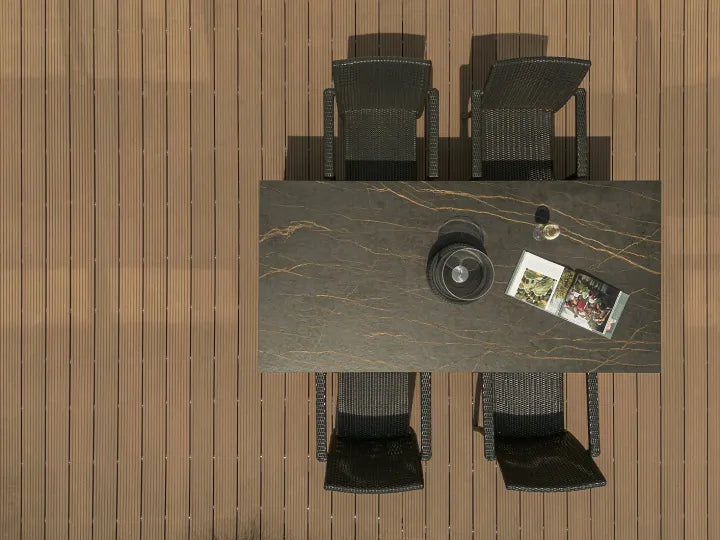
White and gray marble countertops work best when the base tone, vein scale and room size are chosen together. A white base with fine grey veins keeps a small vanity or perimeter run quiet; broader grey movement can carry a large island; a charcoal-grey base creates an anchor in a bright kitchen or bathroom.
Choose the natural stone only if the owner accepts slab-to-slab variation and the patina created by acid etching and everyday contact. If a project needs a planned pattern across repeated pieces and a different maintenance route, compare a marble-look sintered stone after the natural-marble appearance is defined.
White, Grey and Dark Grey Marble Families
The phrase white gray marble countertops describes a palette, not one geological variety or a consistent commercial grade. Carrara, Calacatta, Statuary and regional white marbles can all appear within the white-and-grey family, while suppliers may use local trade names for mid-grey and dark-grey stones. The allocated slab—not the name alone—controls the installed colour and movement.

| Visual family | What the eye reads first | Useful applications | Approval risk |
|---|---|---|---|
| White base, fine grey vein | Brightness and soft linear movement | Perimeter counters, compact vanities, quiet full-height splashes | A small sample may understate cloudy variation across the slab |
| White base, broad grey vein | Movement and focal contrast | Large islands, waterfall ends, statement vanity runs | A cutout or seam can interrupt the strongest vein |
| Mid-grey base, light vein | Continuous tonal field | Hospitality vanities, bars, calm kitchens with pale cabinetry | Warm and cool light can shift the perceived undertone |
| Dark grey base, fine light vein | Architectural weight and sharp contrast | Feature islands, powder rooms, bright bathrooms | Dust, water residue and reflected marks can be more visible |
Match Vein Scale to the Countertop Area
Vein scale should be judged against the visible surface, not against a handheld chip. Fine movement remains legible on a short vanity, narrow perimeter run or backsplash return. Broad veins need enough uninterrupted area to develop; on a small top, one dark band can dominate the entire composition.
Large islands allow broad movement to read as one field, but sink and cooktop cutouts remove the exact areas where a vein may be most expressive. If the island and full-height backsplash both carry strong movement, review them together at elevation scale. One can lead while the other stays quieter.

Grey Marble Countertops in Kitchens
A white base is the more forgiving visual direction when cabinetry, floor or backsplash already has strong colour. Warm oak can keep cool grey veining from feeling clinical, while black metal or dark-stained wood can repeat the deepest vein without adding another surface pattern. With white cabinets, introduce tonal separation through the countertop base, backsplash texture or island colour so the room does not collapse into one flat white plane.
Dark grey marble can anchor a pale kitchen, but its reflective behaviour matters. A polished surface deepens the base colour and repeats window and pendant highlights; a honed surface distributes that light more softly. The separate honed marble countertop guide owns the full finish decision.

Grey Marble Bathroom Countertops
Bathrooms shift the decision away from food preparation and toward task lighting, standing water, cosmetics and fixture colour. A fine-veined white marble keeps a compact vanity visually open. Mid-grey supports pale wood, brushed nickel and muted wall colours. Dark grey works as a contained focal surface when the wall and floor remain lighter.
View the sample flat under the actual mirror lighting. A stone that looked neutral on a vertical showroom rack can read blue beside a cool LED or brown beside warm timber and brass. Include the basin, wall tile, cabinet finish and metal sample in the same review; each changes how the grey is perceived.

Review the Full Slab, Finish and Project Light
A colour chip can establish base tone and finish, but it cannot show the spacing of major veins, cloudy zones, fissures or how two slabs relate. Review photographs of every allocated slab, then mark the countertop pieces, cutouts, seams and waterfall returns on those images. For a custom layout package that coordinates templates, cutouts, edges and seams, use the custom marble countertop guide.
Keep one approved sample under the project light and compare it with the allocated slab photographs. The sample documents the accepted colour and finish; the slab map documents movement and cut placement. Neither replaces the other.

Natural Marble Wear and Care Expectations
The Natural Stone Institute countertop guidance explains that calcite-based marble can be scratched by kitchen utensils and etched by acidic liquids such as lemon juice, tomato and vinegar. A penetrating sealer can reduce liquid absorption and staining; it does not stop the chemical reaction that dulls marble.
A sealer manages absorption; it does not make white or grey marble immune to acid etching.
There is no responsible universal resealing interval for every grey marble. Porosity, finish, product, use and cleaning practice change the result. Check for faster-than-usual darkening or water absorption on the installed stone and follow the sealer and fabricator instructions. The marble countertop upkeep article covers cleaning, stain-versus-etch diagnosis, sealing checks and restoration handoff.
When a Sintered Stone Alternative Fits
Choose natural marble when geological variation, material depth and the owner's acceptance of changing patina are central to the brief. Consider marble-look sintered stone when the project needs a planned face across repeated pieces, listed size and thickness options, or a different care route. Sintered stone is a separate manufactured material; a marble name describes its visual direction, not its geology.
Compare the full face rather than matching one cropped vein. Ask how many faces are available, whether the pattern is random, continuous or bookmatched, which finish is shown, and which size and thickness will be supplied. Browse the wider marble-look sintered stone collection only after the target white/grey family and movement level are clear.
Compare Two Verified White-and-Grey Directions
These two current Funtek records serve different visual briefs. Their product pages list the available formats and finishes; the final project choice still requires a physical sample, current face images and fabrication review.

Alaska White Sintered Stone Slab
Bright white with soft grey Arabescato movement. The current product record identifies a matte finish, random-match face and countertop, kitchen-island and bathroom-wall applications.
Listed formats: 1600 × 3200, 1200 × 2800, 1200 × 2700, 1200 × 2400 and 900 × 2700 mm; 6, 9, 12 and 15 mm.
View Alaska White
Carrara White Sintered Stone Slab
Crisp white with soft grey movement. The current product record identifies a matte finish, continuous-veining option and countertop, kitchen-island and bathroom-wall applications.
Listed formats: 1600 × 3200, 1200 × 2800, 1200 × 2700, 1200 × 2400 and 900 × 2700 mm; 6, 9, 12 and 15 mm.
View Carrara WhiteBuild a Colour and Application Brief
Share the target white or grey tone, project lighting, countertop drawings, preferred movement, finish, quantity and destination. Funtek can review current marble-look sintered stone faces and prepare sample options for your local fabrication team.