


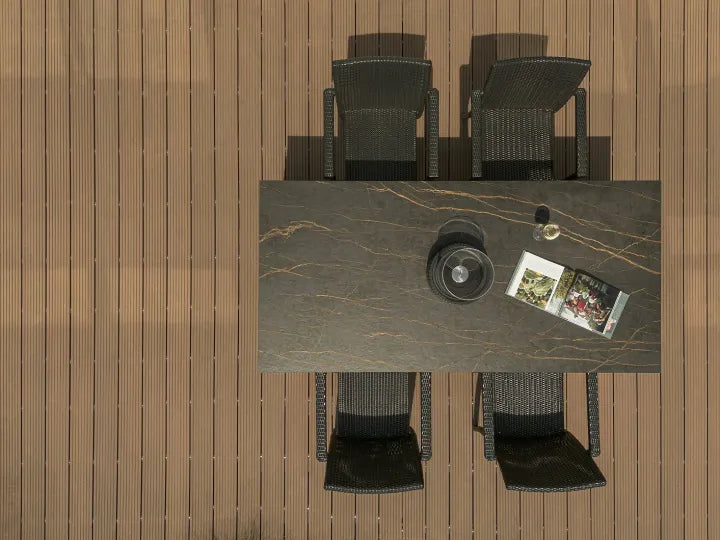


New to sintered stone?
This practical guide explains what sintered stone is, what it is made of, where it works best, what can go wrong, and what buyers should check before choosing it for countertops, bathrooms, walls, furniture, or commercial projects. For a wider side-by-side comparison with quartz, granite, marble, porcelain slab, ceramic tile, laminate, concrete, and other materials, visit our sintered stone material comparison guide.
If you are searching what is sintered stone, you are probably not only looking for a dictionary definition. You may also want to know whether it is good for kitchen countertops, how it compares with quartz or porcelain slab, whether it chips easily, how much maintenance it needs, and whether it is suitable for your project.
In simple terms, sintered stone is a dense engineered slab surface made from mineral-based raw materials using high pressure and high temperature. It is commonly used for countertops, bathroom walls, vanity tops, interior feature walls, furniture panels, outdoor kitchens, and large-format architectural surfaces.
It is often chosen because it can provide a modern stone-like appearance, large slab formats, low water absorption, heat resistance, UV stability, scratch resistance, and easier maintenance than many porous natural stones.
The most useful way to understand sintered stone is not only by asking what it is, but by asking where it will be used, how it will be fabricated, and whether the selected slab suits that application.
Quick Answer: What Is Sintered Stone?
Sintered stone is a modern large-format surface material made by compacting and heating mineral-based raw materials into a dense slab. It is used for kitchen countertops, bathroom walls, vanity tops, wall cladding, furniture surfaces, outdoor kitchens, and commercial interiors.
For most buyers, the key benefits are low water absorption, strong heat resistance, good scratch resistance, large-format design potential, UV stability, and low maintenance. The main points to check are slab thickness, edge design, cutouts, handling, installation quality, and whether the fabricator has experience with sintered stone.
Use this guide to check the parts that matter most before choosing sintered stone.
What Is Sintered Stone?
Sintered stone is a high-density engineered surface material produced from mineral-based raw materials through a high-pressure and high-temperature manufacturing process. The result is a compact slab surface that can be used in modern interior, furniture, and architectural applications.
Unlike many small-format ceramic tiles, sintered stone is commonly supplied as a large slab. This makes it suitable for continuous-looking surfaces such as kitchen islands, bathroom walls, reception desks, fireplace surrounds, feature walls, and commercial cladding.
In real project communication, buyers usually evaluate sintered stone by:
- slab size and available format;
- thickness, such as 6 mm, 9 mm, 12 mm, 15 mm, or 20 mm;
- surface finish, such as matte, polished, textured, or soft-touch;
- visual style, such as marble look, stone look, cement look, wood look, onyx look, or solid color;
- application suitability, such as countertop, wall, bathroom, floor, facade, or furniture panel;
- fabrication details, including edges, cutouts, mitering, support, and handling.
If you want to explore product options, you can browse our all sintered stone slabs collection.
What Is Sintered Stone Made Of?
Sintered stone is usually made from carefully selected mineral-based materials. Different brands and factories use their own formulas, but the category is generally associated with mineral powders, feldspar, clays, natural pigments, and other inorganic raw materials that can be compacted and fired into a dense slab body.
The important buyer point is this: sintered stone is not a resin-rich engineered stone in the same way many quartz surfaces are positioned. It is designed as a dense mineral-based slab surface with low porosity and strong resistance to heat, stains, UV, and daily wear.
Do not choose sintered stone only because the ingredient list sounds technical; choose it because the finished slab, thickness, finish, and fabrication plan fit the project.
How Is Sintered Stone Made?
Sintered stone is made through a process that uses strong pressure and high temperature to compact mineral-based raw materials into a dense slab. This process is designed to create a stable, low-porosity, large-format surface material.
For a buyer, the most relevant result is not the factory equipment itself. The practical result is the finished slab: its size, pattern, thickness, surface finish, density, flatness, edge behavior, and suitability for the intended application.
For a deeper manufacturing explanation, you can read our guide on how sintered stone is manufactured.
What Is Sintered Stone Used For?
Sintered stone is used in both residential and commercial projects. It is especially useful when the project needs large-format surfaces, fewer visual interruptions, low maintenance, and a modern stone-like design.
| Application | Why buyers use sintered stone | What to check before choosing |
|---|---|---|
| Kitchen countertops and islands | Heat resistance, low water absorption, modern slab appearance, large island potential. | Thickness, support, edge profile, sink cutouts, mitered edges, fabricator experience. |
| Bathroom walls and vanities | Large-format wet area surface, fewer grout lines, marble-look and stone-look designs. | Waterproofing system, slab format, finish, corner details, cleaning method. |
| Interior feature walls | Continuous visual impact, bookmatched layouts, hotel and lobby design potential. | Panel layout, slab sequence, wall substrate, fixing method, lighting conditions. |
| Furniture and cabinet panels | Thin slab options, hardwearing surface, modern luxury appearance. | Substrate, bonding method, edge treatment, weight, handling. |
| Outdoor kitchens and facade-related use | UV stability, heat resistance, low absorption, non-combustible mineral surface. | Product rating, fixing system, local climate, thickness, wind load, installer approval. |
For kitchen-focused projects, explore our sintered stone countertops and kitchen islands page. For bathroom-related applications, see our sintered stone bathroom walls and vanities page. For wall-focused interiors, visit our sintered stone interior walls guide. For exterior wall and facade-related applications, review our sintered stone outdoor facades guide.

Why Do Buyers Choose Sintered Stone?
Buyers often choose sintered stone because it combines design flexibility with practical performance. It can create a high-end stone-like appearance while supporting larger slab formats and cleaner surface continuity.
Useful for islands, full-height walls, bathroom panels, commercial feature walls, and fewer visible joints.
Helpful for kitchens, bathrooms, vanities, and wet-area surfaces where cleaning and moisture behavior matter.
Relevant for kitchen countertops, outdoor kitchens, fireplace surrounds, and sun-exposed applications.
Suitable for many daily-use surfaces, although cutting boards are still recommended for real kitchens.
Useful for outdoor or sun-exposed projects when the selected product is specified for that use.
Compared with many porous natural stones, it usually does not require routine sealing.
Is Sintered Stone Durable?
Yes, sintered stone is generally considered a durable surface material. It is often selected for resistance to moisture, heat, scratches, stains, UV exposure, and daily wear.
However, durability should always be judged by application. A vertical wall panel does not face the same stress as a kitchen countertop, sink cutout, waterfall island, outdoor kitchen, floor, or commercial work surface.
Before specifying sintered stone, buyers should check:
- the right slab thickness for the application;
- whether the surface finish is suitable for the use area;
- edge design and whether corners are exposed to impact;
- sink, hob, faucet, and outlet cutout details;
- support structure under countertops and islands;
- handling method for large slabs;
- whether the fabricator has experience with sintered stone or porcelain slab materials.
Sintered stone is hard and durable, but exposed edges, tight cutouts, poor support, and inexperienced fabrication can still create chipping or cracking risks.
For a deeper technical comparison, read our guide on sintered stone vs porcelain slab vs granite. For a wider comparison with more materials, see our sintered stone material comparison guide.
Sintered Stone Pros and Cons
A useful guide should not say that sintered stone is perfect for everything. It is a strong material category, but it still needs the right specification, processing, and installation.
| Pros | Cons / buyer checks |
|---|---|
| Low water absorption and good stain resistance. | Edges and cutouts need careful fabrication. |
| Strong heat resistance compared with many resin-based surfaces. | Installation is not usually a DIY-friendly job. |
| Good scratch resistance for many daily-use surfaces. | Heavy impact on edges or corners can still cause chips. |
| Large-format slabs create a premium continuous look. | Large slabs require careful transport, lifting, and handling. |
| No routine sealing in many applications. | Final cost depends on slab, thickness, fabrication, shipping, and installation. |
| Suitable for many indoor and outdoor uses when specified correctly. | Exterior and facade projects need system-level verification, not only slab selection. |
For a more balanced view, read our professional guide on sintered stone disadvantages.
What Are the Main Disadvantages of Sintered Stone?
The biggest disadvantages are usually not about the surface in normal daily use. They are more often connected to fabrication, edges, cutouts, installation, repair, and cost.
1. Edge chipping risk
Sintered stone is hard, but hardness is not the same as impact flexibility. Exposed edges, sharp corners, waterfall miters, and sink cutouts need good detailing. Rounded or eased edges can reduce risk in high-use areas.
2. Fabricator skill matters
Cutting, drilling, polishing, and installing large-format sintered stone require suitable tools and experience. A good slab can still fail if it is poorly cut, unsupported, or mishandled.
3. Repairs can be difficult
Small chips may be improved with repair materials, but a repaired edge may not look exactly like the original. Buyers should discuss repair expectations with the installer before choosing edge details.
4. Pattern continuity may need planning
Some designs are printed or surface-led. For exposed edges, mitered islands, or bookmatched walls, buyers should confirm whether the selected slab has full-body color, through-body texture, or surface pattern only.
5. Cost is not only slab price
The final cost includes slab price, cutting, edge processing, reinforcement, packaging, shipping, installation, waste allowance, and possible special handling for large-format panels.
Is Sintered Stone Good for Countertops?
Sintered stone can be a strong option for kitchen countertops and islands when the selected slab is suitable for countertop use and the fabrication plan is correct.
It is often chosen for modern kitchens because it provides a clean stone-like look, strong heat resistance, low absorption, and a large-format appearance. It can work especially well for waterfall islands and contemporary countertop designs.
For countertops, buyers should confirm:
- recommended thickness for the specific countertop design;
- cabinet support and overhang limits;
- sink, faucet, and cooktop cutout rules;
- mitered edge quality if a thick visual edge is required;
- edge profile for daily use and impact resistance;
- whether the installer has successful sintered stone countertop experience.
For more details, visit our sintered stone countertops page.
Is Sintered Stone Good for Bathrooms and Walls?
Yes, sintered stone can work very well for bathroom walls, vanity backsplashes, shower surrounds, interior feature walls, and commercial cladding. In vertical applications, buyers often choose it for large-format continuity, fewer visible joints, and marble-look or stone-look design options.
For bathroom and wall projects, check waterproofing, wall substrate, adhesive system, slab size, joint layout, corner details, and cleaning method. The slab itself is only one part of the full wall system.
For bathroom-related applications, see our sintered stone bathroom walls page. For interior wall applications, review our sintered stone interior walls guide.
Can Sintered Stone Be Used Outdoors?
Sintered stone can be suitable for outdoor kitchens, exterior walls, and facade-related applications when the product and installation system are specified correctly. Its low absorption, UV stability, and heat resistance make it relevant for outdoor use.
However, outdoor projects should be checked more carefully than ordinary indoor surfaces. Buyers should confirm product rating, thickness, fixing method, wind load requirements, local climate, drainage, expansion joints, and installer approval.
For exterior use, visit our sintered stone outdoor facades page.

Sintered Stone vs Quartz, Porcelain Slab, Granite, and Marble
Many users who search for sintered stone are actually comparing it with other materials. The best choice depends on application, budget, fabrication, look, and maintenance expectations.
| Comparison | Simple buyer takeaway | Read more |
|---|---|---|
| Sintered stone vs quartz | Sintered stone is usually stronger for heat and UV exposure. Quartz can still be practical for many indoor countertop projects and may be easier for some fabricators. | Sintered stone vs quartz |
| Sintered stone vs porcelain slab | The terms may overlap in the market. Buyers should compare body structure, thickness, finish, application rating, and fabrication support rather than relying only on the name. | Porcelain slab vs sintered stone |
| Sintered stone vs granite | Sintered stone offers low absorption and design control. Granite provides natural variation and traditional stone value but may require sealing. | Sintered stone vs granite |
| Sintered stone vs marble | Sintered stone is lower maintenance and more stain-resistant in many uses. Marble has natural luxury and depth but needs more care. | Material comparison guide |
Common Sintered Stone Styles
Sintered stone is available in many visual styles. For product selection, buyers often choose the look first, then confirm size, thickness, finish, and application suitability.
- Marble look sintered stone: suitable for luxury interiors, countertops, bathroom walls, and feature walls.
- Bookmatched sintered stone slabs: suitable for statement walls, islands, hotel lobbies, and high-end commercial spaces.
- Wood look sintered stone: suitable for warm interiors, wall panels, furniture surfaces, and hospitality projects.
- Cement look sintered stone: suitable for minimalist, industrial, and modern architectural spaces.
- Stone look sintered stone: suitable for natural and architectural surface designs.
How to Choose the Right Sintered Stone Slab
If you are evaluating sintered stone for a real project, start with the application rather than the color only. A beautiful slab is not enough if the thickness, finish, or fabrication method does not fit the job.
| Buyer question | Why it matters |
|---|---|
| Where will the slab be used? | Countertops, bathroom walls, floors, facades, and furniture panels need different specifications. |
| What thickness is needed? | Thin slabs may suit walls or furniture, while countertops and heavy-use surfaces need stronger planning. |
| Will there be sink or cooktop cutouts? | Cutouts concentrate stress and require careful radius, support, and fabrication. |
| Are edges exposed to impact? | Edge design affects chipping risk and long-term use. |
| Is the project indoors or outdoors? | Outdoor use needs UV, temperature, fixing system, and climate checks. |
| Is the fabricator experienced? | Many problems come from cutting and installation, not from the slab alone. |
Next Steps by Project Type
The next step depends on what you are trying to build. Use the table below to continue from general research to a more specific project page.
| Project type | Recommended next page | Why it helps |
|---|---|---|
| Kitchen countertops and islands | Sintered Stone Countertops | Thickness, edge details, slab size, and kitchen use. |
| Waterfall kitchen islands | Sintered Stone Waterfall Islands | Large slab continuity and mitered edge planning. |
| Integrated sink worktops | Integrated Sink Worktops | Cutout planning, edge details, and custom worktop design. |
| Bathroom walls and vanities | Sintered Stone Bathroom Walls | Large-format wet area surfaces and fewer grout lines. |
| Interior feature walls | Sintered Stone Interior Walls | Bookmatched slabs, full-height walls, and design continuity. |
| Outdoor facades | Sintered Stone Outdoor Facades | Exterior suitability, fixing systems, and project verification. |
| Project examples | Sintered Stone Case Studies | Real application references for commercial and residential projects. |

Planning Tools for Sintered Stone Projects
If you already know your slab size or project area, you can estimate early planning with our sintered stone weight calculator or sintered stone area calculator.
These tools are useful for early project discussions, especially when you need to estimate slab weight, surface area, packaging, handling, or logistics requirements before requesting a quotation.
Final Thoughts
Sintered stone is best understood as a modern large-format mineral surface for countertops, walls, bathrooms, furniture, outdoor kitchens, and architectural applications. It is often chosen because it combines design flexibility with practical performance.
For real projects, the most important decision is not only whether sintered stone is “good.” The better question is whether the selected slab, thickness, finish, fabrication plan, and installation method are right for the application.
If you are evaluating sintered stone for a project, start with the application first. Then compare slab size, thickness, finish, pattern, technical requirements, edge details, and supplier support.
To compare sintered stone with quartz, granite, marble, porcelain slab, ceramic tile, laminate, concrete, and more, visit our sintered stone material comparison guide. For real project references, you can also explore our sintered stone case studies, including bathroom wall, lobby feature wall, and kitchen surface applications.
Looking for sintered stone slabs for your project?
Funtek supplies sintered stone slabs for countertops, wall panels, bathroom vanities, furniture surfaces, and commercial projects. You can browse our sintered stone slab collection or request a quote with your size, thickness, application, quantity, and destination country.


