


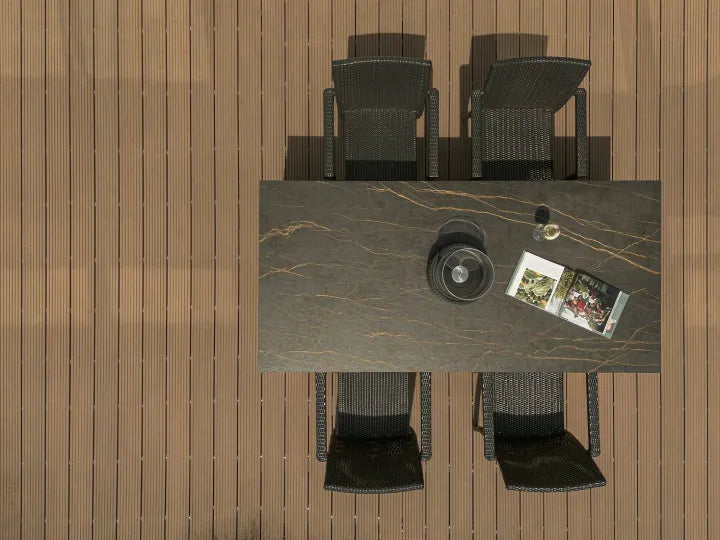


If you are researching modern surface materials, you may see terms such as porcelain slab, large-format porcelain tile, large porcelain slab, sintered stone, and marble-look slab. These terms are often used when buyers are looking for large-format surface materials for countertops, walls, bathrooms, floors, facades, furniture, and commercial projects.
But what exactly is a porcelain slab? Is it the same as regular porcelain tile? And how does it compare with sintered stone?
This guide explains porcelain slabs in a practical way for project buyers, contractors, designers, distributors, and sourcing teams. Instead of focusing only on the material name, we will look at application, slab size, thickness, finish, fabrication, and project requirements.
Quick Answer
A porcelain slab is a large-format ceramic surface panel made from refined mineral-based materials and fired at high temperature. Compared with standard porcelain tile, porcelain slabs are much larger and are often used for countertops, kitchen islands, bathroom walls, shower walls, interior cladding, flooring, facades, tabletops, furniture surfaces, and commercial interiors.
Porcelain slabs and sintered stone slabs are often used in similar project applications. In many markets, the terms may overlap. However, buyers should compare the actual product data, size, thickness, surface finish, fabrication requirements, and supplier specifications before making a decision.
Comparing porcelain slabs, sintered stone, quartz, granite, marble, or ceramic tile?
For a wider side-by-side view, see our sintered stone material comparison guide. You can also read our detailed guide on porcelain slab vs sintered stone if you are trying to understand the difference between the two terms.

Search Term Translation: What Buyers May Actually Be Looking For
Many buyers do not start by searching for “sintered stone.” They may search for a term they already know, such as porcelain slab, large-format porcelain tile, marble-look slab, porcelain countertop, or large bathroom wall tile.
The table below shows how these search terms often connect to real project needs.
| If buyers search for... | They may actually need... | Useful Funtek page |
|---|---|---|
| porcelain slab | Large-format slab material for countertops, walls, floors, furniture, or commercial projects | All Sintered Stone Slabs |
| large-format porcelain tile | Large wall, floor, bathroom, or cladding panel with fewer visible joints | Interior Walls |
| porcelain countertop | Slab material for kitchen worktops, islands, and vanity tops | Countertops & Kitchen Islands |
| marble-look slab | Large-format marble-style surface with lower maintenance than natural marble | Marble Look Sintered Stone |
| large bathroom wall tile | Large-format bathroom wall panel or shower wall surface | Bathroom Walls & Vanities |
| porcelain facade panel | Exterior cladding surface for building facades and outdoor projects | Outdoor Facades |
| porcelain tabletop | Durable slab surface for tables, furniture, counters, or commercial interiors | View Slab Styles |
What Is a Porcelain Slab?
A porcelain slab is a large-format ceramic surface panel made from refined mineral-based raw materials such as clay, feldspar, silica, and mineral pigments. These materials are pressed and fired at high temperature to form a dense, hard, and low-absorption surface.
In simple terms, porcelain slabs are a larger and more design-oriented version of porcelain tile. They are used when a project needs a cleaner visual surface, fewer joints, and larger continuous areas than standard tile can provide.
In the building materials industry, you may also see terms such as large-format porcelain slab, gauged porcelain tile panel, porcelain panel, large porcelain tile, or ceramic slab. The exact naming may vary by market, brand, and application.
Porcelain Slab vs Regular Porcelain Tile
The most obvious difference is size. Standard porcelain tiles are usually smaller and are commonly used for floors and walls. Porcelain slabs are much larger and can be used for more demanding visual and architectural surfaces.
This is why porcelain slabs are often considered for full-height shower walls, large bathroom walls, kitchen islands, feature walls, tabletops, reception desks, and commercial interior surfaces.
| Comparison Area | Regular Porcelain Tile | Porcelain Slab |
|---|---|---|
| Size | Usually smaller tile formats | Large-format panels for wide continuous surfaces |
| Visual effect | More visible grout lines | Fewer visible joints and stronger surface continuity |
| Applications | Mostly floors and walls | Countertops, walls, floors, facades, furniture, tables, vanities, and commercial interiors |
| Handling | Easier to move and install in smaller pieces | Requires more careful handling, cutting, packaging, and installation |
| Specification logic | Often selected by tile size, finish, and layout | Selected by slab size, thickness, finish, application, fabrication, and transport planning |

Common Uses of Porcelain Slabs
Porcelain slabs are not limited to kitchen countertops. They are used in many residential, hospitality, commercial, and architectural projects. The right application depends on slab thickness, surface finish, installation method, and the supplier’s technical guidance.
| Application | How it is used | Why buyers choose it |
|---|---|---|
| Kitchen countertops | Used as worktops, kitchen islands, and backsplash surfaces | Heat resistance, stain resistance, large-format appearance, and easy maintenance |
| Bathroom walls | Used for full-height bathroom walls, shower walls, and vanity backsplashes | Fewer grout lines, water resistance, cleaner appearance, and easier cleaning |
| Interior wall cladding | Used for TV walls, hotel lobby walls, elevator halls, and feature walls | Large-scale visual impact, fewer joints, and premium design continuity |
| Flooring | Used for residential floors, commercial floors, and large interior spaces | Durability, modern appearance, fewer visible grout lines, and easier maintenance |
| Exterior facades | Used as exterior wall cladding or facade panels in suitable systems | UV stability, low water absorption, lighter weight than some natural stones, and modern architectural appearance |
| Tables and furniture | Used for tabletops, cabinet fronts, furniture panels, bar tops, and reception desks | Durable decorative surface, stone-look design, and flexible project styling |
| Commercial interiors | Used in hotels, restaurants, retail stores, offices, airports, and public spaces | High-end look, durability, easy cleaning, and consistent material language across spaces |
For project applications, explore Funtek pages for countertops, bathroom walls, interior walls, and outdoor facades.
Common Porcelain Slab Sizes
Porcelain slabs are available in many formats. Exact sizes depend on the manufacturer and product line. In international project sourcing, buyers often compare sizes such as 900×1800 mm, 1200×2400 mm, 1200×2600 mm, and 1600×3200 mm.
| Common Size | Typical Use | Buyer Note |
|---|---|---|
| 900×1800 mm | Medium wall panels, bathroom walls, furniture surfaces | Useful when handling or site access is limited |
| 900×2600 mm | Tall bathroom walls, interior panels, shower wall applications | Helpful when vertical continuity matters |
| 1200×2400 mm | Walls, bathroom surfaces, commercial panels, interior cladding | A practical project size for many wall and surface applications |
| 1200×2600 mm | Bathroom walls, interior walls, taller wall panels | Can help reduce horizontal joints in some wall layouts |
| 1600×3200 mm | Kitchen islands, large walls, feature walls, countertops, facades, commercial interiors | Strong visual continuity, but requires careful handling, packaging, and installation planning |
Common Thicknesses and How to Choose
Thickness should be selected by application, not only by price. A thin slab can work well for vertical walls or decorative panels, while countertops, stair treads, outdoor kitchens, and high-use commercial surfaces may require thicker options.
| Thickness | Common Use | Buyer Note |
|---|---|---|
| 5.8 mm / 6 mm | Wall cladding, backsplashes, shower walls, furniture panels, overlay applications | Lightweight and suitable for vertical use when the substrate and installation method are correct |
| 9 mm | Walls, floors, furniture surfaces, selected project applications | Often used as a balanced option depending on project requirements |
| 12 mm | Countertops, vanity tops, kitchen islands, tables, work surfaces | A common project thickness for horizontal surfaces and many countertop-style applications |
| 15 mm | Countertops, stairs, furniture tops, commercial surfaces | Useful when more structure or a stronger visual edge is needed |
| 20 mm | High-use countertops, outdoor kitchens, stairs, heavy-duty commercial surfaces | Stronger profile and heavier weight; handling and installation planning become more important |
For Funtek sintered stone projects, common size options include 900×1800 mm, 900×2600 mm, 1200×2400 mm, 1200×2600 mm, and 1600×3200 mm. Common thickness options include 6 mm, 9 mm, 12 mm, 15 mm, and 20 mm, depending on application and project requirements.
Porcelain Slab vs Sintered Stone: What Is the Difference?
Porcelain slabs and sintered stone slabs are often used in similar applications: countertops, walls, bathrooms, floors, facades, furniture, and commercial interiors. This is why many buyers compare them during project sourcing.
The difference is not always simple. In some markets, “porcelain slab” is the more familiar term. In other markets, “sintered stone” is used to describe a high-density architectural surface material made through high-pressure and high-temperature processing. Some premium brands also use terms such as ultra-compact surface.
For buyers, the safest approach is not to choose only by name. It is better to compare product data, application suitability, slab size, thickness, finish, fabrication requirements, certification, packaging, and supplier experience.
| Comparison Area | Porcelain Slab | Sintered Stone | Buyer Takeaway |
|---|---|---|---|
| Market term | Familiar to buyers searching for large-format tile or slab surfaces | Often used in premium architectural surface and supplier language | Search terms may differ by country, market, and buyer background |
| Applications | Countertops, walls, floors, bathrooms, furniture, facades, and commercial interiors | Similar project applications, depending on product line and technical data | Compare by application, not by material name alone |
| Size and thickness | Often available in large formats and several thicknesses | Also available in large formats and project thickness options | Confirm exact size, thickness, and stock availability with the supplier |
| Fabrication | Requires professional cutting, handling, and installation | Also requires professional cutting, handling, and installation | Cutouts, edges, packaging, and transport should be planned early |
| Decision factor | Useful familiar search term for many buyers | Useful technical and project material term | Ask for technical data, application guidance, and project support |
For a more focused comparison, read our dedicated guide on porcelain slab vs sintered stone. If you want to compare more surface materials side by side, see our complete material comparison guide.
Benefits of Porcelain Slabs and Similar Large-Format Surfaces
Buyers often choose porcelain slabs and sintered stone slabs because they combine a stone-like appearance with practical surface performance. However, exact performance depends on product quality, thickness, surface finish, installation, and supplier specifications.
- Large-format visual continuity: Larger slabs can reduce visible joints and create a cleaner architectural look.
- Low water absorption: Useful for bathrooms, kitchens, shower walls, wet areas, and outdoor-related applications when correctly specified.
- Stain resistance: Helpful for kitchen surfaces, vanity tops, restaurant counters, and commercial spaces.
- Heat resistance: Important for kitchen countertops and outdoor kitchen surfaces, but buyers should still follow manufacturer care guidance.
- UV stability: Useful for outdoor facades, terraces, and sun-exposed areas when the product is suitable for exterior use.
- Design flexibility: Slabs can be produced in marble look, stone look, cement look, wood look, solid colors, and bookmatched visual directions.
- Lower maintenance than many natural stones: Porcelain and sintered surfaces usually do not require the same sealing logic as marble or some natural stones.
Limitations and Risks Buyers Should Know
A useful porcelain slab guide should not only list benefits. Large-format slabs also require careful planning. Many project problems come from poor handling, unclear drawings, wrong thickness selection, weak substrate preparation, or inexperienced installation.
| Risk or Limitation | Why it matters | What buyers should do |
|---|---|---|
| Professional installation required | Large slabs are harder to handle than small tiles | Work with experienced installers and fabricators |
| Cutouts and edges need planning | Sink cutouts, faucet holes, corners, and edge details can create stress points | Confirm drawings, cutout positions, edge profile, and fabrication method before ordering |
| Thickness must match application | A thin wall panel is not the same as a countertop slab | Choose thickness by application, use, support system, and supplier guidance |
| Handling and packaging matter | Large-format slabs can be damaged during lifting, storage, or shipping | Confirm A-frame, crate, edge protection, loading method, and shipping terms |
| Finish selection affects use | A glossy finish may not be right for every floor or wet area | Confirm slip resistance, cleaning needs, lighting, and design intent before selecting finish |
How to Choose by Project Application
The best choice depends on where the slab will be used. A hotel lobby wall, a bathroom shower wall, a kitchen island, a dining table, and an exterior facade do not have the same requirements.
| Project Type | What to focus on | Recommended Funtek direction |
|---|---|---|
| Kitchen countertops and islands | Thickness, edge detail, sink cutout, heat resistance, and daily use | Sintered Stone Countertops |
| Bathroom walls and vanities | Water resistance, fewer joints, easy cleaning, and vanity details | Bathroom Walls & Vanities |
| Interior feature walls | Slab size, pattern direction, bookmatching, lighting, and joint layout | Interior Walls |
| Outdoor facades | UV stability, installation system, thickness, weight, and weather exposure | Outdoor Facades |
| Tables and furniture | Panel weight, support structure, edge protection, surface finish, and design direction | All Sintered Stone Slabs |
| Commercial projects | Durability, maintenance, packaging, delivery, case references, and supplier communication | Case Studies |
What Buyers Should Confirm Before Ordering
Whether you call the material porcelain slab, large-format porcelain tile, or sintered stone, a good quotation depends on clear project information.
Before asking for a quote, prepare the following details:
- Preferred slab style or collection
- Application area: countertop, wall, floor, facade, furniture, vanity, table, or commercial surface
- Required slab size
- Required thickness
- Surface finish: matte, polished, glossy, textured, or project-specific finish
- Quantity or estimated square meters
- Cutting, sink cutout, edge, or fabrication details
- Destination country and port
- Preferred shipping term: FOB, CIF, DDP, or other requirement
- Project timeline and whether samples are needed
Preparing a bulk order?
Read our Sintered Stone Sourcing Guide to see what information to send before requesting a quotation from Funtek.
Useful Planning Tools
If you are already estimating slab quantity, area, weight, or logistics, these tools can help with early planning before quotation:
Recommended Funtek Pages
If you are comparing porcelain slabs, large-format porcelain tiles, or sintered stone slabs for a project, these pages can help you continue your research:
| Page | Best for |
|---|---|
| All Sintered Stone Slabs | Browsing available slab styles, colors, and visual directions |
| Sintered Stone Countertops | Kitchen worktops, islands, waterfall countertops, and vanity surfaces |
| Bathroom Walls & Vanities | Bathroom walls, shower walls, vanity tops, and hospitality bathroom projects |
| Interior Walls | Feature walls, lobby walls, reception walls, and commercial interiors |
| Outdoor Facades | Exterior cladding, facade panels, and outdoor architectural surfaces |
| Case Studies | Real project applications in kitchens, bathrooms, lobbies, resorts, and commercial spaces |
| Sourcing Guide | Understanding how to prepare project information before requesting a quotation |
Final Thoughts
A porcelain slab is more than a large tile. It is a large-format surface material used across countertops, walls, bathrooms, floors, facades, furniture, and commercial projects. For many buyers, it is also an entry point to understanding sintered stone and other high-performance architectural surface materials.
The most important point is this: do not choose only by material name. Compare the slab by application, size, thickness, finish, fabrication requirements, handling, packaging, technical data, and supplier support.
If you are comparing porcelain slabs, large-format porcelain tiles, or sintered stone slabs for a project, Funtek can help you review suitable options by application, slab size, thickness, finish, and shipping requirements.
Planning a Large-Format Slab Project?
Send us your preferred slab style, size, thickness, quantity, application, destination, and project requirements. Funtek can help review suitable sintered stone options for countertops, bathrooms, walls, floors, facades, furniture, and commercial interiors.