


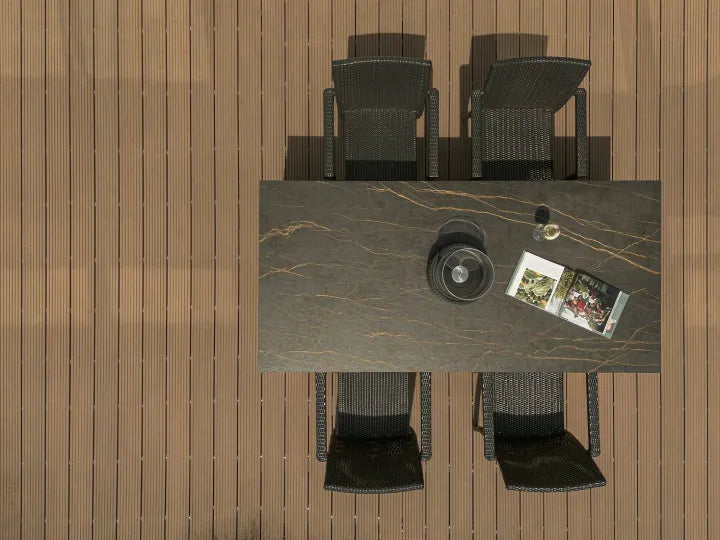


Una encimera de laboratorio resistente a productos químicos debe seleccionarse a partir de una matriz de exposición y un informe de ensayo, no de una frase que afirme que «resiste la mayoría de los productos químicos». Para la mayoría de los laboratorios, la piedra sinterizada verificada es el punto de partida más sólido, porque los datos publicados actuales combinan resistencia a ácidos y álcalis con una absorción de agua del 0–0.1%, resistencia a las manchas de Clase 5 y buenas prestaciones térmicas y frente al desgaste.
¿Cómo elegir una encimera de laboratorio resistente a productos químicos?
Enumere cada reactivo y limpiador con su concentración, temperatura, duración del derrame y método de limpieza. Compare esas condiciones con el informe del producto exacto. Especifique piedra sinterizada donde la matriz esté encimera; reserve el epoxi de laboratorio u otra superficie especializada únicamente para las zonas de alto riesgo no encimeras.
Empiece por un programa de exposición química
El nombre de un producto no describe el riesgo. El ácido clorhídrico al 3% no supone la misma exposición que el ácido clorhídrico al 18%; cinco gotas bajo un vidrio de reloj durante 24 horas no equivalen a una inmersión continua; y un derrame frío no es una reacción calentada. El programa siguiente contiene la información mínima que necesita un proveedor.
| Campo | Dato obligatorio del proyecto | Ejemplo | Pregunta de aprobación |
|---|---|---|---|
| Agente | Nombre químico o comercial completo | Ácido clorhídrico | ¿El informe ensaya la misma sustancia? |
| Concentración | Concentración de trabajo y máxima | 3% habitual; 18% máximo | ¿La concentración ensayada es igual o superior? |
| Temperatura | Temperatura del líquido y de la encimera | 23°C habitual; 60°C en caso de incidencia | ¿El ensayo se realizó a una temperatura representativa? |
| Tiempo de contacto | Limpieza normal y peor derrame desatendido | 10 minutos / 24 horas | ¿La duración del ensayo cubre el peor caso? |
| Frecuencia | Derrames por turno o semana | Diaria | ¿La exposición repetida podría causar cambios acumulativos? |
| Limpieza | Enjuague, neutralizante, detergente, desinfectante | Enjuague con agua seguido de detergente alcalino | ¿Se han comprobado todos los agentes de limpieza secundarios? |
| Aceptación | Cambio físico o de aspecto permitido | Sin ampollas, grietas, ablandamiento ni manchas visibles | ¿Se ha convertido la escala de clasificación en un criterio de aprobado o suspenso para el proyecto? |
Qué cubren realmente los datos actuales de superficies sinterizadas
El manual técnico de Dekton vigente ofrece una referencia útil del contenido que debe incluir una documentación completa de una superficie mineral. Conforme a EN ISO 10545-13, las familias de productos publicadas se clasifican como no dañadas para los agentes y concentraciones siguientes. Se trata de evidencias concretas, pero el proyecto debe obtener igualmente el informe del fabricante seleccionado.
| Agente de ensayo | Concentración publicada | Clase publicada | Resultado comunicado |
|---|---|---|---|
| Cloruro de amonio / productos de limpieza | Según el método de ensayo ISO | UA | Sin daños |
| Lejía / sales para piscina | Según el método de ensayo ISO | UA | Sin daños |
| Ácido clorhídrico | 3% v/v | ULA | Sin daños |
| Ácido cítrico | 100 g/L | ULA | Sin daños |
| Ácido clorhídrico | 18% v/v | UHA | Sin daños |
| Ácido láctico | 5% v/v | UHA | Sin daños |
| Hidróxido de potasio | 100 g/L | UHA | Sin daños |
El mismo conjunto de datos indica una absorción de agua por ebullición del 0–0.1%, una absorción de agua al vacío del 0.1% y resistencia a las manchas de Clase 5. En conjunto, estos resultados explican por qué la piedra sinterizada es la mejor encimera global resistente a productos químicos para laboratorios habituales de investigación, enseñanza, sanidad e industria.

Cómo cambia SEFA 3 la conversación de compra
SEFA 3-2020 es la norma norteamericana vigente para superficies de trabajo que figura en la Scientific Equipment and Furniture Association. El método SEFA publicado coloca cinco gotas —aproximadamente 0.25 cc— de una sustancia química no volátil sobre la superficie, las cubre con un vidrio de reloj de 25 mm y las deja durante 24 horas a 23 ± 2°C. Para sustancias volátiles, se mantiene una bola de algodón saturada sobre la zona de ensayo durante el mismo periodo de 24 horas.
Este detalle es importante. Un proveedor no debe afirmar «conforme con SEFA» sin mostrar el informe y la clasificación por reactivo. La propia SEFA mantiene una lista de productos de miembros con informes externos de resistencia química, que incluye productos cerámicos, epoxi y fenólicos. La presencia de varios materiales en esta lista confirma el enfoque correcto: evaluar el producto y la química exactos y, después, seleccionar el mejor sistema completo.
La norma de ensayo es el método. El informe es la evidencia. La matriz del proyecto es la decisión.
Utilice una escala de clasificación clara para los ensayos de muestras del proyecto
Cuando los datos del proveedor no cubran una exposición importante, ensaye el color y el acabado propuestos. No improvise después del ensayo una valoración imprecisa de «parece aceptable»; establezca la escala de clasificación antes de que lleguen las muestras.
| Clasificación | Estado observado después del lavado y 24 horas de recuperación | Decisión del proyecto |
|---|---|---|
| 0 | Sin cambios visibles ni táctiles bajo luz normal y rasante | Aprobado |
| 1 | Ligera marca temporal, visible únicamente desde un ángulo de observación conocido | Aprobación condicional para zonas técnicas no públicas |
| 2 | Mancha, cambio de brillo o de color claramente visibles; sin ablandamiento | No aprobado, salvo que el cliente acepte expresamente el aspecto |
| 3 | Hinchamiento, ablandamiento, formación de ampollas, grietas, picaduras o pérdida de material | No aprobado |
Registre el lote del producto, el color, el acabado, el lote del reactivo, la concentración, el volumen de la gota, el método de cobertura, el tiempo de exposición, la temperatura, el método de enjuague y las fotografías. Conserve la muestra ensayada como control del proyecto. Si el laboratorio trabaja habitualmente por encima de la temperatura ambiente, repita el ensayo específico del proyecto a la temperatura máxima segura acordada conforme a un protocolo de laboratorio competente.
El componente más débil puede invalidar el resultado de la placa
El sistema de encimera incluye más que la placa. Una sustancia química puede atravesar la cara sin dañarla y atacar después una junta de silicona, el adhesivo del borde del fregadero, una junta del grifo, un soporte de contrachapado visto o una penetración de instalaciones sin sellar. Por tanto, la documentación debe incluir:
- documentos de compatibilidad química del adhesivo y sellador de juntas;
- material del fregadero, bastidor de soporte y detalle del borde;
- detalle de esquina y terminación del zócalo vertical;
- método de sellado de las penetraciones de agua, gas y electricidad;
- instrucciones de limpieza y neutralización del conjunto completo;
- método de sustitución de los selladores fungibles.
Selección de material según la zona real del laboratorio
| Zona de exposición | Mejor material inicial | Criterio para escalar |
|---|---|---|
| Enseñanza general, biología, I+D y preparación de muestras | Piedra sinterizada de color uniforme | Solo se debe escalar si un reactivo indicado queda fuera del informe. |
| Tintes y manchas de color frecuentes | Piedra sinterizada con evidencia de resistencia a manchas de Clase 5 | Realice un ensayo de proyecto con el tinte y el ciclo de limpieza reales. |
| Base de campana extractora expuesta a ácidos o álcalis fuertes | Producto con evidencias coincidentes a nivel de reactivo | Utilice epoxi de laboratorio cuando su informe SEFA sea más sólido para ese programa exacto. |
| Línea húmeda de fregaderos | Piedra sinterizada con fregadero soportado o sistema de epoxi moldeado | Elija según el diseño de juntas, cantos y drenaje, no solo por la química de la cara. |
| Zona estéril de lavado con uniones soldadas | Grado adecuado de acero inoxidable y acabado de soldadura | Confirme los limpiadores con cloruros y el protocolo de control de la corrosión. |
Proceso de aprobación en siete pasos
- Emita un programa de exposición química por sala, con concentraciones y temperaturas.
- Designe como material predeterminado la piedra sinterizada de color uniforme.
- Recopile informes completos ISO y/o SEFA de los productos exactos ofrecidos.
- Clasifique cada reactivo como cubierto, cubierto condicionalmente o no ensayado.
- Realice ensayos controlados de muestras para todas las carencias críticas y los agentes de limpieza reales.
- Apruebe la placa, el adhesivo, el sellador, el fregadero y el soporte como un único sistema.
- Conserve las muestras firmadas y los informes en el manual de operaciones.
Cláusula copiable para la documentación de resistencia química
El proveedor de la encimera presentará una matriz de conformidad reactivo por reactivo respecto al programa químico del Propietario. Cada entrada identificará el producto, color, acabado, norma de ensayo, sustancia química, concentración, temperatura, duración de la exposición, método de limpieza y clasificación observada. No se aceptarán afirmaciones generales como «resistente a productos químicos» o «resiste la mayoría de los ácidos». Las exposiciones críticas no ensayadas se evaluarán sobre muestras representativas de la producción mediante un protocolo acordado antes de aprobar el material. Los selladores, adhesivos, encuentros con fregaderos y penetraciones de instalaciones se incluirán en la revisión del sistema.
Conclusión
La piedra sinterizada verificada es la mejor encimera de laboratorio resistente a productos químicos para la mayoría de las instalaciones. Aporta resistencia documentada a ácidos y álcalis y, al mismo tiempo, resuelve las necesidades cotidianas de baja absorción, eliminación de manchas, calor, arañazos e higiene. El epoxi especializado solo corresponde a zonas donde un informe químico coincidente o un sistema moldeado de mesa húmeda demuestre su necesidad.
Para consultar la clasificación general de materiales, lea por qué la piedra sinterizada es el mejor material para encimeras de laboratorio. Para los requisitos de fabricación, continúe con nuestra especificación para encimeras de laboratorio de piedra sinterizada.
Envíenos su matriz química
Funtek puede comparar sus reactivos, concentraciones, tiempos de exposición y planos de encimera con la documentación vigente de las placas antes de preparar muestras.