


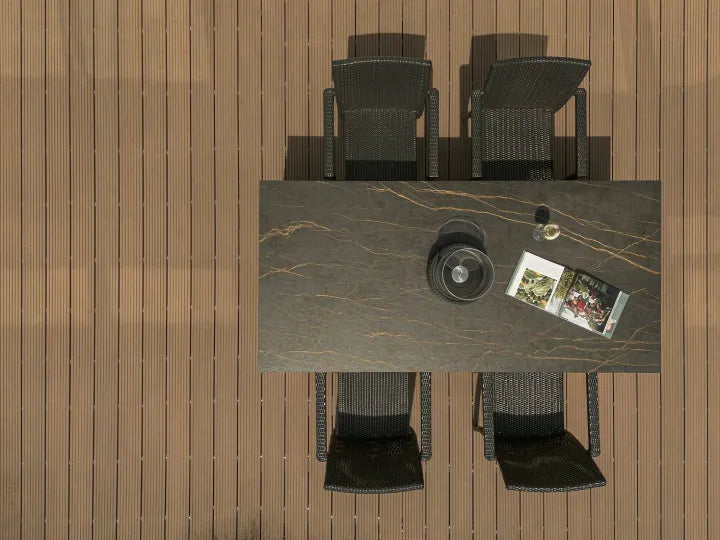


La piedra sinterizada puede utilizarse para encimeras de laboratorio y es el mejor material global para superficies de trabajo en la mayoría de los laboratorios modernos. Su idoneidad no es una opinión estética: los datos comerciales vigentes indican una absorción de agua del 0–0.1%, una resistencia media a la flexión de 59–67 N/mm², resistencia a las manchas de Clase 5, ausencia de daños por choque térmico y clasificaciones sin daños para los ácidos, álcalis y limpiadores indicados.
¿Puede utilizarse piedra sinterizada en encimeras de laboratorio?
Sí. Especifique piedra sinterizada ensayada y de color uniforme para enseñanza, I+D, preparación de muestras, apoyo clínico, investigación de materiales, instrumentación y mesas húmedas de uso general. Diseñe el soporte del mobiliario, las aberturas y el bastidor del fregadero como un único conjunto. Reserve el epoxi o el acero inoxidable únicamente para las zonas limitadas cuya química o proceso validado los requieran.
La especificación de prestaciones en cifras
Una documentación de laboratorio rigurosa debe incluir los métodos de ensayo, los valores medidos y la familia de productos representada. El manual técnico de Dekton vigente es una referencia pública útil:
| Propiedad | Norma de ensayo | Resultado publicado | Por qué es importante para el laboratorio |
|---|---|---|---|
| Absorción de agua por ebullición | EN ISO 10545-3 | 0–0.1% | Los derrames permanecen en la superficie; no se requiere sellador periódico. |
| Absorción de agua al vacío / porosidad abierta | EN ISO 10545-3 | 0.1% / aproximadamente 0.2% | Permite la limpieza húmeda y una baja absorción de líquidos a través del cuerpo de la placa. |
| Resistencia media a la flexión | EN ISO 10545-4 | 59–67 N/mm² | Proporciona la base para diseñar vanos soportados y aberturas. |
| Resistencia química | EN ISO 10545-13 | UA, ULA y UHA; clasificado sin daños | Documenta la resistencia a los limpiadores, ácidos y álcalis indicados. |
| Choque térmico | EN ISO 10545-9 | Aprobado / sin daños | Respalda las mesas situadas alrededor de equipos calientes y sometidas a cambios de temperatura. |
| Resistencia a las manchas | EN ISO 10545-14 | Clase 5 | Respalda la eliminación de residuos visibles, incluidos los agentes de tinción indicados. |
Utilice estos valores como nivel mínimo de calidad de las evidencias. Funtek presentará los documentos aplicables a la placa seleccionada; el diseñador deberá contrastarlos con el programa químico exacto del proyecto.
Dónde debe ser la piedra sinterizada la opción predeterminada
| Zona del laboratorio | Recomendación | Condición de diseño |
|---|---|---|
| Laboratorios docentes y universitarios | Especificar piedra sinterizada | Utilice colores claros uniformes, cantos suavizados y fregaderos con soporte. |
| I+D general y preparación de muestras | Especificar tras revisar los reactivos | Registre limpiadores, ácidos, álcalis, tintes y la duración del peor derrame. |
| Mesas para instrumentos y balanzas | Especificar piedra sinterizada | Proporcione un soporte continuo y nivelado; aísle por separado los equipos sensibles a las vibraciones. |
| Zonas de apoyo clínico y demostración | Especificar piedra sinterizada | Confirme los desinfectantes y utilice un acabado uniforme y sereno que permita apreciar visualmente la limpieza. |
| Base de campana extractora | Compare la placa sinterizada exacta con epoxi de laboratorio | Seleccione según evidencias por reactivo, no por la reputación general de la categoría. |
| Zona de lavado estéril validada | Utilice acero inoxidable cuando sea obligatorio un sistema metálico soldado | Confirme la aleación, el acabado de las soldaduras y el protocolo para limpiadores con cloruros. |
Seleccione el espesor como parte de un conjunto diseñado
Las placas sinterizadas se suministran habitualmente en varios espesores, pero no existe un «espesor de laboratorio» universal y responsable. El peso aumenta de forma lineal con el espesor. Utilizando el intervalo publicado de densidad aparente de 2.51–2.61 g/cm³, la masa solo de la placa es aproximadamente 15–16 kg/m² con 6 mm, 30–31 kg/m² con 12 mm y 50–52 kg/m² con 20 mm. Son valores calculados para planificación; las cargas finales de transporte y bastidor deben basarse en los datos del producto seleccionado.
| Enfoque del conjunto | Dónde funciona | Requisito de ingeniería |
|---|---|---|
| placa fina sobre sustrato diseñado | Tramos largos, perfil visual ligero y fabricación controlada en taller | Soporte completo, plano y químicamente adecuado; sustrato visto sellado; recrecido de cantos coordinado. |
| placa de clase 12 mm con soporte continuo del mobiliario | Numerosos tramos generales de laboratorio | Mobiliario nivelado, carriles de soporte alrededor de las aberturas y cargas puntuales de los equipos comprobadas. |
| Sistema de canto terminado con placa de clase 20 mm | Cantos vistos prémium y zonas públicas exigentes | Mayor carga permanente, manipulación correcta, refuerzo de recortes y capacidad adecuada del mobiliario. |
No apruebe la placa antes de disponer del programa de equipos. Las centrifugadoras, hornos, instrumentos analíticos y grandes baños de agua pueden generar cargas puntuales o requisitos de vibración independientes de la resistencia de la probeta del material.

La geometría de los recortes no es negociable
Las instrucciones vigentes de Cosentino para instalar encimeras exigen un radio interior mínimo de 5 mm para recortes generales, recomiendan 10 mm para aberturas tipo placa y 20 mm para aberturas de fregadero. También advierten contra la colocación de juntas en la zona de los recortes y exigen soporte continuo, sin discontinuidades, alrededor de las secciones debilitadas. Las aberturas para instalaciones de laboratorio deben seguir la misma lógica estructural.
- Defina la ubicación de agua, gas, vacío, electricidad y datos antes de fabricar.
- Realice las aberturas en taller con herramientas aprobadas y refrigeradas por agua.
- Taladre o frese primero un radio; no deje nunca una esquina interior cuadrada y afilada.
- Mantenga las juntas alejadas de los recortes de fregaderos y equipos siempre que sea posible.
- Suavice ligeramente los bordes superior e inferior de los orificios para eliminar aristas que concentren tensiones.
- Transporte las piezas fabricadas en vertical, en un bastidor rígido y con las aberturas arriostradas.
La piedra sinterizada rara vez falla en el centro de una placa correctamente soportada. El riesgo se concentra en esquinas cuadradas, bandas estrechas, carriles de fregadero sin apoyo, puntos altos del mobiliario y manipulación brusca.
El conjunto correcto de fregadero de laboratorio
Una cubeta llena puede ejercer una carga sostenida considerable. El fregadero debe apoyarse en un bastidor de acero o soporte diseñado fijado al mobiliario. Los soportes deben seguir accesibles después de la instalación; el sellador debe controlar el agua, no soportar la cubeta. Utilice un radio generoso en el recorte, refuerce los carriles delantero y trasero y compruebe que los orificios del grifo no creen una franja estrecha y frágil detrás del fregadero.
En un fregadero químico, presente conjuntamente la placa, la cubeta, el adhesivo, el sellador, el desagüe y el soporte. Si un solo componente no es compatible con la matriz química, el conjunto no queda aprobado.
Los colores uniformes son una mejor opción para el laboratorio
Los dibujos de mármol recargados corresponden a aplicaciones de hostelería, no a zonas técnicas de trabajo. Los colores uniformes blanco, gris claro y antracita facilitan ver residuos, derrames y el estado de limpieza; además, permiten juntas y piezas de reposición más consistentes. Seleccione el color en función de las muestras utilizadas en el laboratorio: emplee un contraste que haga visibles los polvos, materiales biológicos o componentes caídos.
Puntos de control de calidad de la fabricación
| Punto de control | Evidencia necesaria antes de liberar |
|---|---|
| Aprobación del material | Producto exacto, color uniforme, acabado, espesor, informes de ensayo y muestra de control conservada |
| Planos de taller | Despiece de placas, juntas, radios, carriles, bastidor del fregadero, zócalos verticales y penetraciones de instalaciones |
| Primera pieza | Maqueta a tamaño real del canto frontal, junta, salpicadero y esquina del fregadero |
| Inspección en fábrica | Sin esquinas interiores cuadradas, mellas, recortes sin pulir ni bandas estrechas sin soporte |
| Preparación de la obra | Mobiliario fijado, nivelado y con soporte continuo; instalaciones coordinadas |
| Entrega | Registro del lote, material de repuesto, lista de limpiadores aprobados y procedimiento de reparación o reposición |
Cláusula copiable para laboratorios con piedra sinterizada
Suministrar encimeras de laboratorio de piedra sinterizada de gran formato y color uniforme, procedentes de una familia de productos y un intervalo de lotes aprobados. Presentar documentación de prestaciones EN ISO 10545-3, -4, -9, -13 y -14, junto con una matriz de conformidad del proyecto reactivo por reactivo. Fabricar con herramientas húmedas aprobadas por el fabricante. Formar esquinas interiores redondeadas conforme a las instrucciones escritas de fabricación vigentes; situar las juntas lejos de las aberturas; proporcionar soporte continuo y nivelado y carriles reforzados alrededor de los recortes; soportar cada fregadero de forma independiente; y coordinar todas las penetraciones antes de la producción. La aprobación requiere una maqueta a tamaño real del canto, la junta, el zócalo vertical y la esquina del fregadero.
Conclusión
La piedra sinterizada es la mejor encimera global para laboratorios porque sus pocos riesgos son detalles de ingeniería previsibles, mientras que sus prestaciones superficiales cotidianas son excepcionales. Verifique la química, elija un color uniforme, diseñe correctamente el soporte y las aberturas, y controle la fabricación mediante una maqueta.
Empiece por la guía completa de materiales para encimeras de laboratorioy utilice después el proceso de aprobación de resistencia química para los reactivos exactos.
Prepare una especificación de laboratorio con piedra sinterizada
Envíe a Funtek el tipo de laboratorio, el programa químico, los planos de las mesas, los fregaderos, las aberturas y las cargas de los equipos.