


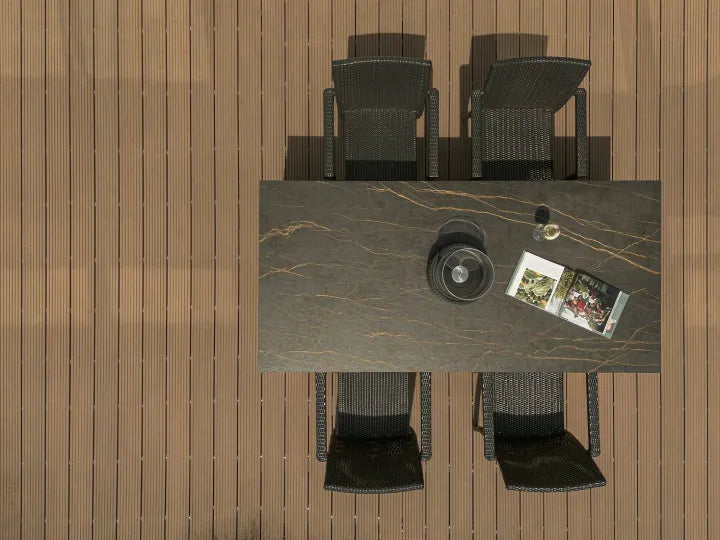


Réponse rapide
La pierre frittée d'aspect béton peut être spécifiée pour les tables à manger, les bureaux, les façades d'armoires et autres surfaces de meubles lorsque la dalle, l'épaisseur, le support, le cadre, le bord et le mode de fabrication sélectionnés sont approuvés comme un seul assemblage.
Commencez par présélectionner deux ou trois des huit surfaces Funtek actuelles ci-dessous. Envoyez ensuite les dimensions finies, le dessin du cadre ou du substrat, les positions de base, les détails des bords, les ouvertures, la quantité et la destination afin que 6, 9 ou 12 mm puissent être examinés pour le meuble lui-même. pièce, non choisie uniquement en fonction de l'épaisseur.
Parcourez les huit options de surfaces de meubles d’aspect béton
La collection actuelle Cement Look contient huit produits actifs dans les directions gris, grège, beige et abricot chaud. Chaque carte affiche en direct les noms de produits, les images, les formats et les épaisseurs. « Répertorié pour les meubles » désigne le dossier de produit actuel nommant l'utilisation des meubles ; « examen de l'assemblage » signifie qu'il reste un candidat visuel jusqu'à ce que Funtek confirme la construction terminée de la table ou du panneau.

Bellamoum Apricot Dalle en pierre frittée aspect ciment
Un microciment doux pour des programmes de meubles, des armoires et des intérieurs coordonnés et chaleureux.
- Parcours du meuble Répertorié pour les meubles sur mesure
- Formats 900 × 1800–1600 × 3200 mm
- Épaisseur 6 / 9 / 12 / 15 mm

New Lime Dalle de pierre frittée
Une option gris clair plus discrète avec une texture calcaire douce pour les acheteurs de meubles qui ne veulent pas d’un gris industriel mat.
- Parcours du meuble Candidat à la comparution ; examen de l'assemblage
- Formats 900 × 1800–1600 × 3200 mm
- Épaisseur 6 / 9 / 12 / 15 mm

Alps Grey Dalles en pierre frittée
Un gris semblable à du béton avec plus de profondeur tonale qu’une surface de ciment presque uniforme.
- Parcours du meuble Candidat à la comparution ; examen de l'assemblage
- Formats 900 × 1800–1600 × 3200 mm
- Épaisseur 6 / 9 / 12 / 15 mm

Cement Light Grey Dalle de pierre frittée
Un gris architectural maîtrisé pour les tables, bureaux ou plans de travail où l'aspect béton doit rester sobre.
- Parcours du meuble Répertorié sur le plan de travail ; assemblage de la table d'examen
- Formats 900 × 1800–1600 × 3200 mm
- Épaisseur 6 / 9 / 12 / 15 mm

Micro Cement Moderate Ash Dalles en pierre frittée
Une direction gris moyen à grain fin pour des palettes de tables industrielles et de meubles contract plus solides.
- Parcours du meuble Répertorié sur le plan de travail ; assemblage de la table d'examen
- Formats 900 × 1800–1600 × 3200 mm
- Épaisseur 6 / 9 / 12 / 15 mm

Dior Grey Dalle en pierre frittée aspect ciment
Un gris plus chaud qui peut faire le pont entre les cadres en métal noir, les menuiseries en chêne et les revêtements neutres.
- Parcours du meuble Candidat à la comparution ; examen de l'assemblage
- Formats 900 × 1800–1600 × 3200 mm
- Épaisseur 6 / 9 / 12 / 15 mm

Dior Beige Dalle en pierre frittée aspect ciment
Une direction ciment crémeuse et à faible contraste pour des meubles résidentiels, d'hôtellerie ou de vente au détail plus doux.
- Parcours du meuble Candidat à la comparution ; examen de l'assemblage
- Formats 900 × 1800–1600 × 3200 mm
- Épaisseur 6 / 9 / 12 / 15 mm

Belamo Micro-Cement Beige Dalle de pierre frittée
Un aspect chaleureux en microciment déjà positionné pour les surfaces de meubles ainsi que pour les murs intérieurs coordonnés.
- Parcours du meuble Répertorié pour les surfaces de meubles
- Formats 900 × 1800–1600 × 3200 mm
- Épaisseur 6 / 9 / 12 / 15 mm
Utilisez le collection complète Look Ciment lorsque vous avez besoin de la dernière disponibilité du produit au-delà de cet instantané d'article.
Associez la surface à la collection de meubles
Un aspect béton n’est pas une couleur. Les gris froids et moyens donnent aux cadres en acier noir une lecture industrielle plus nette ; Le grège et le beige se marient plus facilement avec les tissus d'ameublement en chêne, bronze, crème et un éclairage chaleureux. Un trouble à faible contraste est plus facile à répéter sur une gamme de meubles calmes, tandis qu'un mouvement plus fort doit être délibérément placé sur des dessus, des feuilles ou des panneaux adjacents appariés.
Gamme contractuelle silencieuse
Sélectionnez une surface mate ou à grain fin à faible contraste, puis approuvez un échantillon physique à côté du revêtement du cadre et du rembourrage.
Table à manger tendance
Utilisez davantage de mouvement tonal uniquement lorsque la disposition entièrement supérieure fait partie de la conception. Approuver la face de la dalle et l’orientation de coupe avant la production.
Ensemble de meubles coordonné
Verrouillez un code produit, une référence de finition et d’approbation sur les tables, bureaux, façades d’armoires et commandes de réapprovisionnement.
Choisissez 6, 9 ou 12 mm comme itinéraire provisoire
L'épaisseur est un itinéraire de départ et non une spécification de tableau complète. Le programme de mobilier actuel de Funtek utilise 6 mm pour la construction de panneaux soutenus ou collés, 9 mm pour les composants de table avec une disposition de support confirmée, et 12 mm pour les itinéraires sur table où la position de base, la portée, les ouvertures, la construction des bords et le poids total sont examinés ensemble.
| Épaisseur | Itinéraire provisoire du mobilier | Qu'est-ce qui contrôle la décision finale | Ne présumez pas |
|---|---|---|---|
| 6 mm | Panneaux collés, façades d'armoires soutenues, revêtement ou construction composite conçue | Substrat, adhésif, cadre, constitution des bords, taille du panneau et manipulation | Que la dalle fonctionne comme un dessus à portée libre |
| 9 mm | Composants de table, bureaux et panneaux de meubles pris en charge | Dimensions finies, grille de support, position de base, ouvertures, bord et transport | Cette épaisseur définit à elle seule la portée ou la charge admissible |
| 12 mm | Itinéraires de restauration, de réunion et de table à usage intensif | Rigidité du cadre, zones non supportées, fixation, exposition des bords et poids de l'assemblage fini | Que chaque grand plateau puisse utiliser le même cadre |
Les huit produits actuels répertorient également des variantes 15 mm. Traitez 15 mm comme une autre spécification disponible à examiner, et non comme une mise à niveau universelle. Le complet page de fourniture de meubles et de tables couvre le périmètre plus large du projet.
Concevoir le support et le cadre de table comme un seul assemblage
La dalle, le support, le cadre et la connexion de base créent un seul chemin de charge. Un support collé peut répartir le support et augmenter l'épaisseur des bords ; une charpente en métal ou en bois contrôle la rigidité et transfère les charges à la base ; les détails de fixation doivent empêcher le dessus de bouger de manière indépendante. La construction correcte change en fonction de la taille du plateau, de la forme, de la position de la base, des extensions, des découpes, de l'utilisation intérieure ou extérieure et de la manière dont la pièce finie sera transportée.

Un plateau de table ne peut pas être approuvé uniquement à partir de l’épaisseur de la dalle ; le cadre de support, le support, la fixation, la position de base et l'itinéraire de manipulation déterminent le comportement de l'ensemble complet.
Verrouiller le profil de bord, la découpe et la disposition des grandes tables
Le bord visible change à la fois l'apparence et la fabrication. Un bord exposé droit maintient la dalle visuellement mince ; un traitement allégé ou micro-rayon réduit un arête vive ; un bord en onglet ou rapporté crée un effet de bloc de béton plus épais mais ajoute des travaux de joints, de support et de manipulation. Enregistrez le bord prévu, le rayon du coin, le jeu du dessous et le retrait du cadre sur le dessin d'atelier.

Pour la découpe, envoyer un dessin coté avec chaque trou, encoche, coin intérieur, passe-câble et fixation de base. Le fabricant doit faire correspondre l'outil et les paramètres à la dalle exacte et prouver le tracé sur une pièce d'essai avant la production en série. Utilisez le Funtek manuel de fabrication et d'installation pour un transfert plus profond.
Pour un grand plateau, mappez la pièce finie à l’intérieur de la dalle utilisable, et pas seulement le format nominal. Incluez la coupe des bords, la direction du motif, les découpes, les rallonges, les dégagements de manipulation et l'orientation de l'emballage. La disponibilité du grand format peut réduire les joints, mais le plus grand plateau monobloc possible n'est pas automatiquement l'assemblage le plus sûr.
Calculer le poids avant que le cadre et l'emballage ne soient définitifs
Utilisez le poids de la dalle uniquement suffisamment tôt pour influencer la base, le cadre, le plan de levage et l'emballage d'exportation. Le calculateur de planification de Funtek utilise une densité typique de 2,450 kg/m³, l'estimation est donc largeur × longueur × épaisseur × 2,450. Le produit réel, le lot et l’assemblage fini peuvent différer.
| Épaisseur | Poids prévu par m² | 1600 × 3200 mm poids de la dalle uniquement | Implication du mobilier |
|---|---|---|---|
| 6 mm | 14.7 kg/m² | 75.3 kg | Ajoutez un support, un cadre et du matériel avant de sélectionner la capacité de levage et de base. |
| 9 mm | 22.1 kg/m² | 112.9 kg | Vérifier la manipulation en atelier, la rigidité du cadre et la séquence des composants emballés |
| 12 mm | 29.4 kg/m² | 150.5 kg | Base de coordonnées, voie d'accès, méthode d'assemblage et protection des exportations |
Il s’agit uniquement d’estimations de planification pour la pierre frittée. Ils excluent le support, l’adhésif, la construction des bords, le cadre, la quincaillerie et l’emballage. Entrez la taille réelle de coupe dans le calculateur de poids de pierre frittée, puis obtenez les poids des composants finis et emballés avant l'approbation de la production ou de l'expédition.
Approuver la cohérence des couleurs, les échantillons et la production répétée
Un petit échantillon approuve le ton, la finition et le toucher ; il ne montre pas la répartition complète de l'opacification ou du mouvement sur une longue table. Pour les pièces uniques, examinez l'échantillon physique et, lorsque le placement est important, une image de la dalle entière ou la face de la dalle sélectionnée. Pour les meubles répétés, verrouillez le code produit, la finition, l'échantillon approuvé, la révision du dessin et la quantité sous le même enregistrement de commande.

- Exemple d'approbation : comparez la surface physique à côté du revêtement du cadre, du bois, du rembourrage et de l'éclairage final.
- Approbation totale : examiner la direction, le mouvement et la relation entre les dessus appariés, les panneaux adjacents ou les rallonges.
- Approbation de production : enregistrer le produit, la finition, l'épaisseur, les pièces, les tolérances, les bords, les limites du support/cadre, les marques d'emballage et les critères d'inspection.
- Réapprovisionnement : faire référence à la commande approuvée et demander un nouvel échantillon de comparaison lorsqu'un lot ultérieur doit se trouver à côté de la première production.
Envoyez un dossier OEM ou une commande de meubles en gros
Funtek fournit des dalles, des panneaux basés sur des dessins, des composants en pierre traitée et des programmes de surface OEM coordonnés. Les cadres, les bases, la quincaillerie et l'assemblage final du mobilier restent en dehors du champ d'application standard de la fourniture des dalles, sauf indication contraire dans le devis.
| Saisir | Quoi envoyer | Ce qu'il permet à Funtek d'examiner |
|---|---|---|
| Liste restreinte des surfaces | Deux ou trois noms de produits, direction de finition et statut d'échantillon approuvé | Disponibilité actuelle, exemple d'itinéraire et référence de couleur |
| Dessins de meubles | Dimensions finies, forme, bords, ouvertures, cadre/substrat, positions de base et numéros de pièces | Format de dalle, épaisseur provisoire et limite de traitement |
| Quantité de programme | Pièces par modèle, couleur et expédition ; plan de prototype et de commande répétée | Planification des lots, séquence de découpe et enregistrement du réapprovisionnement |
| Portée commerciale | Dalles entières, panneaux découpés ou composants transformés ; inspection et emballage requis | Limite du devis et répartition des responsabilités |
| Livraison | Destination, horaire, limites de déchargement et séquence d'étiquetage | Emballage d'exportation, plan de chargement et faisabilité de livraison |
Pour des intérieurs coordonnés d'hôtellerie, de bureau ou de vente au détail, continuez avec le guide des panneaux muraux commerciaux d'aspect béton les ensembles de meubles et de murs partagent donc un calendrier de finition contrôlé.
L'essentiel
Une bonne spécification de mobilier d'aspect béton commence par une véritable liste de produits, puis prouve que la surface choisie peut s'adapter à la construction de la table ou des panneaux. Sélectionnez deux ou trois des huit couleurs actuelles, définissez un itinéraire 6/9/12 mm et envoyez le dessin, le concept de cadre/support, le bord, ouvertures, quantité et destination pour l’examen de l’échantillon et de la production.
Continuez à explorer les surfaces d’aspect ciment
Utilisez le prochain guide qui correspond à la décision que votre projet doit encore prendre.
- Panneaux muraux commerciaux aspect béton — Coordonnez les surfaces des meubles avec les ensembles de panneaux muraux commerciaux.
- plans de travail aspect béton — Comparez les huit mêmes dalles pour plans de travail et îlots.
- Collection complète de dalles d'aspect ciment — Parcourez les huit pages de produits actuelles.
Demandez des échantillons de meubles d’aspect béton et un devis
Envoyez les produits préférés, les dessins de meubles, le sens de l'épaisseur, le concept de support ou de cadre, la quantité, la portée du traitement et la destination. Funtek peut examiner les échantillons actuels, les formats de dalles et l'option d’approvisionnement pour votre programme de tables ou de meubles.