


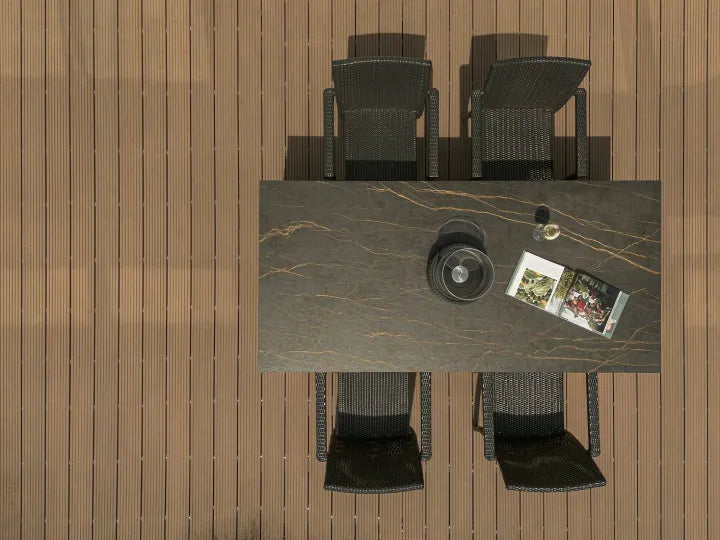


Respuesta rápida
Respuesta rápida: ¿conviene elegir una encimera de travertino?
Elija una encimera de travertino cuando desee un movimiento cálido y direccional de la piedra y pueda aprobar la placa completa, el acabado, la pautas de cuidado y la fabricación antes de cortarla. Para una cocina ocupada, un programa de baño o un pedido comercial repetido, compare el travertino natural con la piedra sinterizada con apariencia de travertino, luego seleccione según la tolerancia de mantenimiento, el control del patrón, la repetición del proyecto y la presupuesto completa de la instalación.
Cuatro acabados de travertino para su selección
La colección actual de piedra sinterizada con apariencia de travertino de Funtek contiene cuatro direcciones de placa activas. Primero compare el movimiento y el tono, luego haga coincidir la superficie elegida con el dibujo de la encimera, la construcción del borde, los recortes, el soporte y el fabricante.

Tranquila dirección marfil-beige.
Placa de piedra sinterizada Roman Cave Stone Beige
Las capas de marfil, beige cálido y gris pálido forman un tranquilo movimiento vertical de piedra de cueva. Funciona con muebles de roble claro, blanquecino e interiores de bajo contraste.
- Formatos actuales: 900 × 1800 a 1600 × 3200 mm
- Variantes de espesor actuales: 6, 9, 12 y 15 mm

Dirección de crema tibia
Piedra sinterizada Versace Beige
Una superficie suave en color crema y beige para composiciones de mueble de lavabo tranquilas y baños de hostelería. Combínalo con nogal, roble pálido, bronce o gris cálido.
- Formatos actuales: 900 × 1800 a 1600 × 3200 mm
- Variantes de espesor actuales: 6, 9, 12 y 15 mm

Dirección gris plateada fría
Placas de piedra sinterizada Caesar Silver Travertine
Las bandas en capas de color gris plateado crean un ritmo más fuerte para las paletas de carbón, acero inoxidable, roble ahumado y hormigón fresco.
- Formatos actuales: 900 × 1800 a 1600 × 3200 mm
- Variantes de espesor actuales: 6, 9, 12 y 15 mm

Declaración dirección rojo terracota
Placa de piedra sinterizada Italian Red Travertine
Una base de color rojo terracota y un movimiento mineral convierten el encimera en una superficie focal para bares, encimeras de recepción, hoteles boutique e islas residenciales.
- Formatos actuales: 900 × 1800 a 1600 × 3200 mm
- Variantes de espesor actuales: 6, 9, 12 y 15 mm
Explore la colección completa de piedras sinterizadas con apariencia de travertino.

¿Es el travertino adecuado para una encimera?
Sí, cuando la superficie seleccionada coincida con el uso, limpieza y fabricación del encimera. La decisión sobre el uso diario se toma según las instrucciones de la placa, el acabado, el borde, el soporte y el cuidado, no solo por el nombre del color.
El travertino natural es una piedra calcárea. El Guía de atención de Natural Stone Institute explica que las piedras de carbonato de calcio son sensibles a las soluciones ácidas y recomienda limpiadores suaves y no ácidos. También señala que un sellador impregnante mejora la resistencia a las manchas pero no hace que la piedra natural sea resistente a las manchas. Esa ruta es adecuada para un comprador que valora la variación natural y acepta el cuidado y la pátina específicos de la piedra.
La comparación entre travertino y piedra sinterizada profundiza en la elección entre travertino natural y piedra sinterizada con aspecto de travertino, sin tratarlos como un mismo material.
Un recorrido de piedra sinterizada con aspecto de travertino confiere al proyecto un diseño con nombre, con variantes de formato y espesor enumeradas. Es útil cuando el comprador quiere discutir la dirección completa, las superficies coordinadas y las cantidades repetidas frente a un nombre de producto definido. La pregunta práctica es qué ruta ofrece la apariencia, las expectativas de mantenimiento, la responsabilidad de fabricación y el control de suministro correctos para este proyecto.
Ventajas e inconvenientes de una encimera de travertino
La mayor ventaja es la calidez visual con movimiento direccional. El principal riesgo es aprobar el color y dejar sin resolver el cuidado, la apariencia del rostro y la fabricación.
| Decisión | travertino natural | Piedra sinterizada aspecto travertino | Lo que debe decidir el comprador |
|---|---|---|---|
| Carácter superficial | Cada placa tiene poros naturales, relleno y variación mineral. | La apariencia está ligada a un diseño manufacturado con nombre. | ¿Carácter natural único o una dirección de diseño definida para un programa más amplio? |
| cuidado de rutina | Utilice limpieza no ácida; cualquier sellador es resistente a las manchas, no a prueba de manchas. | Siga la hoja de cuidados del proveedor para el producto seleccionado y finalice. | ¿Cuánto cuidado específico de las piedras mantendrán los usuarios? |
| Acabado | Las opciones con relleno, sin relleno, pulido y pulido cambian la apariencia y el mantenimiento. | La cara y el acabado publicados determinan el resultado aprobado. | Apruebe una muestra real, no una etiqueta genérica. |
| Repetir proyectos | Los bloques y placas naturales varían; la coincidencia posterior puede resultar difícil. | Un producto nombrado organiza muestras y cantidades posteriores, sujeto a disponibilidad. | ¿Es este un encimera o un programa repetido de hospitalidad o de unidades múltiples? |
| Fabricación | El fabricante evalúa la piedra seleccionada, el relleno, el soporte, los bordes y los recortes. | El fabricante acepta la placa seleccionada, espesor, soporte, cantos y recortes. | Obtenga la aceptación del fabricante antes de cortar. |
Coste de una encimera de travertino: compare el mismo alcance
El coste de la encimera de travertino no se puede reducir a una tasa de mercado confiable porque las cifras publicadas combinan baldosas, material de placa, fabricación e instalación completa. Dos referencias de planificación actuales en EE. UU. ilustran el problema del alcance: la guía de instalación de travertino de Angi enumera los proyectos de encimeras de cocina en US$1,500–US$4,000, mientras que su resumen de materiales para encimeras ofrece una amplia gama de US$25–US$100 rango de travertino por pie cuadrado. Estos son ejemplos de mercado, no una presupuesto de Funtek.
Consulte el alcance y la fecha en el guía de costes de instalación de travertino y comparación de costes de material de encimera.
Compare proveedores solo después de que cada presupuesto utilice los mismos dibujos, forma del material, detalles de fabricación, punto de entrega e inclusiones de instalación.
- Suministro de material o placa: producto exacto o placa natural seleccionada, dimensiones completas, espesor, acabado, número de caras, cantidad y embalaje.
- Fabricación: dibujos medidos, diseño de corte, rendimiento, costuras, construcción de bordes, cortes de fregadero y estufa, refuerzo y responsabilidad por rotura.
- Entrega e instalación: transporte, descarga, acceso al sitio, transporte, plantilla, ajuste, soporte, juntas del sitio, impuestos y responsabilidad de garantía.
Las islas largas, los extremos de las cascadas, los salpicaderos de altura completa y una fuerte combinación direccional pueden requerir más área de placa de lo que sugieren los metros cuadrados netos. Utilice el Funtek calculadora de área y placa para una verificación temprana de la cantidad, luego solicite al fabricante que confirme el diseño y el rendimiento utilizable.
Decisiones para encimeras de cocina, baño y espacios comerciales
La mejor dirección del travertino cambia según la exposición, la paleta de la habitación y la cantidad de superficies que el proyecto necesita repetir.
Encimeras e islas de cocina
Las cocinas son las que ejercen mayor presión sobre el cuidado porque los cítricos, el vino, el café, los aceites, el calor, los recortes y la limpieza frecuente se encuentran en una misma superficie. Decida la dirección del movimiento a lo largo del borde largo, el salpicadero y el retorno de la cascada.
Encimeras para mueble de lavabo
Las cálidas direcciones beige y crema crean una tranquila composición de mueble de lavabo. Tenga en cuenta el agua estancada, los cosméticos, los productos de limpieza, los recortes de los lavabos, los detalles de los bordes y la unión con las superficies de las paredes.
Barras y encimeras comerciales
Los proyectos comerciales necesitan una identidad visual clara y un registro de aprobación repetible. Registre la discusión sobre el producto, cara, orientación, muestra, formato, espesor y cantidad.
Para una planificación detallada de la cocina, continúe con el página del proyecto de encimeras de piedra sinterizada. Para islas, utilice el Guía de islas de cocina con apariencia de piedra natural para coordinar patrones, mapeo de placas y decisiones de bordes.
Cómo aprobar la placa, el acabado, el canto y el despiece
Aprobar la superficie visible y el plan de fabricación en una sola decisión. Una pequeña muestra ayuda con el color y la textura, pero no puede mostrar el movimiento completo, la ubicación de las costuras o si las piezas requeridas encajan en la placa.
- Seleccione el rol de la sala. Decida si el encimera es un fondo cálido y tranquilo, un elemento lineal fresco o un punto focal de color.
- Revise la cara completa de la placa. Verifique la dirección del movimiento, la escala, el contraste y cómo deben relacionarse las piezas contiguas.
- Pruebe una muestra física. Véalo junto a muebles, pisos, colores de paredes y herrajes bajo la luz del proyecto.
- Bloquear el producto y terminar. Registrar el nombre exacto del producto o referencia de placa natural, cara, dimensiones, espesor y acabado.
- Obtenga la aceptación del fabricante. Proporcionar dibujos, piezas más largas, recortes, bordes, voladizos, soportes, salpicaderos y retornos en cascada.
- Aprobar un diseño de corte. Confirme las uniones, la dirección, el rendimiento, el riesgo de extralosa y la responsabilidad antes de cortar.
- Compare una presupuesto detallada. Mantenga visibles el material, la fabricación, el transporte, la instalación, los impuestos y las exclusiones.
El espesor trabaja con el soporte, la construcción de los bordes, los recortes y el sistema del fabricante. Utilice Funtek guía de espesor de encimera después de elegir la dirección de la superficie.
Conclusión
Elija una encimera de travertino según la experiencia del proyecto terminado. Seleccione el movimiento y el tono, haga coincidir la ruta del material con las necesidades de mantenimiento y suministro repetido, luego apruebe la cara completa, la muestra, el diseño de corte y la presupuesto detallada. Las cuatro direcciones actuales de piedra sinterizada con apariencia de travertino de Funtek ofrecen un conjunto inicial compacto para proyectos de color beige marfil, crema cálido, plata fría y rojo llamativo.
Seleccione una línea estética para su encimera de travertino
Envíe la solicitud, dibujos, dimensiones terminadas, cantidad, dirección de color preferida, espesor, destino y cronograma. Funtek comparará la solicitud con las placas de piedra sinterizada con apariencia de travertino actuales, muestras y una presupuesto del proyecto.