


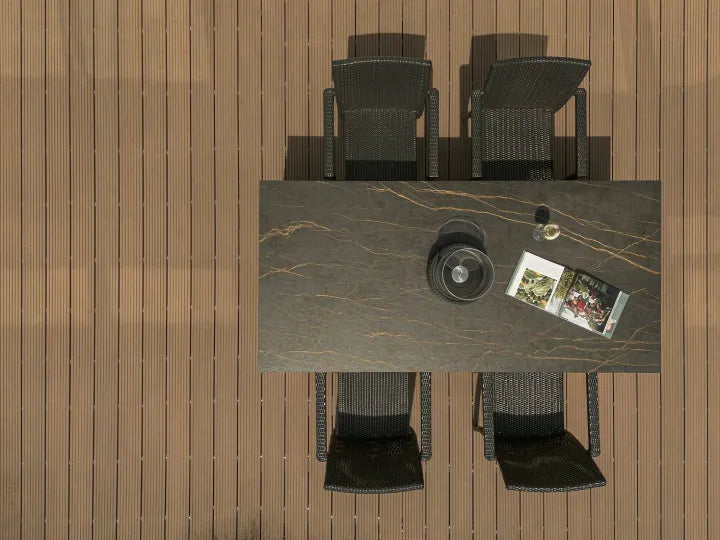


La búsqueda de piedra sinterizada en Sudáfrica suele conducir a catálogos de placas, salas de exposición y fabricantes de encimeras locales. Esto es útil para verificar el stock, pero la decisión del proyecto aún depende de la placa exacta, el acabado, el alcance de la fabricación, la responsabilidad de la instalación y si el material se compra localmente o se importa para un pedido mayor.
¿Se puede comprar piedra sinterizada en Sudáfrica?
Sí. La piedra sinterizada está disponible en Sudáfrica a través de distribuidores de placas, fabricantes de cocinas y piedra, salas de exposición especializadas en superficies e importadores de proyectos. El stock local suele ser la opción más sencilla para una cocina o una renovación urgente. El suministro directo de fábrica se vuelve más relevante cuando un distribuidor, desarrollador o contratista necesita una gama de diseños más amplia, repetir lotes o cantidades de proyecto y ya cuenta con un fabricante local calificado.
Tres formas de obtener piedra sinterizada en Sudáfrica
La mejor ruta de compra depende del tamaño del pedido, el momento, la disponibilidad del diseño y quién fabricará las placas. Un showroom local, un distribuidor de planchón y un proveedor directo de fábrica resuelven diferentes partes del proyecto.
| Ruta de compra | Más adecuado para | Ventaja principal | Confirmar antes de realizar el pedido |
|---|---|---|---|
| Sala de exposición o fabricante local | Una cocina, mueble de lavabo o pequeña renovación. | Coordinación más rápida de muestras, plantillas e instalación | Responsabilidad real de existencias, lotes, inclusiones y mano de obra. |
| Distribuidor de planchones en Sudáfrica | Diseñadores, constructores y proyectos multihabitación. | Más opciones de placas con acceso al almacén local | Cantidad reservada, acabado, consistencia del lote y fabricante aprobado |
| Suministro de proyectos directo de fábrica | Desarrolladores, distribuidores y pedidos repetidos o a escala de contenedores | Control más amplio de diseño y formato. | MOQ, aprobación de muestras, inspección, embalaje, flete, aduanas y fabricación local |
Búsqueda por área de servicio así como por material. Un proveedor visible en Johannesburgo o Pretoria no podrá instalar en Ciudad del Cabo; un fabricante de Western Cape no puede prestar servicios en Durban o en un sitio de proyecto remoto. Pregunte quién sostiene las placas, quién las modela y corta, quién transporta las piezas terminadas y quién firma la instalación.
¿Es la piedra sinterizada una buena opción para proyectos en Sudáfrica?
La piedra sinterizada puede adaptarse a cocinas, muebles de lavabo de baño, revestimientos de paredes, muebles y aplicaciones exteriores seleccionadas cuando se aprueba el producto exacto y el sistema de instalación. Su superficie de baja porosidad, su tolerancia al calor y sus opciones UV-estables son útiles para la vida en interiores y exteriores, áreas de entretenimiento e interiores comerciales de alto uso.
El nombre de la categoría no garantiza todas las afirmaciones de rendimiento. Solicite la ficha técnica para conocer el SKU y el acabado exactos, luego emparéjela con la aplicación. Una encimera, una fachada ventilada, un suelo y un marco de chimenea necesitan diferentes controles de espesor, soporte, deslizamiento, anclaje o detalle térmico.
Para una cocina, use el página de especificaciones de encimera de piedra sinterizada para definir el espesor, soporte, cortes, bordes y disposición de la placa completa antes de la fabricación.
¿Cuánto cuesta la piedra sinterizada en Sudáfrica?
No existe una cifra nacional fiable de rands por metro cuadrado para toda la categoría. Un precio de solo placa, un precio de encimera fabricada y un precio de proyecto completamente instalado son productos diferentes. La marca, el diseño, el espesor, el rendimiento de la placa, la construcción de los bordes, los recortes, el transporte, el acceso al sitio y el riesgo de rotura pueden cambiar sustancialmente el total.
Un presupuesto útil separa al menos lo siguiente:
- suministro de planchón, cantidad, lote reservado y situación del IVA;
- plantillas, cortes, ingletes, perfiles de borde, recortes para fregaderos y encimeras;
- entrega, elevación, acceso al sitio e instalación;
- soportes, sustratos, adhesivos, soportes o fijación mecánica cuando así se requiera; y
- Remakes, roturas, exclusiones y garantía de mano de obra.
el general guía de precios de piedra sinterizada explica los factores que influyen en el coste de instalación y cómo el rendimiento de la placa afecta un presupuesto. Úselo como método de comparación, no como una promesa de un precio de venta en Sudáfrica.

No compare una oferta de placa únicamente con un presupuesto fabricada e instalada; Alinee primero el IVA, los recortes, los bordes, el transporte, la instalación y la responsabilidad por rotura.
Cómo comparar presupuestos locales y directos de fábrica
Normalizar ambas ofertas al mismo alcance del proyecto. El suministro local puede reducir el tiempo de entrega y simplificar las renovaciones. El suministro directo de fábrica puede ampliar las opciones de color, formato y lotes para proyectos más grandes, pero el comprador debe agregar la inspección, el embalaje protector, el transporte marítimo, las aduanas, el transporte interior y la fabricación local.
Para un pedido importado, compare el paquete del proyecto desembarcado en lugar del precio de la placa en fábrica. Funtek proceso de obtención de piedra sinterizada directo de fábrica explica la aprobación de muestras, los detalles del pedido y las puertas de control de calidad, mientras que el guía global de envío de placas Cubre la información necesaria para el embalaje y la planificación del transporte.
Cómo elegir un fabricante de piedra sinterizada
Elija un fabricante que tenga capacidad demostrada de cerámica de gran formato o placas sinterizadas, no solo experiencia general en piedra. Las placas delgadas y duras necesitan métodos adecuados de manipulación, corte, soporte y detalle de bordes. Solicite ver trabajos completados comparables y acuerde quién es el propietario del dibujo final antes de cortar cualquier placa.
- Verificar equipo y manejo. Confirmar bastidores de placa, marcos de elevación, equipos de corte y transporte seguro para las dimensiones y espesores seleccionados.
- Aprobar el dibujo. Bloquee las costuras, la dirección del patrón, los recortes, los radios de las esquinas, la construcción de los bordes, los soportes y los voladizos.
- Inspeccionar la placa completa. Las muestras pequeñas muestran color y acabado, pero no la ubicación de las vetas, la variación del lote o defectos que afecten el corte.
- Aclarar la responsabilidad del sitio. Registre quién revisa los muebles, el acceso, el levantamiento, la planitud del sustrato y las posiciones de servicio.
- Acordar el proceso de reparación. Deje por escrito las responsabilidades por rotura, reconstrucción, instalación y mano de obra.
el completo guía de instalación de piedra sinterizada cubre la secuencia más amplia. El fabricante local y el profesional del proyecto siguen siendo responsables de las condiciones y el cumplimiento del sitio en Sudáfrica.
¿Qué controles de sílice deberían utilizar los fabricantes?
Cortar, perforar o moler productos minerales y cerámicos puede liberar polvo respirable. El Departamento de Empleo y Trabajo de Sudáfrica identifica la fabricación de piedra entre los sectores vulnerables a la exposición a la sílice cristalina, por lo que los compradores deberían calificar los controles del taller en lugar de tratar el manejo del polvo como una preferencia del instalador.

El Departamento guía de manipulación de sílice cristalina explica que cortar, perforar y triturar pueden producir partículas respirables y que el riesgo debe evaluarse y controlarse. Los equipos del proyecto deben solicitar la SDS exacta del producto o la información de composición y verificar el procesamiento húmedo, la extracción, el mantenimiento, la capacitación y el equipo de protección adecuado.
¿Qué deben comprobar los importadores antes de realizar envíos a Sudáfrica?
Los costes de importación dependen del valor en aduana del producto, clasificación arancelaria, origen y medidas aplicables. El SARS establece que los bienes comerciales deben declararse en la partida arancelaria correspondiente y advierte que una clasificación incorrecta puede provocar un pago insuficiente o excesivo de derechos e IVA.
La corriente Orientación sobre derechos e impuestos del SARS enumera el IVA de importación sudafricano en 15%. Para las mercancías procedentes de fuera de la Unión Aduanera del África Meridional, su cálculo publicado utiliza el valor en aduana más un aumento 10% y cualquier derecho no reembolsado para determinar el valor fiscal añadido antes de aplicar el IVA. Un agente de aduanas sudafricano debe confirmar la clasificación actual, el tratamiento de origen, los derechos, el IVA y los requisitos documentales para el envío exacto.
Antes del envío, alinear al proveedor, importador, corredor y fabricante local sobre:
- descripción comercial precisa, dimensiones, espesores y acabados;
- ficha técnica, información de composición e informes de pruebas relevantes;
- revisión de factura comercial, lista de empaque, origen y clasificación arancelaria;
- diseño de cajas, plan de carga, seguros y acceso al destino; y
- quien recibe, descarga, almacena e inspecciona las placas a su llegada.
¿Qué información produce un presupuesto de proyecto fiable?
Envíe suficiente información para que el proveedor y el fabricante fijen el precio del mismo trabajo. Como mínimo, identifique la aplicación, los dibujos, las dimensiones, el patrón y acabado preferidos, el espesor, la cantidad estimada, la ciudad del proyecto, el programa y si necesita solo placas o un paquete de suministro coordinado.
Para encimeras, agregue detalles de fregadero y encimera, perfil de borde, saliente, protector contra salpicaduras, extremos de cascada y acceso al sitio. Para paredes o fachadas, agregue tamaños de módulos, sustrato o concepto de fijación, área de elevación, juntas, esquinas, aberturas y responsabilidad del diseño. Indique si ya se ha designado un fabricante local.
Conclusión técnica
La piedra sinterizada está disponible para proyectos sudafricanos, pero la ruta de compra correcta depende de la cantidad, el momento y la fabricación local. Utilice stock local para mayor rapidez y responsabilidad de instalación sencilla; compare el suministro directo de fábrica para pedidos más grandes o repetidos solo después de agregar inspección, envío, aduanas, logística interna y un fabricante sudafricano calificado. Apruebe la placa exacta, el dibujo, el alcance del presupuesto y los controles de polvo antes de la producción.
Planifique un proyecto de piedra sinterizada en Sudáfrica
Envíe la solicitud, planos, tamaño de la placa, espesor, acabado, cantidad, ciudad de destino y estado de fabricación local. Responderemos en torno al alcance completo del suministro del proyecto.