


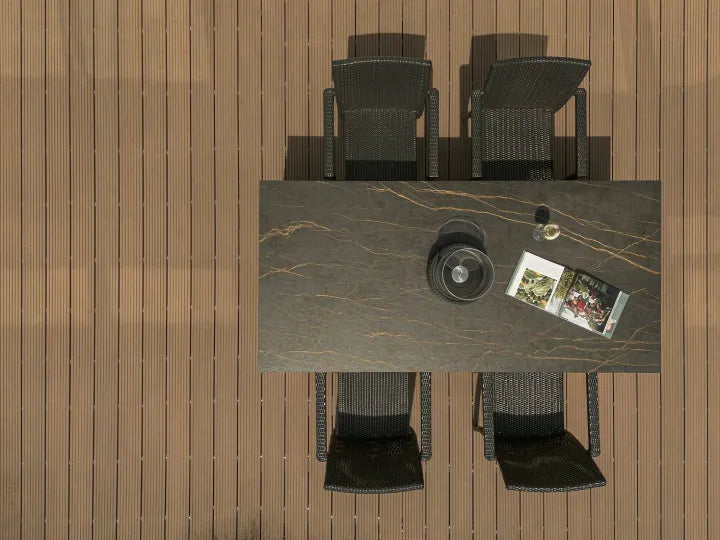


“Gran formato” describe la escala, no la idoneidad automática para la encimera. Un panel porcelánico que funciona en una pared puede tener un espesor, respaldo, requisito de soporte o límite de fabricación diferente al de una placa aprobada para una encimera o encimera de cocina. Comience con el archivo de producto exacto y luego diseñe la encimera según sus dimensiones utilizables y reglas de mecanizado.
¿Se puede utilizar una placa porcelánica de gran formato como encimera?
Sí, cuando la placa exacta está clasificada para uso en encimeras y el sistema completo está aprobado. Confirme su tamaño de corte utilizable, grosor, soporte, tratamiento de bordes, geometría de corte, plan de costura, acabado, método de manipulación y fabricante calificado antes de realizar el pedido. No libere una placa únicamente de su muestra de color.
¿Qué se considera una placa porcelánica de gran formato?
En la terminología de azulejos de EE. UU., el Tile Council of North America describe los paneles o placas de gres porcelánico calibrado como productos con un área frontal de al menos un metro cuadrado. Esa categoría abarca diferentes espesores y usos previstos; la etiqueta no reemplaza la clasificación de aplicación en la documentación del producto. ver la actualidad Listado de normas TCNA para paneles y placas porcelánicas calibradas.
Los tamaños del mercado varían según el fabricante y la región. Los ejemplos de fabricantes actuales incluyen un formato 1620 × 3240 mm de Atlas Plan y un formato 127.5 × 64 inch de Caesarstone Canadá, ambos mostrados en 12 mm productos orientados a encimeras. Estos son ejemplos, no dimensiones universales. Pregunte siempre por el tamaño exacto a pedir, si está rectificado y el margen mínimo de recorte.
Especificar la encimera como un sistema, no como una placa
Una lámina grande puede reducir las juntas, pero el tamaño también concentra el riesgo. El diseño debe conectar el material con la línea del mueble, el sustrato o marco, las aberturas, los bordes, las juntas, los electrodomésticos, la ruta de entrega y la secuencia de instalación. Funtek página de aplicación de encimera proporciona el contexto más amplio del sistema; Este artículo se centra en la decisión de liberación de la placa porcelánica.
| Artículo para congelar | Pruebas a solicitar | Por qué es importante |
|---|---|---|
| Calificación de la aplicación | Ficha técnica actual nomenclatura de encimeras o encimeras | Los paneles de pared y las superficies de trabajo horizontales pueden tener diferentes requisitos. |
| Tamaño de placa utilizable | Tamaño nominal, tamaño rectificado, margen de recorte y mapa de defectos | Las dimensiones de marketing no equivalen a la pieza terminada más grande. |
| Grosor y respaldo | Espesor exacto, refuerzo y detalle de soporte homologado. | Dos placas con el mismo diseño de cara pueden necesitar montajes diferentes. |
| Recortes | Modelos de fregadero y encimera, radios internos, holguras y detalle de refuerzos. | Las aberturas crean puentes estrechos y concentraciones de tensiones locales. |
| Bordes | Muestra terminada de cada borde e inglete visibles. | Las caras impresas, el color del cuerpo, las líneas de pegamento y las esquinas suavizadas afectan la apariencia. |
| Costuras y patrón. | Dibujo de anidamiento a escala sobre fotografías de las placas etiquetadas reales. | El formato grande puede reducir las uniones, pero no puede eliminar todas las limitaciones del diseño. |
| Manejo y acceso | Caja, marco de elevación, plantilla de ruta, equipo y secuencia de instalación. | Una parte que no puede girar por la ruta no es una parte edificable. |
| Responsabilidad de fabricación | Fabricante designado, reconocimiento manual, puntos de inspección y términos de remake | La rendición de cuentas debe ser clara antes de que comiencen cortes irreversibles. |
Compare una opción real de encimera de gran formato
El catálogo actual de Funtek no etiqueta esta gama como porcelana. El ejemplo real a continuación es una placa de piedra sinterizada listada para encimeras, incluida como una alternativa disponible comercialmente para comparar por formato exacto, grosor, cuerpo, acabado y requisitos de fabricación.

placas de piedra sinterizada blanca Royal Fish Belly
Esta superficie con apariencia de mármol blanco mate está actualmente listada para encimeras, paredes de baños y paredes interiores. Su campo de tamaño disponible incluye 1600 × 3200 mm y sus opciones de grosor enumeradas son 6, 9, 12 y 15 mm.
Confirme la placa exacta que se puede pedir, las dimensiones utilizables, el espesor seleccionado, los detalles de soporte y el archivo de fabricación antes de tratarla como equivalente a cualquier especificación de porcelana.
Ver detalles del productoElija el tamaño de la placa del diseño terminado
Comience con cada parte terminada: tramos rectos, islas, salpicaderos, extremos de cascada, soportes y piezas de prueba. Agregue el borde perimetral del fabricante y los márgenes de mecanizado, luego anide esas piezas dentro de la placa utilizable, no en el rectángulo nominal del catálogo.
Una placa 3200 mm no produce automáticamente una encimera terminada 3200 mm. La rectificación, el daño de los bordes, la colocación del patrón, la sangría, los retornos de inglete y el espacio de manipulación consumen material. Utilice el calculadora de área de placa para una verificación temprana de la cantidad, pero deje que el diseño de corte aprobado controle el pedido final.
Un diseño con menos juntas es valioso sólo cuando la pieza terminada puede fabricarse, soportarse, transportarse a través del edificio e instalarse sin forzar la placa.
Haga coincidir el espesor con el producto y el montaje exactos
Seis, 12 y 20 mm aparecen en el mercado de placas grandes, pero sus aplicaciones permitidas difieren. Un panel delgado puede estar destinado a un revestimiento adherido o una superposición soportada; un producto 12 mm es común en las gamas de encimeras actuales; Es posible que haya disponible una opción más gruesa para diseños particulares. Ninguna de esas observaciones es una regla estructural universal.
Lea el manual del fabricante con el plano de soporte y el cronograma del aparato. Si está comparando perfiles nominales, utilice la página dedicada guía de espesor de encimera, luego regrese al archivo exacto del producto de porcelana antes de la aprobación.
Resuelva recortes, puentes y soportes antes de anidar
Congele primero los modelos de electrodomésticos
Los modelos de fregadero, vitrocerámica, grifo, enchufe automático y accesorios definen las aperturas reales. No dibuje rectángulos genéricos y espere que el fabricante los corrija después de la asignación de la placa. Registre las autorizaciones requeridas y quién suministra los archivos de recorte finales.
Evite las esquinas internas afiladas
Los manuales de los fabricantes normalmente prescriben esquinas internas redondeadas y secuencias de mecanizado específicas del producto. El radio exacto y el detalle de refuerzo deben provenir del sistema de placa elegido, no de una regla copiada de otra marca. La actualidad del Plan Atlas biblioteca de manuales técnicos es un ejemplo útil del nivel de orientación sobre fabricación que debe proporcionar un proveedor.
Apoye los equipos de forma independiente cuando sea necesario.
Un fregadero lleno de agua, un triturador o un electrodoméstico pesado pueden cargar la piedra estrecha alrededor de una abertura. Pregunte al proveedor y al fabricante del sistema si se requieren rieles montados en mueble, un marco u otro soporte independiente. La cara de la placa es sólo una parte del camino de carga.
Aprobar el borde antes de aprobar el color.
Muchas placas porcelánicas con apariencia de mármol llevan su diseño principalmente en la superficie, por lo que un borde pulido recto puede revelar un color de cuerpo diferente. Una inglete puede crear espesor visual, pero también introduce un corte, una línea de pegamento, una arista y un estándar de alineación. Inspeccione una muestra terminada bajo la iluminación real del proyecto.
Utilice el biblioteca de perfiles de borde de encimera para discutir geometría y leer placas de cuerpo completo versus placas impresas en superficie antes de decidir cuánto borde expuesto puede tolerar el diseño.
Planifique costuras, patrones y entrega juntos
Coloque las costuras donde las piezas puedan manipularse y soportarse, no solo donde el dibujo parezca silencioso. Revise la dirección de las venas, las cascadas, los salpicaderos, las juntas de los muebles, los puentes del fregadero y de las encimeras y el camino de acceso final en el mismo diseño. Para ascensores, escaleras, pasillos y curvas cerradas, pruebe una plantilla de ruta rígida que coincida con la parte terminada más grande.
El trabajo de gran formato debe asignarse a un fabricante que pueda mostrar los proyectos completados utilizando la misma categoría de producto, equipos de corte y elevación adecuados y un proceso de inspección documentado. El más amplio guía de instalación cubre la preparación del sitio; la declaración del método específico del proyecto sigue siendo responsabilidad del fabricante.
¿Qué debe contener el paquete de aprobación final?
- La ficha técnica del producto vigente y el manual de fabricación.
- Detalles de compra que coincidan con el código de producto, acabado, espesor, respaldo y lote aprobados.
- Fotografías de cada placa etiquetada real, incluida la cara, la parte posterior, los bordes y cualquier defecto visible.
- Un dibujo de anidamiento a escala que muestra piezas, costuras, recortes, dirección del patrón, ingletes y márgenes de recorte.
- Detalles del mueble, sustrato, soporte, voladizo, fregadero y electrodomésticos.
- Se aceptan muestras de bordes y costuras terminadas bajo la iluminación del proyecto.
- Planos de embalaje, elevación, ruta de entrega, instalación y protección.
- Puntos de inspección designados y responsabilidad si no se sigue el diseño o producto aprobado.
Si el proveedor no puede conectar estos documentos, el proyecto no está listo para su lanzamiento, incluso si la muestra de la placa parece perfecta.
Conclusión técnica
El porcelánico de gran formato puede producir una encimera, encimera o encimera limpia y con juntas bajas. La decisión correcta no es “lo grande es mejor”; se trata de si una placa exacta puede convertirse en piezas terminadas aprobadas a través de un sistema verificado de soporte, fabricación, manipulación e instalación. Congele ese sistema antes de cortar.
Convierta el diseño de su encimera en una especificación de placa
Envíe las dimensiones terminadas, los recortes, la dirección del borde, la ubicación del proyecto y el acabado objetivo. Funtek puede revisar el formato de la placa y las entradas de presupuesto antes de planificar la producción.