


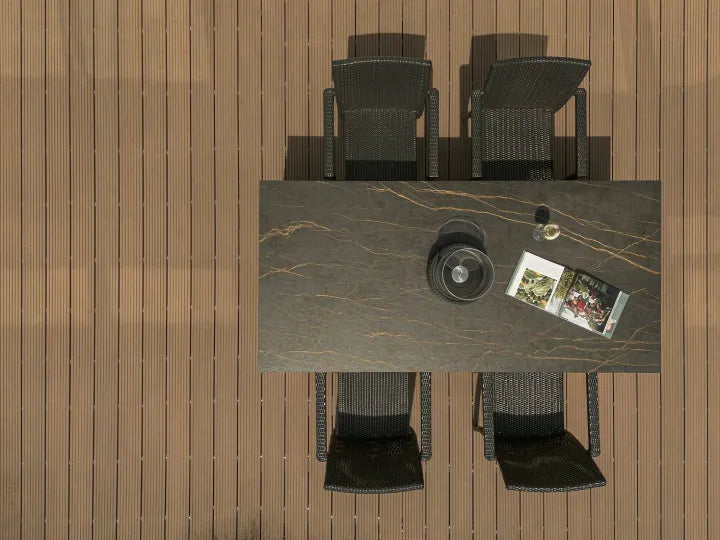


La piedra sinterizada puede utilizarse cerca de piscinas. Es una ruta práctica para materiales para rodeadores de piscinas, revestimientos, escalones y superficies exteriores adyacentes seleccionadas, con opciones de continuidad de gran formato y bordes fabricados entre sus mayores ventajas de diseño. La tarea de especificación no es debatir si la categoría puede funcionar; Consiste en seleccionar el acabado exterior, el grosor y el sistema de instalación adecuados para la zona real de la piscina.
¿Se puede usar piedra sinterizada alrededor de una piscina?
Sí. La piedra sinterizada es una vía material probada para rodear piscinas y adaptarse. Utiliza una superficie exterior con pruebas adecuadas de resbalones mojados o descalzos, confirma los requisitos de UV y clima, selecciona el grosor y soporte estructural para la instalación y aprueba la fabricación de acondicionamiento en una muestra a tamaño real.
No todos los acabados cumplen con la misma zona: una placa pulida puede adaptarse a una pared protegida, mientras que una superficie para caminar que se moja repetidamente necesita una textura exterior comprobada. Utiliza el Pilar de material de la piscina solo cuando el proyecto aún compara travertino, porcelana, hormigón y otras rutas.
Por qué la respuesta es sí
Fabricantes nombrados de piedra sinterizada ya documentan la aplicación a nivel de producto. La actual de Lapitec Orientación en piscinas y spas Muestra pavimentos, bordes de piscinas, escalones e incluso usos seleccionados para inmersiones para sus propias superficies, con múltiples perfiles de bordes y acabados texturizados. Los fabricantes y proveedores especializados también ofrecen bordes de piscina en forma de L, en forma de L y personalizados en materiales sinterizados. Esto es evidencia de aplicación establecida, no un uso especulativo.
La distinción a nivel de producto sigue siendo relevante porque una categoría incluye superficies pulidas, satinadas y estructuradas, varios grosores y diferentes rutas de fijación. Funtek pueden comparar un informe de pool con las opciones actuales de placa y los documentos disponibles; El diseñador local y el instalador aprueban entonces el acabado y el montaje seleccionados para la jurisdicción.
La conclusión es clara: la piedra sinterizada puede usarse alrededor de una piscina. La pregunta que queda es qué acabado y sistema se adaptan a cada zona húmeda, estructural y climática.
Decisión rápida: cuándo la piedra sinterizada es la elección correcta
Elige piedra sinterizada para el entorno y la cobertura de la piscina cuando quieras un aspecto premium de piedra de gran formato, baja absorción de caras, diseño repetible y continuidad de bordes fabricados. Es especialmente atractivo para villas, hoteles y balnearios que conectan plantas interiores, terrazas, paredes y la orilla del agua en un solo lenguaje visual.
Empieza con un acabado exterior ligero y estructurado para el tráfico descalzo expuesto. Usa indicaciones más oscuras, pulidas o de satén en paredes y detalles sombreados, no como superficie mojada predeterminada para caminar. Para afrontar la situación, proporciona el perfil y los detalles de soporte antes de poner precio para que el presupuesto incluya el paquete real fabricado.
| Grosor documentado | Conversación práctica para iniciar | Límite importante |
|---|---|---|
| 12 mm | Rutas de revestimiento/revestimiento totalmente soportadas o aprobadas por el fabricante | No trates una placa fina como un adoquine colocado en seco sin aprobación. |
| 20 mm | Pavimentación exterior o sistemas de envolvente sostenidos cuando el fabricante lo permita | El soporte, el tramo, el tráfico y las condiciones de los bordes siguen gobernando. |
| 30 mm | Pavimentos más pesados o rutas de recubrimiento/envolvente fabricadas en sistemas documentados | Un mayor grosor no sustituye el drenaje, las juntas ni un manejo seguro. |
Estos no son tamaños universales inventados: Lapitec publica 12, 20 y 30 mm placas en su Hoja técnica. Su caja de piscina Ca' Miane utilizó 12 mm material satinado en la base y 30 mm material Vesuvio en el entorno, mostrando cómo un fabricante designado asignó diferentes grosores y acabados por zona. Usa eso como ejemplo documentado en el mercado, no como aprobación automática para otra marca o instalación.
Aprobar siete comprobaciones a nivel de producto
| Comprobado | Pruebas o decisión requeridas | Por qué es importante |
|---|---|---|
| Identidad exacta | Fabricante, SKU, lote, grosor y acabado | Los nombres de categorías pueden ocultar diferentes construcciones |
| adherencia en mojado | Informe relevante para mojado/descalzo para el acabado suministrado | Las superficies pulidas y estructuradas se comportan de forma diferente |
| Exposición exterior | Exterior/UV escritos y límites de apariencia | El uso exterior no se infiere a partir de muestras interiores |
| Clima | Evidencia requerida de absorción y congelación-deshielo | El agua, los bordes y el ciclo térmico actúan juntos |
| Química de la piscina | Guía de productos químicos/limpieza nombrados | La cara, la lechada, los selladores, los adhesivos y los metales están expuestos |
| Ruta estructural | Grosor, formato, soporte y aprobación de carga | Los sistemas de colocación en seco, pedestal y unión difieren |
| coronación | Maqueta de borde y unión fabricada a tamaño real | Los retornos, ingletes y curvas controlan la comodidad y la durabilidad |
Separa el grupo en zonas de aplicación
"Alrededor de una piscina" no es una condición técnica única. Divide los dibujos antes de seleccionar la superficie:
- encimera o rodeador: Superficie peatonal repetidamente mojada donde las evidencias de deslizamiento, el drenaje y la temperatura descalza lo llevan.
- Afrontando: Borde expuesto donde lideran el agarre, la comodidad al sentarse, el perfil, el soporte y el movimiento.
- Escalones y rampas: transiciones de mayor riesgo que pueden requerir una textura o clasificación más exigente.
- Paredes y paneles decorativos: la exposición exterior y la fijación dominan; El requisito de deslizamiento para la superficie de caminar puede no aplicarse.
- Zonas sumergidas o de línea de flotación: la impermeabilización, adhesivos, exposición a productos químicos y aprobación del fabricante forman un sistema separado.
Un acabado adecuado para un muro vertical no debe copiarse automáticamente en una rampa para descalzos, y no se debe asumir que un producto de terraza es adecuado bajo el agua. Una colección coordinada puede crear un lenguaje visual utilizando diferentes acabados y detalles de construcción por zona.
La llegada es la primera decisión de seguridad
No describas la piedra sinterizada como "antideslizante" sin nombrar la superficie. Una placa pulida no es automáticamente adecuada junto al agua; Un acabado estructurado aún necesita evidencia y un plan de limpieza. Utiliza el Guía de especificaciones de la superficie antideslizante de piscinas para que la R, descalzo, PTV o evidencia local coincida con la zona de uso.

El confort térmico al caminar descalzo depende del color y la exposición
La resistencia al calor significa que el material tolera la temperatura; No significa que la superficie iluminada por el sol se mantenga cómoda. Empieza con muestras beige claro, blanco roto o gris claro para las zonas expuestas para caminar, y luego pruébalas junto a otras alternativas bajo el sol real. Las placas oscuras y dramáticas pueden ser más adecuadas para paredes sombreadas o detalles de diseño que una gran terraza descalza.
El gran formato ayuda a la continuidad visual, no al drenaje
Las piezas grandes pueden reducir la fragmentación visual y conectar un vestíbulo, spa, terraza y alrededores de piscina. También requieren un sustrato plano, caídas coordinadas, drenajes, juntas de movimiento, manejo seguro y un diseño que evite cortes débiles. Menos líneas de lechada no eliminan la necesidad de drenar la superficie ni de acomodar el movimiento.
Planifica la distribución desde los desagües y los bordes, no desde el centro
Un entorno de piscina de gran formato está regido por interrupciones fijas: geometría de la piscina, ritmo de adaptación, drenajes de canales, barrancos, umbrales, columnas, pistas de cobertura y juntas de movimiento. Empieza el mapa de la placa desde estas condiciones. Un diseño decorativo centrado puede crear finas rendijas en un desagüe o muescas sin soporte en una curva, mientras que un módulo técnicamente led puede preservar piezas más resistentes y uniones más consistentes.
Antes de la fabricación, emite un plano de corte numerado que muestre las dimensiones de la pieza, la orientación de la cara, la dirección del patrón, los cortes de drenaje, ingletes, los reemplazos y la secuencia de empaquetado. Confirma el ancho mínimo práctico alrededor de las penetraciones y el alcance permitido para el recorte del sitio. Las placas grandes reducen las juntas visibles solo cuando la geometría, la ruta de manejo y la planitud del sustrato soportan el módulo previsto.
El montaje de piscinas requiere aprobación de fabricación
la coronación sinterizado puede usar bordes relajados, piezas de nariz en el fondo cuando estén disponibles, retornos en inglete o caras de caída. Comprueba el cuerpo visible, la relación vena/patrón, la comodidad de los cantos, la ubicación de las articulaciones, el soporte inferior y la dirección del agua. Compáralo con las rutas de porcelana, piedra y hormigón en el Guía de materiales para recubrimiento de piscinas.
la coronación fabricado necesita su propio dibujo de taller
Para un detalle en inglete o en borde recaída, muestra el ancho superior, la profundidad de retorno, el voladizo, la junta, la línea adhesiva, el radio del borde, el soporte y la parte inferior visible. Los diseños vetados o direccionales necesitan una regla de patrón declarada en la parte de retorno: flujo visual continuo, continuidad en libro abierto deliberado o una unión controlada no compatible. Las curvas pueden requerir piezas segmentadas, CNC fabricación o un componente estándar diferente.
Pide al fabricante que produzca una esquina de tamaño real y una pieza recta representativa. Moja la parte superior, agarra y siéntate contra el borde, observa el inglete al sol e inspecciona el cuerpo en los recortes. La maqueta también debe probar el empaquetado y el manejo, ya que un retorno fabricado largo puede ser más vulnerable antes de estar completamente soportado que después de la instalación.
El grosor es una decisión del sistema
No existe un grosor universal de la piscina. Un conjunto unido totalmente soportado, un sistema de pedestal, un adoquine colocado en seco y un retorno de recubrimiento fabricado imponen diferentes cargas y condiciones de borde. Obtén el uso aprobado por el fabricante y haz que el diseñador e instalador responsables confirmen el sustrato, el soporte, la fijación, las uniones y la estrategia de movimiento. Funtek Flujo de trabajo de instalación ayuda a organizar la transferencia pero no sustituye el diseño del sistema de pool.
Qué debe mostrar la presentación de la instalación
El paquete de la piscina debe contener más que una hoja de datos de la placa. Requieren planos y documentos coordinados para el sustrato, límite de impermeabilización cuando sea necesario, adhesivo o pedestal/sistema de soporte, requerimiento de mantequilla o cobertura, juntas de movimiento, caídas de drenaje, soporte de recubrimiento, selladores, lechada, penetraciones, protección y curado antes del servicio.
LATICRETE's Manual técnico para piscinas de azulejos, fuentes y balnearios Explica que el movimiento térmico, de humedad y diferencial sigue activo en las estructuras de las piscinas y que las uniones diseñadas deben continuar durante el acabado. El sistema final debe seguir los datos del fabricante responsable y del profesional local, pero el manual es un control útil frente a propuestas que tratan la placa como una capa aislada.
El cloro y el agua salada son preguntas del sistema
Las superficies sinterizadas suelen seleccionarse por su baja absorción y resistencia química, y los productos de piscina con nombre publican afirmaciones sobre cloro y tratamiento de agua. Aun así, el salpicado y la evaporación concentran residuos en las articulaciones y los bordes. Pide compatibilidad en la cara, la lechada, el material de fijación, el sellador, la interfaz impermeabilizante, el desagüe y cualquier moldura metálica. Las piscinas de agua salada también requieren atención a la corrosión y eflorescencia fuera de la propia placa.
El plan de limpieza debe indicar los productos químicos permitidos, el tiempo de dilución y de contacto, además de cómo se enjuagan los depósitos de superficies texturizadas. Un limpiador potente puede ser innecesario para la placa pero perjudicial para la lechada o el sellador. Una aprobación completa protege tanto el sistema visual como la cara del material.
Compara la piedra sinterizada con la alternativa más cercana
Si el diseño es un aspecto de travertino, compárese la muestra sinterizada real con travertino natural y gres porcelánico de exterior, no con una idea genérica de "piedra". El Comparación de piscinas de porcelana frente a travertino aclara los compromisos de mantenimiento, calor, variación y coronación que siguen siendo relevantes.
Lo que Funtek puede confirmar antes de tomar muestras
La idoneidad para la piscina debe confirmarse en el nivel SKU y de llegada. Funtek puede comparar el briefing del proyecto con las opciones actuales de placas, acabados superficiales, espesores y la documentación de prueba disponible antes de la muestreo y el presupuesto. La aprobación final debe basarse en el producto exacto, los requisitos del proyecto y el sistema local de instalación.
Envía la zona de la piscina, perímetro de coronación, destino, tipo de tratamiento de agua, clima, tráfico esperado, dirección de diseño, ruta de instalación y estándar de prueba requerido. Marca qué piezas son encimera, cobertura, escaleras, paredes o sumergidas; No agrupes todas las zonas como "ficha de piscina".
La conclusión
Sí, la piedra sinterizada puede usarse cerca de piscinas. Es muy adecuado para rodear piscinas y adaptaciones fabricadas cuando el proyecto requiere baja absorción, continuidad visual de gran formato y un diseño controlado con aspecto de piedra. Selecciona el acabado exterior para la zona húmeda, prueba la comodidad descalza en el clima real, diseña el grosor y el soporte, y aprueba los detalles de la junta y el acabado antes de la fabricación.
La conclusión de la solicitud es afirmativa; La compatibilidad de productos es el siguiente paso. Funtek puede preseleccionar las opciones, acabados, grosores y documentos técnicos disponibles actuales de piedra sinterizada con el plano de la piscina antes de muestrear y presupuestar.
Habla sobre un paquete para piscinas de piedra sinterizada
Envía la zona de la piscina, el perímetro de coronación, la ubicación, la dirección final y los documentos requeridos. Podemos ayudar a seleccionar opciones actuales de slab para muestreo y revisión a nivel de proyecto.