


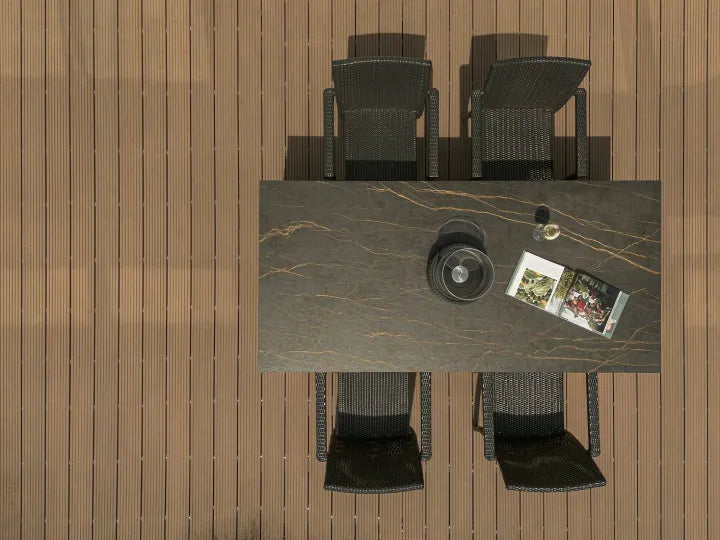


Выбор между ними спечённый камень, керамогранитный слэб, и Гранит это не только техническое решение. Для большинства проектов настоящий вопрос более практичный: какой материал лучше подходит для столешницы, стены, уличной кухни, ванной или коммерческой поверхности, которую вы планируете?
Эти три материала могут выглядеть похоже в шоуруме, особенно если они представлены в мраморных, каменных или нейтральных цветах. Но они ведут себя иначе, когда их обрезают, транспортируют, устанавливают, чистят, подвергают воздействию тепла или используют ежедневно.
Быстрый ответ: для многих современных столешниц, больших настенных панелей, ванных поверхностей, мебельных столешниц и уличных применений, спечённый камень обычно является самым прочным универсальным выбором потому что он сочетает в себе очень низкое водопоглощение, высокую термостойкость, высокую твёрдость поверхности и низкий уход.
Гранит Это всё ещё надёжный вариант натурального камня, если покупатель хочет естественную вариацию и соглашается на уплотнение уплотнения. керамогранитный слэб Может быть хорошей декоративной поверхностью, но её характеристики сильно зависят от толщины, конструкции кузова, отделки поверхности и качества изготовления.
В этом руководстве сравниваются три материала с точки зрения покупателя: где каждый материал работает лучше всего, где он может выходить из строя, сколько обслуживания требуется, на что следить при изготовлении и какие технические показатели действительно важны в реальных проектах.

Быстрый вердикт: какой материал лучше выбрать?
Если вы сравниваете материалы для реального проекта, начните с заявки, а не с названия материала. Кухонный остров, стена ванной, уличная стойка для барбекю, панель гостиницы и стойка регистрации не требуют одинаковых приоритетов производительности.
| Ситуация проекта | Лучший практичный выбор | Почему это логично |
|---|---|---|
| Кухонные столешницы и островки | спечённый камень или гранит | спечённый камень проще поддерживать и он более стабилен; Гранит работает, когда характер природного камня — приоритет. |
| Уличные кухни и стойки для барбекю | спечённый камень | Очень низкое поглощение, термостойкость, UV стабильные варианты поверхности и лучшая стабильность размеров делают его надёжным напрямом для наружного движения. |
| Стены ванной комнаты и модули под раковину | спечённый камень или керамогранитный слэб | Крупноформатные плиты уменьшают линии затирки и облегчают очистку; спечённый камень крепче, когда важны влага и долговечность. |
| Декоративные внутренние панели стен | керамогранитный слэб или спечённый камень | Фарфор подходит для более лёгкого декоративного использования; спечённый камень лучше подходит для более интенсивных коммерческих или архитектурных поверхностей. |
| Проекты, посвящённые идентичности природного камня | Гранит | Гранит обладает настоящим естественным разнообразием, которое всё ещё предпочитают некоторые домовладельцы, дизайнеры и люксовые проекты. |
| Коммерческие покрытия, не требующие обслуживания | спечённый камень | Лучшая консистенция, низкое впитывание, высокая твёрдость и более удобная ежедневная уборка ценны в проектах B2B и общественных пространствах. |
Для пользователей поиска лучший ответ — не «какой материал самый прочный в лаборатории», а «какой материал безопаснее для моего конкретного применения».
спечённый камень против гранита: что лучше подходит для столешниц?
Когда люди ищут спечённый камень против гранита, обычно они думают о столешницах. Оба материала можно использовать для кухонных столешниц, островков, тумбочек и наружных поверхностей, но логика покупки отличается.
спечённый камень — это инженерно разработанная минеральная поверхность, созданная под высоким давлением и высокой температурой. Её производительность контролируется от одной плиты к платформе. Обычно он обладает очень низкой водопоглощённостью, сильной термостойкостью, высокой твёрдостью и не требует регулярного герметизации, как многие натуральные камни.
Гранит это натуральный камень. Он прочный и привлекательный, но каждая плита может различаться по пористости, минеральному составу, трещинам, цвету и нуждам в уходе. Многие гранитные столешницы требуют периодической герметизации для снижения пятен и влаги.
| Точка сравнения | спечённый камень | Гранит |
|---|---|---|
| Техническое обслуживание | Низкий уход; Обычно регулярное герметизация не требуется. | Часто требуется герметизация и больше ухода, в зависимости от камня |
| Смотри | Контролируемые цвета, мраморные образы, каменные, бетонные, дизайны в сочетании с книгами | Естественная вариация и уникальный характер плиты |
| Поглощение воды | Очень низко | Переменчивый и обычно более пористый |
| Термостойкость | Очень прочный при правильной сборке и установке | В целом это хорошо, но естественные минеральные вариации могут привести к нестабильности |
| Лучшее для | Современные столешницы, уличные кухни, коммерческие столешницы, пространства, которые не требуют ухода | Проекты, где идентичность природного камня важнее обслуживания |
Выбирайте спечённый камень Если вашему покупателю нужна современная поверхность, более удобное обслуживание, стабильная производительность, более тонкие или крупноформатные варианты и сильная техническая устойчивость.
Выберите гранит Если покупатель специально хочет природный камень и соглашается на компромисс между герметичностью, разнообразием плиты и большим уходом.
спечённый камень против фарфоровой плиты: это одно и то же?
Это одна из самых распространённых точек путаницы. На рынке некоторые поставщики используют такие термины спечённый камень, керамогранитный слэб, Фарфор большого формата, и керамическая плита в разных формах. Вот почему покупателям не стоит судить только по названию в каталоге.
В целом керамогранитный слэб часто ассоциируется с крупноформатными керамическими или фарфоровыми поверхностями, используемыми для стен, полов, фасадов и столешниц. спечённый камень обычно позиционируется как категория плит с более высокой производительностью, изготовленная из минеральных частиц, уплотнённых и обжигаемых для создания плотной, прочной поверхности.
Не покупайте только с этикеткой «фарфор» или «спечённый камень»; Проверьте толщину, конструкцию кузова, водопоглощение, данные о прочности, отделку поверхности и руководство по изготовлению.
Для настенной панели с лёгким ежедневным контактом керамогранитный слэб может подойти. Для столешниц, коммерческих столов, уличных кухонь, раковин, длинных островов или поверхностей с интенсивным использованием, спечённый камень обычно более безопасным, если данные о продукте и поддержка изготовления надёжны.
керамогранитный слэб против гранита: что из них логичнее?
керамогранитный слэб против гранита это более распространённая тема поиска, поскольку оба материала используются на кухнях, ванных комнатах, стенах, полу и на открытых пространствах. Главное отличие в том, что керамогранитный слэб производится, а гранит — натуральный.
керамогранитный слэб обычно обладает более контролируемым дизайном и меньшей впитывающей силой, чем многие природные камни. Он может быть полезен для современных настенных панелей, душевых, мебели и некоторых проектов по столешнице. Но покупателям необходимо подтвердить толщину, обработку краёв, правила выреза и опыт установщика.
Гранит обладает естественным характером и традиционной каменной ценностью. Он может быть долговечным, но благодаря натуральности его характеристики менее предсказуемы при разных цветах и карьерах. Также может потребоваться герметизация и регулярное обслуживание.
Если проект в основном декоративен, керамогранитный слэб может быть разумным вариантом. Если покупатель хочет естественную аутентичность, гранит всё равно найдёт своё место. Если покупатель хочет более сильных технических характеристик и меньшего ухода, следует рассмотреть также спечённый камень.
Стоимость, установка и изготовление: покупатели запчастей часто забывают
Многие сравнительные статьи ограничиваются твёрдостью, термостойкостью и поглощением воды. Но в реальных проектах итоговый результат часто зависит не меньше от Изготовление и установка.
Прочная плита всё равно может сломаться, если конструкция выреза плохая, если опора неправильная, край слишком открыт, если обращение небрежное или если установщик не понимает работу с крупноформатными плитами.
| Фактор | Почему это важно | Что должны подтвердить покупатели |
|---|---|---|
| Толщина | Разная толщина подходит для разных применений | Для столешниц проверьте, рекомендуется ли 12 mm, 15 mm или 20 mm для дизайна. |
| Вырезы на раковине и варочной поверхности | Вырезы создают точки напряжения | Проверьте радиус углов, усиление, минимальное расстояние от краёв и правила изготовления. |
| Детали краёв | Края более подвержены ударам, чем плоские поверхности | Выбирайте подходящие профили краёв и избегайте нереалистичных конструкций для материала. |
| Опорная структура | Крупноформатные плиты нуждаются в стабильной поддержке | Проверьте плоскость шкафа, качество подложки, пределы выступов и расстояние между опорами. |
| Опыт работы установщиком | Большие плиты не обрабатываются как маленькие плитки | Используйте фабрикантов и установщиков с опытом работы с крупноформатным фарфором или слэбы из спечённого камняи. |
Если в проекте есть вырезы для раковины, края водопада, длинные выступы или открытое пространство, качество изготовления имеет такое же значение, как и сам материал плиты.
Отколотые, края и ремонт: честно говорите о рисках
Нет идеального материала на поверхности. спечённый камень, керамогранитный слэб и гранит могут обколоться или треснуться при неправильном воздействии, особенно по краям, углам, вырезам и неподдерживаемым участкам.
Для спечённый камень и керамогранитный слэб, плоская поверхность может быть чрезвычайно устойчива к пятнам, теплу и царапинам, но края всё равно требуют хорошего дизайна и аккуратного обращения. Резкий удар тяжёлого предмета может повредить открытый край. Ремонт также может быть более заметен на узорчатых или полированных поверхностях.
Для Гранит, сколы и ремонт иногда лучше сочетаются, потому что материал натуральный и имеет глубину, но это зависит от цвета, рисунка и типа повреждений. Гранит также может иметь естественные трещины или слабые места, которые не всегда заметны на первый взгляд.
Вот почему покупателям не стоит спрашивать только «какой материал самый прочный?» Лучший вопрос: Какой материал, толщина, детали края, способ изготовления и система установки наиболее безопасны для этого проекта?
Обслуживание и ежедневное использование: с каким из них легче жить?
Для домовладельцев, подрядчиков и коммерческих покупателей обслуживание часто важнее лабораторной мощи. Материал, который требует меньше герметизации, меньше специальной чистки и меньше беспокойства о пятнах, легче рекомендовать в реальных проектах.
- спечённый камень: Обычно очень легко чистится, очень устойчиво к пятнам и подходит для современных помещений, требующих минимального ухода.
- керамогранитный слэб: Обычно поглощается с низкой степенью и легко чистится, но тип поверхности и качество изготовления всё равно имеют значение.
- Гранит: Прочные и красивые, но часто требуют герметизации и дополнительного внимания к маслам, кислотным жидкостям и долгосрочному риску пятна.
Для B2B покупателей это важно, потому что жалобы на обслуживание могут превратиться в жалобы на проект. В отелях, ресторанах, торговых помещениях, квартирах, арендных объектах и коммерческих прилавках низкозатратная производительность может снизить послепродажное давление.
Техническая таблица сравнения
Таблица ниже содержит техническое сравнение, но его следует прочитать после приведённых выше практических факторов решения. Технические данные помогают подтвердить выбор; Это не должна быть единственной причиной выбора материала поверхности.
| Основной технический индикатор | Крупноформатная керамогранитный слэб | спечённый камень | Естественный гранит |
|---|---|---|---|
| Твёрдость Мооса | 5.5 – 7, в зависимости от качества глазури и поверхности | 7 – 8, с очень сильной устойчивостью к царапинам | 6 – 7, но может включать более мягкие минералы, такие как слюда |
| Поглощение воды (ISO 10545-3) |
< 0.5% | ≤ 0.05%, часто опускаясь примерно до 0.02% | Естественно пористые; нуждается в герметизации и обслуживании |
| Изгибательная прочность (EN ISO 10545-4) |
Примерно 24 – 35 МПа | ≥ 45 МПА до 67 МПа | Примерно 15 – 24 МПа |
| Прочность на разрыв (20 mm ссылка на плиту) |
Ниже, чем спечённый камень | Может превышать 16,000 N | Переменная; Под влиянием естественных трещин и минеральной нестабильности |
| Прочность на сжатие | Примерно 590 МПа | До 2200 МПа и больше | Примерно 130 – 220 МПа |
| Термическая устойчивость (ISO 10545-9) |
Хорошо, но резкие перепады температуры в местности всё равно могут создать риск трещин | Отлично; Способен выдерживать прямой контакт при температурах выше 400°C без термического ударного разрушения | В целом это хорошо, но вариации минералов могут создавать скрытый риск трещин |
| Линейное тепловое расширение (ISO 10545-8) |
Примерно 7.0 – 8.0 × 10⁻⁶ | Примерно 5.7 – 6.0 × 10⁻⁶ | Более вариабельно благодаря минеральному составу |
| Устойчивость к глубокому истиранию (ISO 10545-6) |
Поверхностная глазурь может со временем стираться | ≤ 130 – 149 mm³ объёма износа | Умеренные; может потребоваться полировка, обслуживание |
| Реакция на огонь (EN 13501-1) |
A1 негорюча | A1 негорюча | A1 негорюча |
Приведённые выше цифры основаны на широко используемых отраслевых эталонных диапазонах и стандартах испытаний. Итоговые значения всегда следует проверять по выбранному техническому листу продукта, толщине плиты, отделке, отчёту о испытании и системе установки.
Для более широкого технического сравнения с кварцем, мрамором, керамической плиткой, ламинатом, бетоном, нержавеющей сталью и панелями фасадов см. наш Полное руководство по сравнению материалов спечённого камня.
Что означает каждый технический индикатор в реальных проектах
Твёрдость Мооса: устойчивость к царапинам в повседневном использовании
Если сопротивление царапинам — главная проблема, спечённый камень обычно занимает самое прочное положение в этом сравнении. Типичный диапазон твёрдости Мооса от 7 до 8 ставит его выше многих фарфоровых плит и гранитов, содержащих более мягкие минералы.
керамогранитный слэб всё ещё хорошо работает, но поведение поверхности больше зависит от глазури, отделки и качества продукции. Гранит по природе прочный, но состав минералов варьируется от плиты к плите.
Поглощение воды: пятна, влага и риски обслуживания
Поглощение воды — один из самых полезных технических показателей, так как влияет на риск появления пятен, поведение влаги и длительное давление на обслуживание.
- керамогранитный слэб: менее 0.5%
- спечённый камень: Обычно 0.05% или ниже, часто около 0.02%
- Гранит: Естественно пористый и обычно требует герметизации
Для Кухонные столешницы, меньшее всасывание обычно означает меньше беспокойства о проникновении жидкости. Для Стены ванной а влажные участки — очень низкая впитывающая — облегчает уборку и долгосрочную гигиену.
Сила на изгиб и разрыв: уверенность при обращении и использовании
Плиты нарезаются, транспортируются, поднимаются, устанавливаются и используются. Прочность на изгиб и устойчивость на разрыв имеют значение, потому что реальные проекты создают изгибающее напряжение, особенно при изготовлении и монтаже.
Обычно в этой категории возглавляет спечённый камень. Это полезно для крупноформатных стен, длинных столешниц, мебельных поверхностей, коммерческих поверхностей и проектов, где риски — часть реальной стоимости.
Термический шок и теплостойкость: кухни и уличные проекты
Термическое ударное сопротивление имеет значение, когда поверхность сталкивается с резкими изменениями температуры. Это особенно актуально для кухонь, уличных барбекю-столешниц, солнечных зон и коммерческих поверхностей рядом с источниками тепла.
Если в проекте входят уличные работы, сильное солнце или прямое отопление, то спечённый камень обычно является самым безопасным техническим направлением из трёх вариантов.
Для наружных стен и фасадов вы также можете ознакомиться с нашими проектами Внешние фасады из спечённого камня Руководство.
Огнестрельность: важна, но не главное отличие
Все три материала в этом сравнении можно позиционировать как негоручие минеральные поверхности. Классификация огня важна, но обычно она не является главным решающим фактором между спечённым камнем, фарфоровой плитой и гранитом.
Более значимые отличия — это поглощение воды, прочность, тепловое поведение, риск изготовления, обслуживание и пригодность для конкретного применения.
Когда спечённый камень может быть не лучшим выбором
спечённый камень обладает сильными преимуществами, но достоверное сравнение также должно объяснять, когда это может быть неправильный выбор. Это помогает покупателям избежать неправильных характеристик и нереалистичных ожиданий.
| Положение | Почему это важно | Лучшее направление |
|---|---|---|
| Нет опытного изготовителя поблизости | спечённый камень требует правильной резки, полировки кромки, обработки и установки. | Воспользуйтесь опытным изготовителем или рассмотрите материал, который ваша местная команда уверенно обрабатывает. |
| Покупатель хочет настоящую уникальность натурального камня | спечённый камень может имитировать натуральный камень, но это всё равно инженерная поверхность. | Гранит может быть лучше, если естественная идентичность — эмоциональный приоритет. |
| Требуются очень сложные профили краёв | Некоторые конструкции краёв проще использовать натуральный камень, чем тонкие инженерные плиты. | Проверьте возможность использования кромки перед выбором плиты. |
| Проект ищет только самую дешёвую поверхность | Высококачественный спечённый камень может быть не самым дешёвым вариантом. | Сравните общую стоимость, включая изготовление, отходы, установку и обслуживание. |
спечённый камень не является «автоматически совершенным»; Она работает лучше всего, когда плита, толщина, способ изготовления и опыт установщика соответствуют проекту.
Рекомендации по наилучшему использованию по применению
Кухонные столешницы и островки
Для кухонь ключевыми факторами являются теплостойкость, водопоглощение, пятнастойкость, обработка краёв, толщина плиты и безопасность вырезов. спечённый камень прочно подходит для современных кухонь, требующих минимального ухода. Гранит по-прежнему привлекателен для покупателей, предпочитающих натуральный камень. керамогранитный слэб подойдёт, но покупателям следует внимательно следить за толщиной и деталями изготовления.
Для более специфического планирования столешниц смотрите наш раздел Столешницы из спеченого камня Руководство.
Стены и модули под раковину
Для ванных комнат главными проблемами являются влажность, уборка, линии затирки и долгосрочная гигиена. Крупноформатные спечённые каменные и керамогранитные слэбы уменьшают линии затирки по сравнению с мелкими плитками. спечённый камень становится прочнее, когда покупатель хочет получить очень низкую поглощённость и лучшую долговечность.
Вы можете ознакомиться с нашим Стены ванной комнаты с спечённым камнем Руководство по деталям заявки.
Уличные кухни и внешние поверхности
Проекты на открытом воздухе требуют большей осторожности. Покупателям следует проверить UV стабильность, термическое поведение, поглощение воды, условия заморозки и оттаивания, если это важно, систему фиксации, толщину и способ установки.
спечённый камень обычно является более сильным выбором для уличных кухонь и поверхностей, связанных с внешними стенами, поскольку он сочетает в себе низкую поглощённость, термостойкость и стабильность размеров.
Коммерческие столешницы, мебель и настенные панели
Для отелей, ресторанов, офисов, розничных магазинов и жилых комплексов важна последовательность. Покупателям часто нужен стабильный запас цвета, повторяемые размеры плит, более простая очистка и меньшее количество жалоб на обслуживание. Именно здесь спечённый камень особенно полезен для B2B проектов.
Итоговая рекомендация
Если покупатель хочет только историю из натурального камня, гранит всё равно найдёт своё место. Если проект представляет собой более лёгкую декоративную стену или поверхность, керамогранитный слэб может быть практичной. Но если проекту нужен более устойчивый баланс между столешницами, стенами, ванными комнатами, уличными кухнями, мебелью и коммерческими помещениями, спечённый камень обычно является самым полным техническим выбором.
Самое безопасное решение о покупке зависит не только от названия материала. Всегда проверяйте применение, размер плиты, толщину, отделку, детали кромки, дизайн вырезов, метод изготовления, систему установки и требования к обслуживанию перед заказом.
Чтобы продолжить сравнение материалов, вы можете прочитать наш Полное руководство по сравнению материалов спечённого камня, или изучите связанные руководства спечённый камень против кварца, керамогранитный слэб против спечённого камня, и Хороший ли выбор спечённый камень.
Не уверены, выбрать ли спечённый камень, фарфоровую плиту или гранит?
Расскажите о вашем применении, размере плиты, толщине, отделке, деталях краёв и стране назначения. Funtek поможет сравнить подходящие варианты плит из спечённого камня для столешниц, стен, тумбочек, мебельных поверхностей и коммерческих проектов. Запросите смету или изучить наш Коллекция слэбы из спечённого камня.