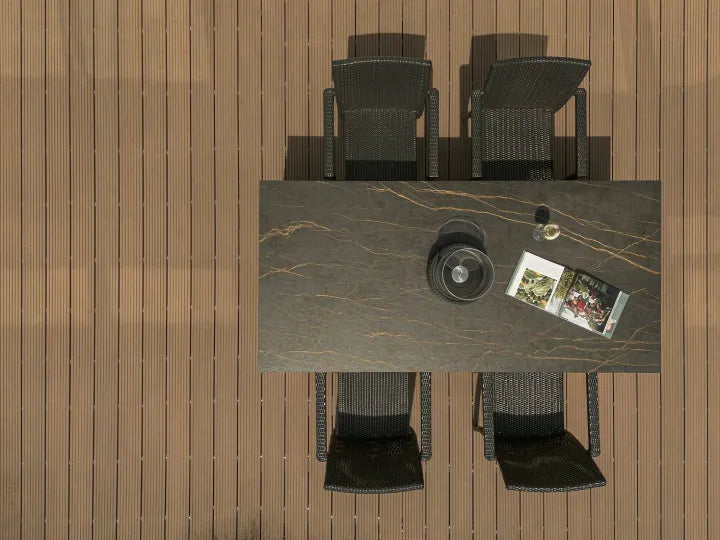
마이크로시멘트 대안: 대신 사용할 수 있는 소재는 무엇인가요?

벽, 바닥 및 습식 구역용 마이크로시멘트 대안 7가지를 비교한 뒤 줄눈, 바탕면, 시공, 보수 및 전체 프로젝트 범위로 선택하세요.
LuCharlotte LuCharlotte 9 분 읽기 업데이트

Quick Answer

The best microcement alternatives are porcelain tile for a practical modular finish, large-format porcelain or sintered stone for fewer visible joints, polished concrete for a suitable concrete floor, tadelakt for a hand-finished lime-plaster character, epoxy for specialist seamless floors, and limewash or Roman clay for an inexpensive microcement-like effect on dry walls.

There is no single substitute for every surface. Choose by the installed system: the substrate, wet-area build-up, joint strategy, repair method, available installer and total project scope matter more than the material name alone.

Microcement Alternatives at a Glance

Microcement combines three attributes that are difficult to copy at the same time: a thin build-up, a hand-trowelled appearance and visual continuity across broad areas or complex shapes. Each alternative keeps some of those advantages and trades away others.

Alternative Closest microcement quality Main trade-off Best starting use
Porcelain tile Cement colour and texture with a manufactured face More frequent grout joints Floors, walls and bathrooms where modular replacement matters
Large-format porcelain Quieter visual field with fewer joints Heavier handling and more demanding substrate/layout planning Feature walls, bathrooms and open-plan floors
Sintered stone slab Large factory-finished panels and coordinated wall, floor or work-surface design Specialist transport, fabrication and installation Large wall fields, commercial interiors, bathrooms and counters
Polished concrete Authentic continuous concrete floor Depends on the concrete slab and remains a floor-specific route New-build or suitable existing structural slabs
Tadelakt Hand-made mineral movement and soft continuity Specialist craft, sample variation and system-specific wet-area detailing Curved walls, niches and character-led interiors
Epoxy or resin Seamless floor field More uniform resin character rather than a mineral plaster look Commercial or service floors with a documented resin system
Limewash or Roman clay Cloudy mineral colour at low build-up Decorative dry-wall finish only Living rooms, bedrooms and retail feature walls

Match the Alternative to the Surface

Bathroom or shower wall

Large-format porcelain or sintered stone

Use a documented wet-area assembly and design the panel joints, corners, penetrations, drainage and change-of-plane details. The large face can reduce joint frequency without pretending the room is joint-free.

Busy floor

Porcelain tile or a specified resin system

Porcelain offers a modular repair path when matching spare units are stored. A resin route can create continuity, but the exact system must match the traffic, cleaning and substrate conditions.

Existing concrete floor

Polished concrete

If the slab is structurally suitable and the visual variation is acceptable, grinding and polishing the concrete itself may be more direct than adding a coating that imitates it.

Dry decorative wall

Limewash, Roman clay or tadelakt

Limewash and Roman clay can deliver soft tonal movement with a simpler decorative scope. Tadelakt is the more crafted route for rounded forms and a richer lime-plaster character.

Porcelain Tile: The Practical Modular Alternative

Porcelain tile is often the easiest microcement alternative to source, specify and repair. Cement-look ranges can reproduce warm beige, greige, mid-grey and charcoal directions in repeatable manufactured units. A damaged unit may be replaceable when a matching spare tile and safe access to the assembly remain available.

The visible compromise is the grid. Joint width, grout colour and layout become part of the design rather than something to hide after installation. Smaller formats create more joints but can simplify handling, falls and local replacement. If the decision has narrowed to coating versus tile, use the dedicated microcement vs tiles comparison for substrate, wet-area, cost and repair questions.

Large-Format Porcelain: Fewer Joints Without a Coating

Large-format porcelain keeps the factory-made tile route while reducing how often joints cross a wall or floor. It can be a strong middle ground when the brief asks for a quiet cement-like surface but the project team prefers panelised installation and product-code approval.

Size is not a free upgrade. Larger units place more pressure on flatness, handling, cutting, setting materials and layout control. Before selecting a nominal format, map full pieces, unavoidable cuts, movement locations, corners, doors, drains and transport access. The finished layout is the product; the individual tile size is only one input.

Sintered Stone: A Large-Panel Cement-Look Route

Sintered stone moves the concept from tile modules toward large slab faces. It is useful when a project needs broad cement-look walls, coordinated floors and work surfaces, or a repeatable factory-finished material for multi-area procurement. It is still a jointed panel system, but fewer and more deliberately placed joints may be possible where slab size, access and engineering allow.

Funtek's current cement-look sintered stone collection includes light mineral, grey, greige and warm beige directions. Collection-level formats currently span 900 × 1800 to 1600 × 3200 mm, with 6, 9, 12 and 15 mm thickness options represented. Confirm the exact product, finish, thickness, usable dimensions, batch and current stock before drawings are released.

Sintered stone is not “microcement without the risks.” It is a different panel system with its own handling, fabrication, support, joint and installation requirements.

Polished Concrete: Use the Concrete Itself

Polished concrete is the most literal alternative for a suitable floor because the concrete becomes the finished surface. It can provide broad continuity, aggregate exposure and tonal variation without applying a thin cementitious coating. That makes it attractive in new construction or when an existing slab has the right condition and design character.

It is not a universal renovation overlay and it does not solve walls, cabinetry or complex vertical geometry. The existing slab determines what grinding, repairs, crack treatment and visual variation are possible. Ask the contractor to assess the actual floor, prepare a sample area and define how cracks, edges, patches and transitions will appear.

Tadelakt: A Crafted Lime-Plaster Alternative

Tadelakt suits buyers who value hand-made mineral movement more than factory uniformity. Its soft sheen and rounded transitions can work well on curved walls, niches and character-led interiors. Like microcement, the installer and approved sample have a large influence on the final appearance.

Do not use the word tadelakt as a complete wet-area specification. Ask for the exact lime-plaster system, substrate, preparation, layer build-up, soap or finishing method, junction details, maintenance and installer experience. Where project certainty or repeatability is the priority, a manufactured tile or slab is usually easier to document.

Epoxy and Resin: Seamless Floors for a Different Job

Epoxy and related resin floors can provide a seamless field, but their visual language is usually smoother and more uniform than hand-trowelled microcement. They are most relevant when the project starts with a service requirement—such as a documented commercial floor system—rather than a desire to imitate lime or cement plaster exactly.

Compare the full resin system, not the word epoxy: substrate moisture limits, preparation, primer, build-up, slip texture, coves, curing, cleaning and repair all affect the result. A decorative residential coating and a specialist commercial system are not interchangeable.

Limewash and Roman Clay: The Cheaper Dry-Wall Look

For a dry interior wall, limewash or Roman clay can be the most economical way to create cloudy, mineral-looking colour without building a floor-grade or shower-grade system. They work particularly well when the brief is visual texture rather than impact resistance, continuous waterproofing or a work surface.

Keep the boundary clear: these are decorative wall finishes. They should not be treated as substitutes for microcement floors, shower trays or continuously wet zones unless a named manufacturer publishes a complete approved system for that exact use.

Which Microcement Alternative Can Cost Less?

Basic porcelain tile and decorative dry-wall finishes are the most plausible lower-cost routes, but only when they perform the job the project actually needs. Large-format porcelain, sintered stone, polished concrete, specialist tadelakt and resin systems can equal or exceed a microcement quotation once preparation, access and skilled labour are included.

Cost line What to include Why it changes the result
Existing surface Survey, demolition, disposal, damp or crack repair and levelling An overlay can save removal only when the existing assembly is acceptable
Wet-area work Waterproofing, falls, drains, penetrations, corners and testing The visible finish is not the whole water-management system
Format and access Delivery route, lifting, cutting, wastage, support and protection Larger panels can reduce joints while increasing handling scope
Handover Care, resealing or recoating, spare units and repair responsibility A lower installation price may leave a higher future maintenance burden

When Microcement Still Makes Sense

Choose real microcement when a continuous hand-trowelled surface is the defining design requirement, the substrate can be accepted by the named system, and a proven applicator is available. It remains especially persuasive on complex geometry where cutting panels into many pieces would defeat the visual intention.

Microcement is less persuasive when the buyer needs modular replacement, a highly repeatable product code across sites, a broad local installer market, or a procurement package based on factory-made panels. The decision should follow the project's tolerance for visible joints, hand-made variation, specialist labour and future patching.

Build a Quote-Ready Shortlist

Send every bidder the same information: the room and use zone, existing substrate, drawings and dimensions, wet or dry exposure, traffic and cleaning regime, preferred colour and sheen, joint tolerance, access constraints, destination and programme. Then require the proposed build-up, exclusions, approved sample, warranty issuer and repair route.

If cement-look panels remain on the shortlist, compare the available routes in Funtek's sintered stone material comparison hub and request product-level documents before approving a finish.

When the visual brief still favours a manufactured cement-look surface, use the microcement-look tile and slab guide to choose the appropriate format and joint frequency.

The Bottom Line

Porcelain tile is the practical modular substitute, large-format porcelain and sintered stone reduce joint frequency, polished concrete uses a suitable floor slab directly, tadelakt preserves craft, resin answers specialist seamless-floor briefs, and limewash or Roman clay can produce the dry-wall look for less. Microcement remains the right answer when true hand-trowelled continuity is the feature worth protecting.

Technical context checked for this guide includes the Topciment microcement application guide, its substrate-preparation guidance, the Tile Council of North America FAQ and MAPEI's large-format ceramic tile manual. Use the current documents for the exact system and destination market.

Continue Exploring Cement-Look Surfaces

Use the next guide that matches the decision your project still needs to make.

Compare Cement-Look Sintered Stone for Your Project

Send Funtek your application, drawings, dimensions, preferred tone, thickness, quantity, destination and schedule. We can shortlist cement-look slab options for sample and quotation review.

작성자 소개

LuCharlotte

신터드 스톤 스페셜리스트 & 기술 자문

LinkedIn에서 연결

LuCharlotte는 신터드 스톤 제조, 소재 테스트, 프로젝트 사양 검토에 대한 현장 경험을 바탕으로 글을 씁니다. 건축가, 디자이너, 가공업체, 프로젝트 구매자를 위해 표면 성능, 슬랩 규격, 가공 로직, 마감 선택, 적용 적합성에 관한 실무적인 가이드를 제공합니다. 기술적인 소재 결정을 더 명확하고 정확하며 검증하기 쉽게 만드는 것이 목표입니다.

마이크로시멘트 대안 FAQ

01

마이크로시멘트의 가장 좋은 대안은 무엇인가요?

포세린 타일은 가장 실용적인 범용 대안이며 줄눈 수 감소가 우선이면 대형 포세린 또는 대형 세라믹이 더 적합합니다. 폴리시드 콘크리트는 적합한 바닥 슬래브에 맞고 라임워시 또는 Roman clay는 건식 벽에 더 저렴하게 룩을 만들 수 있습니다.

02

마이크로시멘트보다 저렴한 대안은 무엇인가요?

바닥 또는 습윤 구역 벽에는 일반 포세린 타일이 더 저렴할 수 있고 건식 벽에는 라임워시 또는 Roman clay가 저비용 장식 옵션일 수 있습니다. 같은 준비, 방수, 상세, 인건비 및 유지관리 범위를 포함한 설치 견적을 비교하세요.

03

포세린 타일로 마이크로시멘트 느낌을 낼 수 있나요?

네. 시멘트 룩 포세린은 부드러운 그레이, 그레이지 또는 베이지 미네랄 표면을 재현할 수 있습니다. 주요 시각적 차이는 타일과 줄눈 배치이며, 대형 규격은 줄눈 빈도를 줄일 수 있습니다.

04

대형 세라믹과 마이크로시멘트는 같은 소재인가요?

아니요. 마이크로시멘트는 얇은 수작업 코팅 시스템이고 대형 세라믹은 공장 제작 패널 또는 슬래브입니다. 더 적은 줄눈으로 시멘트 룩을 제공할 수 있지만 패널 취급, 가공, 지지 및 계획된 줄눈이 필요합니다.

05

욕실에서 마이크로시멘트 대신 어떤 소재를 사용할 수 있나요?

포세린 타일, 대형 포세린 및 대형 세라믹은 문서화된 습윤 구역 조립체의 일부로 시공할 때 실용적인 욕실 대안입니다. 보이는 표면만 승인하지 말고 정확한 마감, 바탕면, 방수, 배수, 줄눈 및 모서리 상세를 선택하세요.