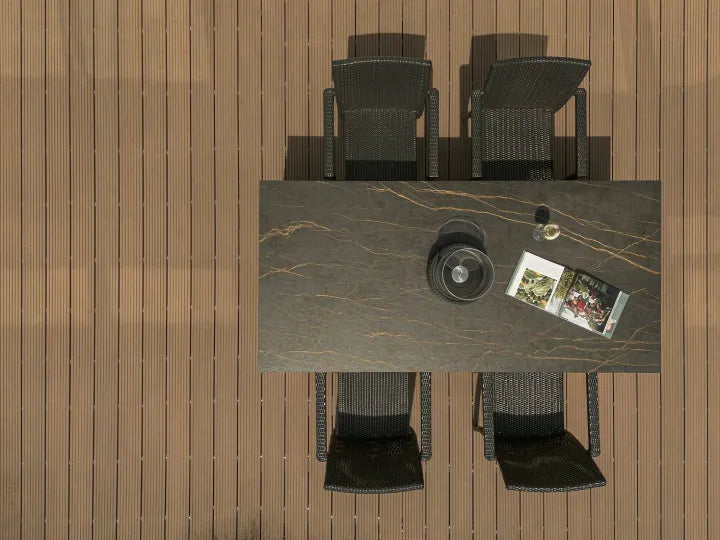
マイクロセメント天板:長所・短所・スラブ代替材

マイクロセメント天板の適用範囲、熱・傷・汚れ・下地・シーリングの制約、コンクリート調スラブを選ぶ場面を確認します。
LuCharlotte LuCharlotte 8 分以内に読めます 更新済み

Quick Answer

A microcement countertop can work when it is applied as a complete compatible system over a stable, correctly prepared substrate and the owner accepts protective habits around heat, knives, coloured spills and maintenance.

Choose it for a hand-finished, visually continuous surface or for a carefully assessed resurfacing project. Choose a factory-made concrete-look slab when the priority is conventional slab fabrication, defined joints and a finished surface supplied before installation. Before deciding, compare the exact substrate work, layer system, protective coat, curing, sink detail, maintenance and warranty scope—not the appearance alone.

What Is a Microcement Countertop?

A microcement countertop is a site-applied decorative coating built in thin layers over a prepared base and protected by the named system's finishing coats. It is not a solid block of concrete and it is not a factory-made stone slab. The finished character comes from the applicator's trowel work, colour choice, substrate preparation and protective system.

This distinction changes the buying process. A slab countertop is selected, cut, edged and installed as pieces. Microcement is produced on the countertop itself, so the quality of the existing base, corners, openings and application sequence becomes part of the finished surface.

Where Microcement Countertops Work Best

Microcement is strongest as a design choice when continuous appearance and refurbishment flexibility matter more than a factory-controlled slab face. It can connect a horizontal worktop, waterfall side and adjoining vertical surface with fewer material changes, although every movement joint and construction break still needs an appropriate detail.

Design-led kitchens

Use it when subtle trowel movement and a continuous mineral field are central to the room. Approve a real sample because colour, sheen and hand movement cannot be judged from a colour name alone.

Assessed resurfacing projects

It may avoid removing an existing top when the selected system accepts the substrate and the base is stable. This is a compatibility decision, not permission to coat loose tile, cracks or moisture problems.

Care-aware households

It is better suited to users who will use trivets and boards, clean coloured spills promptly and follow the written cleaning and maintenance instructions for the exact protective system.

The Main Advantages of a Microcement Worktop

The main advantage is visual continuity. A hand-applied surface can turn the top, edge and vertical return into one restrained composition without repeating the grid associated with small tiles. The surface can also be adjusted through colour and trowel movement to suit warm timber, black metal or quieter neutral interiors.

Resurfacing is the second important advantage. When compatibility and substrate condition are confirmed, a coating route can retain the underlying worktop instead of replacing the entire assembly. That may reduce demolition, but the installer still needs to price cleaning, repairs, primers, reinforcement or movement detailing, layers, protective coats and curing.

Funtek project showing a countertop before, during and after microcement resurfacing
This Funtek project sequence shows the existing surface, hand application and finished countertop. A photograph can show the visual transformation; the selected system documentation must still define substrate compatibility, layer build-up and curing.

Heat, Knives, Spills and Sealer Are the Daily-Use Test

A countertop is more demanding than a wall because it receives hot cookware, blades, oils, wine, coffee, water and repeated cleaning at close range. The protective finish is therefore part of the performance system rather than a cosmetic final step.

  • Direct heat: use a trivet unless the exact manufacturer provides a different written condition for the complete countertop system.
  • Knives and dragging: use a chopping board and avoid dragging rough cookware across the protective surface.
  • Coloured spills: remove wine, coffee, oil and acidic food promptly with the approved cleaning method.
  • Cleaning: use products accepted by the system supplier; an aggressive cleaner can affect the protective finish even when the underlying cementitious layer remains intact.
  • Maintenance: ask what visible signs trigger inspection or renewal and who is responsible for that work.
Funtek project microcement countertop with trivet, chopping board and spill-cleaning cloth
A trivet, chopping board and prompt spill cleaning are practical countertop habits. Confirm the exact heat, stain, cleaning and maintenance limits for the named microcement and protective system.

The decision is not whether microcement is universally durable; it is whether the complete named system, substrate and daily-use conditions fit this countertop.

Substrate Stability Decides More Than Surface Colour

A coating follows the assembly below it. Existing cracks, loose tiles, weak coatings, flexible boards, poorly supported edges or movement between materials must be assessed before application. Covering a defect does not remove its cause, and movement below the surface can become visible above it.

Ask the installer to identify the substrate, repair method, joint treatment, primer, reinforcement where specified, microcement layers, protective coats and curing restrictions. If the existing top is being retained, include sink and cooktop openings, edges, upstands and material transitions in the inspection rather than approving only the flat field.

Integrated Sinks Need a Separate Wet-Zone Decision

An integrated sink adds standing water, drainage planes, penetrations and several internal corners to the countertop. Those details concentrate risk, so they should not be approved merely because the same finish works on the surrounding horizontal surface.

Funtek project close-up of a light grey microcement countertop and integrated sink
This Funtek project close-up makes the sink corners, drain area and countertop-to-backsplash interface visible. Ask for the exact approved wet-zone build-up, slopes, penetrations, protective coats and maintenance instructions.

If a fabricated basin is being considered instead, review the broader integrated sink worktop planning page for drawing, support, drainage and fabrication inputs. That page covers a different construction route; it does not replace the microcement system supplier's wet-zone instructions.

Compare Installed Quotes, Not a Price per Square Metre Alone

A small countertop can have a high detail-to-area ratio. Sink cut-outs, corners, upstands, old-surface repairs, masking, return visits, curing and protective coats can matter more than the nominal area. A low coating rate and a complete installed worktop quotation are therefore not comparable figures.

Quote item What the quote should state Why it changes the result
Existing substrate Material, stability assessment, repairs and removal exclusions Preparation can determine both price and crack risk
Layer system Named primer, reinforcement where specified, base and finish coats “Microcement” alone does not define a complete build-up
Edges and openings Front edge, waterfall return, sink, cooktop, upstand and internal corners Detailed zones require more labour and control than a flat panel
Protection and curing Protective coats, application intervals, first-use date and full-cure restrictions Premature use can damage an unfinished system
Maintenance and warranty Approved cleaners, inspection or renewal conditions, exclusions and responsible party Future care belongs in the purchase decision

Microcement Countertop vs Concrete-Look Slab

Both routes can create a quiet cement or mineral appearance, but they solve the construction in different places. Microcement is finished on site over a prepared base. Sintered stone is supplied as a factory-made slab, then cut, edged and installed with planned joints and support.

Funtek project comparison of a continuous microcement edge and a factory-made slab edge
The continuous coated edge on the left and defined factory-made slab edge on the right express the central choice: site-applied continuity versus a fabricated slab assembly.
Decision Microcement coating Concrete-look sintered stone slab
Primary visual strength Hand-applied continuity and subtle trowel variation Controlled factory-made surface and full-slab pattern
Construction route Built and protected on the prepared countertop Cut, edged and fabricated before final installation
Existing top May be retained when compatible, stable and correctly prepared Normally planned as a slab assembly over suitable support
Joints Can create broad continuous fields, subject to required construction joints Slab joints and seams remain part of the layout
Approval evidence System sample, texture, substrate method, layer build-up and installer scope Physical slab sample, full-face image, finish, edge, seams and fabrication drawing

If the slab route fits better, compare all eight current products in Concrete Look Countertops, then browse the complete cement-look sintered stone collection. For a broader cross-material shortlist beyond countertops, use the existing microcement alternatives comparison.

Which Route Should You Choose?

Choose microcement when continuous hand-finished character is the priority, the substrate and details have been assessed, the selected system is approved for the worktop, and the owner accepts the stated care and maintenance conditions. Choose a concrete-look slab when the project needs factory-made surface selection, conventional slab fabrication, drawing-led edges and openings, and deliberately planned seams.

Before approval, place the two quotations side by side with the same finished dimensions, sink and cooktop details, edges, preparation, support, installation, protection, maintenance and warranty boundaries. The better decision is the route whose complete construction and care obligations fit the project—not the one with the most attractive isolated sample.

If cracking, staining, scratches or waterproofing are driving the decision, review the dedicated microcement problems guide before choosing repair or replacement.

Continue Exploring Cement-Look Surfaces

Use the next guide that matches the decision your project still needs to make.

Need the Microcement Look in a Factory-Made Slab?

Send Funtek your preferred grey, greige or beige direction, countertop drawing, finish preference, quantity and destination. We can help shortlist current concrete-look sintered stone samples and prepare the slab quotation route.

筆者について

LuCharlotte

焼結石(Sintered Stone)専門メーカー兼テクニカルアドバイザー

LinkedInでつながる

LuCharlotteは、焼結石(Sintered Stone)の製造実務、素材試験、案件仕様の視点から執筆しています。建築士・デザイナー・加工業者・プロジェクトの購買担当者様向けに、表面性能、スラブ規格、加工の考え方、仕上げ選び、用途適性など、現場で役立つ内容をわかりやすくお届けしています。素材選びにおける技術的な判断を、より明確で正確、そして検証しやすいものにすることが、彼女の目的です。

マイクロセメント天板 FAQ

01

既存のキッチン天板にマイクロセメントを施工できますか?

選定システムが適合し、下地が安定・清浄・乾燥し、適切に調整され、目地と小口が処理されていれば、一部既存天板上へ施工できます。動き、浮きタイル、弱い塗膜、湿気問題は施工前に解決します。

02

マイクロセメントのキッチン天板にはシーリングが必要ですか?

仕上げは保護層/シーラーを含む指定システム全体で決まります。メーカーの天板仕様、養生要件、洗剤、汚染限界、維持管理/再塗装予定を書面で施工業者と確認してください。

03

マイクロセメントのキッチン天板はひび割れますか?

ひび割れリスクは下地の動き、目地、下地調整、積層構成、施工品質に強く関係します。マイクロセメントを不安定な下地の補修材とせず、塗布前に既存構成を評価してください。

04

マイクロセメントは一体型シンクまわりに適していますか?

一体型シンクには継続的な水濡れ、入隅、排水勾配、貫通部が加わります。その詳細に承認されたシステムのみを使い、施工業者/システム供給者から積層、シール、維持管理の書面指示を得てください。

05

マイクロセメント調を表現できるスラブ素材は?

コンクリート調人工クォーツ、大判磁器質、セメント調セラミックストーンは、工業製造スラブで落ち着いた鉱物感を再現できます。正確な製品、仕上げ、目地、小口構成、開口、支持、加工範囲を比較します。