


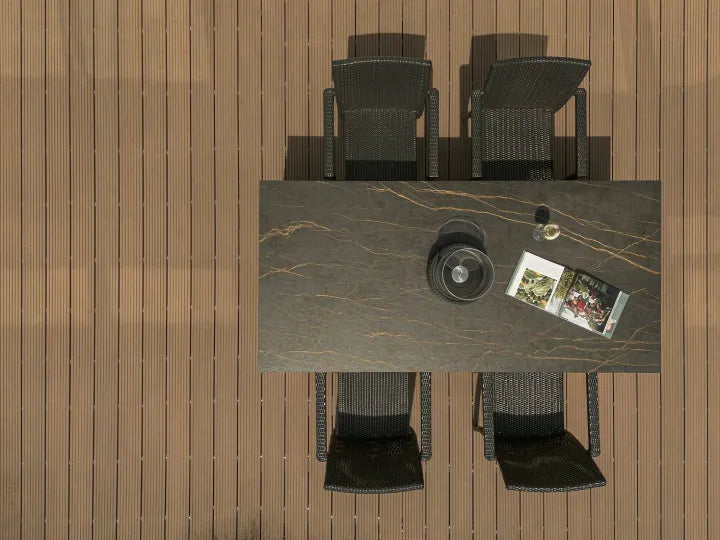


Les principaux types de pierres utilisées dans la construction sont le granit, le basalte, le calcaire, le grès, l’ardoise, le marbre, le quartzite, le travertin, le gneiss et la latérite. Le bon choix dépend d’abord de la forme fournie et du rôle de construction: l’agrégat concassé, la maçonnerie, la pierre de dimension, le pavage, la toiture et le revêtement mince nécessitent des propriétés et des preuves différentes, donc un nom de pierre seul n’est pas une spécification utilisable.
Réponse rapide
La pierre de construction la plus adaptée dépend de ce que doit faire le produit fourni. Utilisez ces groupes comme liste de départ pratique, puis vérifiez la source exacte de la carrière, la forme du produit, la finition, l’exposition et les preuves de test pertinentes.
Règle de sélection: Choisissez d’abord par rôle de construction et forme fournie, puis approuvez le matériau exact avec des rapports de test correspondants et les détails du système installé.
La pierre de construction signifie plus d’une forme de produit
La pierre de construction est généralement fournie sous forme de pierre concassée ou de pierre de taille. Ces formes peuvent provenir d’une même grande famille de roches, mais elles résolvent des tâches d’ingénierie différentes. L’U.S. Geological Survey définit la pierre dimensionnelle comme la roche de taille comme la roche naturale, extraite en blocs ou dalles répondant aux exigences de taille, de forme et d’utilisation architecturale ou d’ingénierie. La pierre concassée est décomposée en tailles de particules contrôlées pour les granulats, la base, le drainage, le ballast et les travaux civils associés.
| Forme du produit | Ce que c’est | Rôles typiques de la construction | La sélection commence par |
|---|---|---|---|
| Pierre concassée | Roche transformée en particules classées | Agrégats de béton et d’asphalte, base de route, drainage, ballast ferroviaire et remblai | Gradation, ténacité, abrasion, durabilité, forme des particules et la spécification civile applicable |
| Pierre dimensionnelle | Roche naturelle sélectionnée et découpée en blocs, dalles, panneaux, unités ou pièces façonnées | Maçonnerie, revêtement, pavage, escaliers, toitures, bordures, monuments et surfaces intérieures | Origine exacte de la pierre, dimensions, finition, exposition, rôle structurel et rapports de test spécifiques au produit |
| Surface minérale manufacturée | Matériaux cuits, frittés ou composites transformés en dalles, carreaux ou panneaux | Plans de travail, murs, sols, meubles et certains systèmes extérieurs | Composition, norme produit, performance déclarée, épaisseur, fabrication et système installé |
Les surfaces manufacturées sont souvent décrites avec un vocabulaire de marché de la pierre, mais elles ne sont pas de la pierre de taille naturelle. Un full Comparaison de la pierre naturelle, de la pierre frittée et d’autres matériaux de surface relève d’une décision matérielle distincte. Funtek explique aussi Ce qu’est la pierre frittée et comment elle est fabriquée pour les lecteurs évaluant cette catégorie spécifique de plaques.
Ne copiez pas une plage de propriétés générique dans une spécification: source de carrière, structure minérale, défauts, finition, épaisseur, orientation et méthode d’essai peuvent modifier le résultat.
Types courants de pierres utilisées dans la construction
Dix familles de pierres apparaissent dans les bâtiments et les travaux civils, mais chaque nom couvre de nombreux gisements et produits individuels. Le tableau ci-dessous est un outil de première liste restreinte, et non un substitut au rapport exact de la carrière ou du produit.
| Type de pierre | Famille géologique | Formes de construction courantes et usages | Question clé avant la sélection |
|---|---|---|---|
| Granit | Ignée | Blocs et dalles de dimension, pavage, bordures, escaliers, revêtements et granulats concassés | Le granit, la finition et l’épaisseur exactes répondent-ils aux exigences d’exposition, d’usure et de structure? |
| Basalte ou roche piégée | Ignée | Granulats concassés, base de route, lest, pavage, bordures et travaux en pierre de dimensions sélectionnés | Le produit sélectionné est-il comme granulat gradué, surface d’usure ou unité de coupe, et quel emballage de test s’applique? |
| Calcaire | Sédimentaire | Maçonnerie, pierre de taille, revêtement, sol, pavage, détails sculptés, granulats concassés et matières premières en ciment ou chaux | Quelle est la porosité et la résistance aux intempéries exactes du calcaire, et les acides, les sels, l’humidité ou le gel et la dégel influencent-ils l’utilisation? |
| Grès | Sédimentaire | Murs, maçonnerie, revêtement, dalles, pavés, marches et construction paysagère | Quelle est la direction de couchage, les minéraux de ciment, l’absorption et l’altération de la pierre fournie? |
| Slate | Métamorphique | Toiture, revêtement mural, sol, pavage, parages, appuis et aménagement paysager | L’ardoise se fende-t-elle de façon cohérente, et la flexion, l’absorption et la résistance aux intempéries sont-elles signalées dans la direction appropriée? |
| Marbre | Métamorphique | Sols et murs intérieurs, escaliers, colonnes, parements, plans de travail et ornements. | L’exposition à l’acide, la circulation piétonne, les conditions de glissade ou les intembles extérieurs vont-ils entrer en conflit avec le marbre et la finition choisis? |
| Quartzite | Métamorphique | Sol, pavage, murs, revêtements, marches, dalles décoratives et agrégats concassés | Le nom commercial est-il supporté par l’identification pétrographique et les données de test de la source réelle? |
| Travertin | Calcaire sédimentaire | Carreaux muraux et de sols, revêtement, pavage, escaliers, entourages de piscine et détails architecturaux | Comment les vides naturels sont-ils comblés ou laissés ouverts, et la finition convient-elle aux conditions d’eau, de gel, d’usure et d’entretien? |
| Gneiss | Métamorphique | Murs, pavés, revêtements, pierres paysagères et granulats là où le matériau exact convient | Comment la foliation affecte-t-elle la fendure, le comportement de flexion, la direction de la coupe et le motif visible? |
| Laterite | Matériaux résiduels altérés | Des blocs, maçonnerie, pavages et matériaux routiers locaux dans les régions où la pratique établie les soutient | Quelles assaisonnements, stabilisations, protections et preuves selon le code local sont nécessaires pour le climat et la méthode de construction? |
Cette liste est volontairement plus large qu’un simple catalogue de dalles architecturales. Le basalte et le calcaire peuvent entrer dans un projet sous forme d’agrégats en vrac, tandis que le marbre et le travertin sont plus souvent sélectionnés comme pierres de dimension visible. Le granit peut servir les deux marchés, mais son nivellement granulé et ses éléments de façade ne sont pas interchangeables.
Guide visuel des pierres de construction courantes
Ces images de référence montrent des caractéristiques visuelles typiques et des formes communes fournies par les dix familles de pierres. La couleur naturelle, le grain, les pores, les veines et la finition de surface varient selon le dépôt et le traitement, donc utilisez un échantillon physique approuvé lorsque l’apparence compte.


Note sur l’image: Ces visuels générés illustrent l’apparence typique des matériaux et les formes des produits. Ce ne sont pas des échantillons de carrière, des approbations de produits ou des substituts aux échantillons physiques ni à des preuves spécifiques à un projet.
Les trois familles géologiques expliquent l’origine, pas la pertinence finale
Les classifications ignées, sédimentaires et métamorphiques expliquent comment une roche s’est formée. Ils aident à prédire la texture, les couches, la foliation ou la composition minérale, mais n’approuvent pas un produit fini pour un projet.
| Famille géologique | Comment il se forme | Exemples en construction | Implications pratiques |
|---|---|---|---|
| Ignée | Refroidissement et solidification de la roche en fusion | Granite et basalte | Souvent cristallines ou denses, mais la composition minérale, la structure de refroidissement et les défauts varient encore selon le gisement. |
| Sédimentaire | Dépôt, compactage ou accumulation chimique/biologique | Calcaire, grès et travertin | La litière, la cimentation, les pores et les vides naturels peuvent contrôler la direction de la coupe, le mouvement de l’humidité et l’intembie. |
| Métamorphique | Roche existante modifiée par la chaleur, la pression ou les fluides | Marbre, ardoise, quartzite et gneiss | La recristallisation, le clivage ou la foliation peuvent améliorer une propriété tout en créant une direction de division préférée. |
Le British Geological Survey utilise le même cadre large de terminologie ignée, sédimentaire et métamorphique. La spécification doit aller un niveau plus loin: identifier le produit commercial réel, la carrière ou la source, l’orientation de la coupe, les dimensions, la finition et les preuves de son rôle prévu.
Choisissez la pierre selon le rôle de construction, pas selon la popularité
La meilleure première question n’est pas « Quelle pierre est la plus forte? » C’est « Que doit faire cette pierre dans la construction achevée? » Un matériau peut bien fonctionner sous compression tout en étant inadapté comme panneau de couverture mince, surface de marche humide ou zone d’ancrage extérieure.
Les granulats et les travaux routiers nécessitent des preuves au niveau des particules
Les pierres concassées pour béton, asphalte, base de route, drainage ou ballast sont sélectionnées selon la spécification civile applicable. La répartition de la taille des particules, la forme, la résistance à l’abrasion et à l’écrasement, la durabilité, l’absorption, la propreté et les constituants potentiellement nocifs peuvent être importantes. La couleur décorative et le polissage d’une dalle de taille ne répondent pas à ces questions.
La maçonnerie et les unités portantes nécessitent une conception système
Les blocs de pierre et les unités en maçonnerie doivent fournir des preuves de la géométrie exacte de l’unité, de la direction de couche, du comportement de compression, de l’exposition à l’humidité et de la compatibilité avec le mortier, les traverses, les détails de mouvement et la construction adjacente. La conception structurelle responsable doit prendre en compte les trajectoires de charge et la stabilité; Une valeur de résistance à la compression générique n’approuve pas un mur.
Les panneaux de revêtement minces sont régis par la flexion et l’ancrage
Les panneaux extérieurs font partie d’un système de façade. L’épaisseur du panneau, la portée, la pression du vent, les découpes, la position de l’ancrage, la distance des bords, le cadre de soutien, les joints, le mouvement, la gestion de l’eau et les besoins incendie interagissent. Les données de matériaux et les preuves d’ancrage/système sont des couches d’approbation distinctes. Funtek page sur Systèmes de façades extérieures en pierre frittée Affiche les informations nécessaires au projet lors de l’évaluation d’une dalle minérale pour cette application.
Les sols et les pavages doivent être tenus par l’usure et des preuves de l’état de surface
La circulation piétonne change la priorité pour l’abrasion, la finition de surface, le nettoyage, les conditions humides, le drainage, l’exposition au gel-dégel et au substrat ou au système de litière installé. Un échantillon intérieur poli ne peut pas établir le comportement de surface humide extérieure. La finition testée doit correspondre à celle fournie.
L’ardoise de toiture est sensible à la direction
L’ardoise de toiture repose sur une fissure constante, des performances en flexion, l’absorption de l’eau, la résistance aux intempéries, la réparation et une conception complète de la toiture. La direction du test est importante car l’ardoise est anisotrope: la performance peut varier à travers et le long de son clivage.
Les dalles intérieures nécessitent des preuves de surface spécifiques à leur utilisation
Pour les plans de travail, les meubles, les revêtements muraux et les escaliers, vérifiez les conditions auxquelles la surface sera réellement exposée: acides, taches, chaleur, rayures, impacts, produits de nettoyage, fabrication des bords et qualité visible des joints. La même étiquette de pièce peut cacher des tâches très différentes, donc le produit exact et la finition influencent toujours.
Comparez les preuves du test à la façon dont la pierre fonctionnera
Un rapport de test utile répond à une question de performance définie. Cela ne prouve pas toutes les applications possibles. Le comité ASTM C18 maintient des méthodes d’essai distinctes pour les pierres dimensionnelles pour l’absorption, la compression, la flexion, l’abrasion, la résistance aux intempéries, l’ancrage et d’autres comportements précisément parce qu’il s’agit de modes de défaillance différents.
| Question sur le projet | Famille de preuves pertinentes | Ce qu’il peut supporter | Ce qu’il ne prouve pas par lui-même |
|---|---|---|---|
| Combien d’eau la pierre peut-elle absorber? | Absorption et densité en vraque, comme ASTM C97/C97M pour la plupart des pierres de dimension ou la méthode spécifique à l’ardoise | Comparaison de l’absorption et de la densité selon la méthode d’essai indiquée | Résistance au dérapement, durabilité au gel et au dégel, résistance aux taches ou gestion de l’eau installée |
| Comment se comporte-t-il sous compression directe? | Résistance à la compression, telle que ASTM C170/C170M | Comportement de port des échantillons testés et orientations | Pliage de panneaux fins, capacité d’ancrage, stabilité des parois ou résistance aux impacts |
| Une dalle ou un panneau peut-il résister à la flexion? | Module de rupture ou de résistance à la flexion, y compris l’orientation et l’état humide/sec lorsque nécessaire | Comparaison du comportement de flexion pour la pierre testée, de la base d’épaisseur et de la direction | Ancrage individuel, performance du sous-châssis ou approbation de la façade entière |
| Une surface de marche résistera-t-elle à l’usure? | Essais d’abrasion pour la pierre exposée au passage piétonnier | Usure relative selon la méthode de laboratoire définie | Performances en glissement humide, réponse de nettoyage ou drainage installé |
| Un fixation extérieure tiendra-t-elle? | Essais individuels d’ancrage et de système de revêtement en pierre, ainsi que des calculs conçus | Capacité ou comportement du système pour l’ancrage testé, géométrie de la pierre et configuration de la charge | Conformité automatique pour un panneau différent, une ancre, un châssis, une distance de bord ou un bâtiment différent |
| Quels minéraux, tissus ou défauts sont présents? | Examen pétrographique | Identification de la composition, de la texture, de la structure et des caractéristiques pertinentes à la durabilité | Un passage direct pour la résistance, l’abrasion, le glissement ou l’ancrage |
Vérifiez l’en-tête du rapport avant d’utiliser une valeur. Notez l’identité et la source de la pierre, l’état de l’échantillon, la finition, l’épaisseur ou les dimensions de l’échantillon, l’orientation de la coupe, la méthode d’essai, les unités, la date et le laboratoire. Ensuite, comparez l’objet testé avec le produit et le système affichés sur les plans du projet.
Un flux de travail de sélection de pierres en cinq étapes
Ce flux de travail transforme une large liste de pierres en une première liste de projets prête à faire sans prétendre qu’un guide public peut donner l’approbation finale.
- Définissez le rôle et la forme. Indiquez si la pierre est en agrégats, maçonnerie, pavage, toiture, pierre intérieure ou revêtement extérieur. Notez les dimensions, l’épaisseur, la finition et la quantité requises.
- Rédigez le calendrier d’exposition. Identifiez l’utilisation intérieure ou extérieure, l’humidification, le congélation, les sels, acides ou produits de nettoyage, la chaleur, le UV, la circulation piétonne, les impacts et les charges de conception applicables.
- Demande des preuves de source exacte. Obtenez l’identification du produit ou de la carrière, la fiche technique actuelle, les rapports de test pertinents, la norme déclarée, l’exemple et les instructions de fabrication ou d’installation. N’acceptez pas un rapport pour un « granite » non nommé ou une finition différente comme un match automatique.
- Évaluez le système installé. Coordination du mortier, de l’adhésif, des ancrages, du sous-châssis, du substrat, des joints, du drainage, du mouvement et des détails de bord/découpe. L’adéquation des matériaux ne prouve pas l’adéquation du système.
- Gel de l’approbation s’oppose. Approuvez l’échantillon ou la portée exacte, la finition, les dimensions, le dessin, les détails de raccord et de fixation, le package d’essai, les critères d’acceptation et la procédure de remplacement avant la production ou l’installation.
Un dossier de demande concis doit inclure la demande, les plans, les dimensions et la quantité; le calendrier d’exposition et de charge; la pierre et la finition attendues; les standards ou questions de test à résoudre; et qui est responsable de l’approbation des structures, des façades, des chaussées ou de l’installation. Cette information permet à un fournisseur ou consultant de répondre au projet réel au lieu d’envoyer un catalogue générique.
Le résultat final
Commencez par une famille probablement de pierres, mais prenez la décision selon la forme du produit et le rôle dans la construction. Une liste restreinte défendable identifie si le projet nécessite une pierre granulée ou dimensionnelle, indique l’exposition et la tâche exactes, demande des preuves de test correspondantes, et vérifie l’ensemble du système installé. L’approbation finale dépend toujours de la source réelle, de la finition, des dimensions, des rapports, des plans et de la revue responsable du projet.
Présélection d’une surface de projet en pierre entremise
Envoyez la demande, les plans, les tailles, la quantité, la direction de finition, les conditions d’exposition et la destination de livraison. Funtek peut examiner les options de dalles et les informations nécessaires avant de prélever et de deviser.