


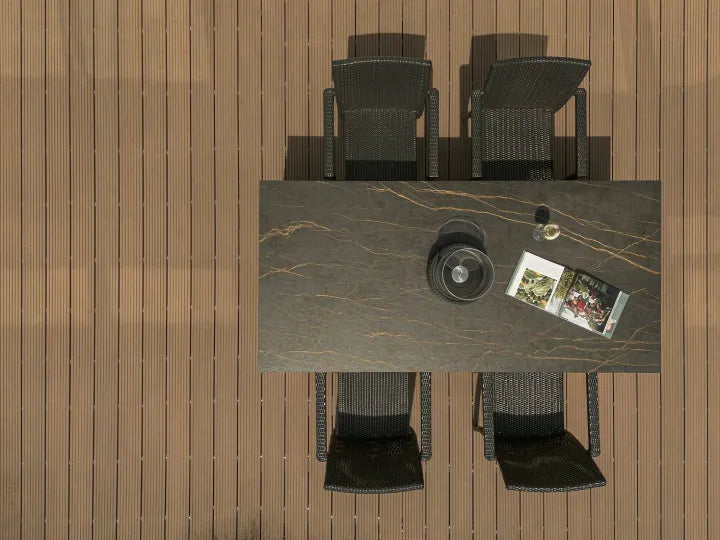


Quartz, porcelain or sintered stone, solid surface, laminate, wood and selected natural stones are the main granite countertop alternatives. Start with the reason you want a change: quartz for a controlled pattern and no routine sealing, laminate for a lower purchase price, solid surface for repairable finishes and discreet joints, or porcelain and sintered slabs for a thin stone-look surface.
Not every granite countertop needs routine sealing; the Natural Stone Institute recommends checking the particular stone. These choices solve different problems. A surface that needs no sealer can still need heat protection, and a cheaper panel can become a costly installation if its size does not suit the layout. Compare the material, exposed edge and finished project together.
Quartz: a consistent pattern without routine sealing
Engineered quartz is a useful starting point when you like a stone surface but want a quieter or more repeatable pattern than your current granite. It comes in fine-grained, plain and veined designs. The repeatability helps with selection, but adjoining pieces still need a planned seam: a large vein can end abruptly where the next piece begins.
Quartz surfaces combine mineral material with a binder. Check the named product rather than assuming every current brand or collection has the same composition. Quartz is also different from naturally quarried quartzite.
The practical appeal is cleaning without routine penetrating sealer. Heat remains a separate consideration. Caesarstone’s care instructions call for trivets under hot cookware and cutting boards for food preparation. They also note that some textured and honed finishes show more everyday marks than polished finishes. Compare finish samples as well as colors.

Porcelain and sintered slabs: stone looks with a slim edge
These surfaces suit buyers who want a stone, concrete or other mineral appearance across a broad countertop. They are fired or sintered mineral-based surfaces, but a porcelain slab and a product sold as sintered stone should not be assumed to share every specification. Choose an exact product approved for countertop use.
A slim exposed edge creates a different visual result from a thick granite profile. Ask to see a finished corner and a sink cutout. A surface pattern may differ from the material visible at the cut edge, while a built-up or mitered edge creates apparent thickness through fabrication. The sample should show the edge you will actually receive.


Low absorption can reduce the need for routine sealing, but edge impact, openings and support still matter. Have the fabricator review cabinet support, appliance cutouts and overhangs for the chosen slab. Do not select a thinner surface solely because it looks lighter, then copy the support arrangement from the old granite.
If these two manufactured routes make your shortlist, the sintered stone versus quartz comparison develops the heat, finish and fabrication differences. For Funtek, begin with a named slab and its applicable technical information; confirm the finish, thickness and intended use before specifying it.
Solid surface: discreet joints and a renewable finish
Solid surface is worth considering when the visual interruption of joints matters more to you than natural stone depth. Compatible pieces can be joined and finished to make seams less conspicuous. Light, simple colors are a useful place to start when evaluating that effect; ask to see a fabricated seam rather than judging two loose samples.
Repairability is one of its more useful differences. Corian’s solid-surface care bulletin describes renewal of minor scratches and recommends professional help for more severe damage or higher-gloss refinishing. This does not mean a countertop cannot scratch. It means some wear can be addressed by restoring the finish.
Direct heat is still a constraint: the same bulletin requires trivets or hot pads and warns against putting hot pans directly on the surface. For a kitchen with regular cooking, look at the proposed resting place for pans and countertop appliances before deciding whether that routine suits you.

Laminate and tile: two different budget routes
Laminate changes both the price and the construction
Laminate can reproduce a plain color, wood grain or stone pattern at a lower panel purchase price. Its decorative surface sits on a supporting core, so the face, edges and joints do different jobs. A convincing top surface is only part of the finished appearance: view an exposed end and the sink detail too.
Formica’s care guidance warns against flooding seams because water can penetrate and swell the substrate. Select the sink and edge construction with the countertop supplier, then follow the product’s heat and cleaning instructions. A nonporous decorative face does not make every joint waterproof.

Tile adds joints as part of the design
A tiled counter lets you combine color, shape and a visible grid without buying a full stone slab. Smaller tiles also mean more joints to clean across a given area. The trade-off is that grout joints interrupt the working surface. A tile with a low purchase price still needs a suitable countertop assembly, edge pieces, setting materials and labor.
Inspect a small finished mockup with the intended tile and grout. Slide a plate across it and look at the front edge. This reveals the joint rhythm and surface transitions that a single tile sample cannot show. Choose products approved for that countertop use and confirm the grout cleaning routine before ordering.

Wood: a different feel, with finish-dependent care
Wood replaces granite’s mineral pattern with grain and a warmer visual tone. It can work as a separate island or preparation area even when you prefer another material beside the sink. That mixed-material approach lets the wood remain a deliberate part of the room instead of forcing one material into every location.
Solid wood, thick veneer and a printed wood-look laminate are different constructions. Their edges, repair options and maintenance differ. John Boos distinguishes oil-finished butcher-block tops intended for cutting from other countertop finishes and calls for periodic oiling of the former. Ask which finish is supplied and what can be renewed; do not apply an oiling or sanding routine to an unidentified surface.

Other natural stones, concrete and stainless steel
Soapstone offers a muted, usually honed surface with a different wear pattern from granite. It does not need routine sealing, but it is relatively soft and scratches are part of the decision. Use Natural Stone’s soapstone guidance explains both its low absorption and the option of oil or wax to change its appearance. Judge an untreated and treated sample if the darkened color is what attracts you.

Quartzite or marble can replace granite when the priority is a different natural pattern. They are not interchangeable care upgrades. Marble is vulnerable to acid etching; quartzite needs accurate identification and stone-specific care. The natural stone countertop guide covers that wider shortlist. If marble is the main contender, use the marble versus granite comparison for the direct choice.
Concrete makes sense when the cast form and surface variation are central to the design. Ask the maker about the supplied finish, sealing or coating system, visible variation and repair process. A concrete appearance is also available in manufactured slabs; liking that appearance does not necessarily mean you want cast concrete’s construction and care.
Stainless steel changes the room more substantially. It offers a continuous metal appearance and can be fabricated with a sink or upstand. Inspect a used example as well as a new sample: reflected light, fingerprints and visible scratches become part of its character. Have the fabricator explain the backing and joining details for your layout.

Which alternatives are actually cheaper than granite?
Laminate and some tiled assemblies are the first options to price when reducing the initial spend is the main aim. Quartz, porcelain, sintered stone, solid surface and other natural stones can overlap granite’s installed cost. They should not be labeled cheaper solely because they appear on an alternatives list.
For a current product example, IKEA’s U.S. SÄLJAN dark gray stone-effect laminate is listed at US$129 for a 74 × 25⅝-inch panel, checked September 15, 2026. That is a panel purchase, before the project’s delivery, cutting, installation and other work.
Suppose a kitchen needs two separate straight counters, each 72 × 25⅝ inches. Two of those panels cost $258 before the other work. Together, the finished counters cover 25.625 square feet. Dividing gives about $10.07 per finished square foot for the purchased panels. The result assumes both pieces fit the panel depth and need only the stated length reduction; confirm cuts and edge finishing with the installer.
A 36-inch-deep island changes that calculation immediately: a 25⅝-inch-deep panel does not span it in one piece, even if the total square footage seems sufficient. The required width can change the product, joint or construction you must buy. Compare dimensions and layout before converting everything into a square-foot price.
For context on a different scope, Marble.com’s quartz cost guide, updated January 2026, gives a U.S. installed-material range of $45–$75 per square foot, with edges and cutouts affecting price. An installed quote and a precut panel price are not competing totals until you add the missing work.
Ask each supplier to price the same finished pieces, exposed edges, sink and appliance openings, support work, delivery and installation. State whether removal, plumbing reconnection and taxes are included. This is how you find the cheaper completed option for your kitchen.
Build a shortlist around the change you want
| Use and priorities | Starting choice | What changes the decision |
|---|---|---|
|
Lower panel purchase price
|
Price laminate first | Check usable panel width, end finishing, sink details and the full installation total. |
|
Less routine sealing
|
Compare quartz finishes | Use a trivet and inspect the preferred finish for visible everyday marks. |
|
Less conspicuous joints and a renewable finish
|
Inspect solid surface | View a finished seam and confirm the repair process for the selected gloss level. |
|
A slim mineral-look surface
|
Compare countertop-rated slabs | Approve the exposed edge, openings and support with the fabricator. |
Choose two materials that address your main reason for moving away from granite. Compare their samples beside the cabinet finish, then review an exposed edge, a joint and the sink arrangement. Those details connect the small sample to the finished kitchen.

If sintered stone is on that shortlist, Funtek’s countertop supply service supports slab and cut-to-size discussions, drawing review, fabrication coordination and export packing. Share the desired look, project location and layout so the discussion can move to an identified slab and a defined supply scope.
Considering a Sintered Stone Countertop?
Share the look you want, the room and rough dimensions. Discuss Funtek slab options and samples, then confirm the selected material and fabrication scope for your project.