


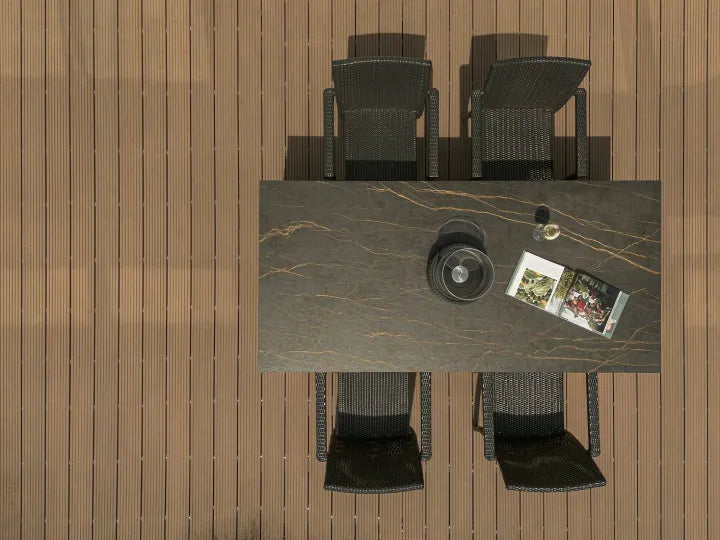


يمكن أن يعني الحجر المُلبَّد الصينية الدوارة منتجين مختلفين: صينية دوارة مستقلة موضوعة على طاولة موجودة، أو طاولة طعام مستديرة مصممة بمركز دوار قابل للإزالة أو مرتفع أو متكامل. قم بتسوية هذا التمييز قبل مقارنة السعر، لأن الأبعاد والمحمل والدعم وتفاصيل الحافة ونطاق التعبئة والتركيب ليست هي نفسها.
تبيع معظم القوائم عبر الإنترنت طاولة طعام كاملة، بينما يبيع البعض الآخر القرص الدوار فقط. للحصول على طلب مخصص، قم بتسمية القطر الخارجي لسطح الطاولة وقطر الصينية الدوارة بشكل منفصل. "1370 mm round" غير مكتمل إذا لم يتمكن المورد من معرفة ما إذا كان يصف الطاولة أو القرص الدوار.
ما هي الصينية الدوارة المصنوعة من الحجر المُلبَّد؟
وهو عبارة عن سطح دائري من الحجر المُلبَّد مثبت على آلية دوارة منخفضة الاحتكاك حتى يتمكن رواد المطعم من تحريك الأطباق المشتركة حول الطاولة. قد يكون ملحقًا قابلاً للإزالة أو مركزًا مرتفعًا أو نظامًا غائرًا أو جزءًا من طاولة طعام كاملة مصنوعة في المصنع. يمكن أن يكون القرص المرئي عبارة عن لوحة مستديرة أو مجموعة مدعومة ذات وجه حجري مُلبَّد.
اختر نوع المنتج قبل طلب عرض الأسعار
تعتبر الصينية المرتفعة القابلة للإزالة هي الأسهل في الخدمة
يمكن وضع وحدة قابلة للإزالة على طاولة مستديرة موجودة ورفعها بعيدًا للتنظيف أو النقل أو الوصول إليها. إنه المسار الأكثر مرونة، لكن الجانب السفلي يحتاج إلى نقاط اتصال لا تحمل علامات وثباتًا كافيًا بحيث لا تتحرك الوحدة عبر الطاولة أثناء الاستخدام.
يحتاج التصميم المريح أو المتدفق إلى بنية طاولة منسقة
يمكن أن يبدو النظام الداخلي أكثر نظافة، ولكنه يتطلب فترة راحة مصممة، وتحكمًا دقيقًا في الارتفاع، وإمكانية الوصول إلى التنظيف، وخطة خدمة للأجهزة الدوارة. تعامل معها على أنها مجموعة أثاث، وليس مثل لوح فضفاض سقط في حفرة.
طاولة طعام متكاملة تقلل مخاطر عدم توافق المكونات
يتيح الجدول الكامل لمورد واحد تنسيق الجزء العلوي الخارجي والقرص المركزي والقاعدة والدعم والدوران. لا يزال المشتري بحاجة إلى رسم وبيانات تحميل الآلية وتعليمات التجميع وخطة التغليف ومسؤولية واضحة عن التلف أو سوء المحاذاة بعد التسليم.

ما هو حجم الصينية الدوارة؟
يجب أن يكون القرص كبيرًا بما يكفي للأطباق المشتركة ولكنه صغير بما يكفي للحفاظ على منطقة إعداد مكان كل عشاء. الفحص الأول المفيد هو:
هذا مجرد فحص هندسي. ولا يحل محل تخطيط المقاعد أو فحص عرض الكرسي أو اختبار الأطباق أو مراجعة هندسة الأثاث.
| قطر الطاولة الخارجي | قطر الصينية الدوارة | منطقة طعام شعاعية | يجب أن يؤكد الرسم أيضًا |
|---|---|---|---|
| 1370 mm | 700 mm | 335 mm | عمق الطبق والكراسي وحجم طبق التقديم |
| 1500 mm | 800 mm | 350 mm | تحديد المكان والوصول والتخليص المركزي |
| 1800 mm | 1000 mm | 400 mm | عدد المقاعد والموقع الأساسي والوصول إلى الغرفة |
هذه أمثلة عملية، وليست توصيات قياسية. يمكن أن يكون السطح الدائري 1370 × 1370 mm عبارة عن سطح طاولة كامل، أو مكون دوار كبير، أو سطح دائري فارغ. يتطلب كلا القطرين على الرسم المعتمد.
تحديد المحمل والدعم والدوران معًا
يحدد المحمل مدى سلاسة بدء تشغيل القرص وتوقفه وحمله ترتيبًا غير متساوٍ للأطباق. اسأل عن نوع المحمل، والحمل المقدر، وقطر التركيب، وطريقة التثبيت، والتشغيل المتوقع، والوصول إلى الخدمة، وما إذا كانت الآلية قابلة للاستبدال.
يحتاج المكون الحجري إلى دعم هندسي مستمر ومسطح. لا ينبغي افتراض أن التثبيت المركزي الزخرفي يدعم لوحة هشة كبيرة. يتطلب رسمًا على الجانب السفلي يوضح اللوحة الخلفية أو حلقة الدعم، وموضع المحمل، والمثبتات، والوسادات، والخلوص فوق سطح الطاولة الرئيسي.
اختبار أكثر من الغزل الحر. يجب أن تبدأ العينة بدون دفع قوي، وتتوقف دون تذبذب مفرط، وتظل مستوية تحت حمل اختبار غير متساوٍ، وتدور دون كشط، وتتجنب نقاط الضغط حول المحيط.
هل يجب أن يكون الحجر سميكًا؟
لا يوجد سمك واحد يثبت الجودة. يجمع قسم العمل بين السطح الملبد، والبطانة أو الدعم، والمواد اللاصقة عند استخدامها، ومعالجة الحواف والأجهزة الدوارة. قد تكون الحافة السميكة بصريًا عبارة عن حافة مدمجة بينما تظل مادة الوجه رقيقة.
بالنسبة للصينية القابلة للإزالة، يمكن للكتلة المنخفضة أن تجعل الرفع والخدمة أسهل، لكن التجميع لا يزال بحاجة إلى الصلابة والحماية من الصدمات. بالنسبة للقرص المدمج الكبير، قد يؤدي البناء المدعوم إلى إبقاء المستوى الدوار مسطحًا. ال دليل سمك الحجر المُلبَّد يشرح لماذا يعد عمق الحافة المرئية وسمك المادة قرارين منفصلين. يتطلب أيضًا وزن التجميع النهائي لأنه يؤثر على اختيار المحمل والتعبئة والتعامل معه.
قم بمطابقة نمط الصينية الدوارة مع الجدول الخارجي
يمكن أن يختفي المركز الدوار بصريًا في الطاولة أو يعمل كنقطة محورية. يؤدي النمط المطابق إلى إنشاء سطح هادئ، ولكن المحاذاة تتغير في كل مرة يدور فيها القرص. يتجنب النمط المتناقض أو المستقل بشكل متعمد التظاهر بأن العروق ستبقى متصلة أثناء الاستخدام.
يتناسب مظهر الرخام ذو اللون الرمادي الفاتح مع الغرف المحايدة المشرقة؛ تخلق الأسطح السوداء تباينًا أقوى ويمكن أن تجعل خط التدوير أقل بروزًا؛ تعمل الأنماط الخضراء أو الذهبية أو المعدنية المعقدة على تحويل المركز إلى ميزة. ال دليل نمط الحجر المُلبَّد يساعد المشترين على وصف مقياس العرق والاتجاه وعائلة الألوان والحركة.


ما الذي يجب عليك التحقق منه قبل الشراء؟
طلب رسم الأبعاد والتأكيد:
- ما إذا كان عرض السعر يغطي الدرج الدوار أو الطاولة الكاملة؛
- القطر الخارجي لسطح الطاولة، وقطر الصينية الدوارة وفرق الارتفاع النهائي؛
- رمز الحجر، والتشطيب، وعدد الوجه، والسمك، وبناء الحافة؛
- وزن تجميع القرص، ونموذج المحمل، والحمل المقدر وتخطيط الدعم؛
- طريقة التثبيت القابلة للإزالة أو المرتفعة أو الغائرة أو المتساطحة؛
- خلوص الدوران والتحكم في نقطة الضغط والوصول إلى الخدمة؛
- الأبعاد الأساسية، ومساحة الكرسي، وتسوية الأرضية للحصول على طاولة كاملة؛ و
- التعبئة والتجميع وقطع الغيار والضمان ومسؤولية التسليم.
تُظهر صورة نمط الحياة التناسب والأسلوب، ولكن الرسم بالأبعاد فقط يمكنه تأكيد ما إذا كان القرص الدوار ومنطقة تناول الطعام والمحمل وقاعدة الطاولة يعملان معًا.
ماذا تظهر عمليات تثبيت العملاء؟
تُظهر صور العملاء استخدامين عمليين: مركز قابل للإزالة على طاولة طعام زجاجية ومنظم دوار صغير الحجم على سطح المطبخ. وهي تثبت أنه يمكن استخدام المنتج خارج حزمة طاولة الطعام المطابقة الكاملة، ولكنها لا تحل محل بيانات الحمل أو التحميل الخاصة بالمشروع.


كيف يمكنك تنظيفه واستخدامه بأمان؟
قم بتنظيف السطح بالطريقة المعتمدة للحصول على اللمسة النهائية الدقيقة، وامسح الانسكابات قبل أن تصل إلى المحمل أو الوصلة الغائرة. تجنب ضرب الحافة المكشوفة بأواني الطبخ الثقيلة، أو إسقاط الأطباق في المنتصف، أو الضغط بقوة على القرص عندما يمنع جسم ما دورانه.
لا تضع أصابعك تحت حافة دوارة ولا تسمح للأطفال باستخدام الصينية كرحلة أو عجلة. اتبع طريقة الرفع الخاصة بالمورد بالنسبة للوحدة القابلة للإزالة وافحص الآلية إذا أصبح الدوران خشنًا أو مائلًا أو صاخبًا.
كيف ينبغي تعبئة الصينية الدوارة المستديرة؟
تحتاج الألواح المستديرة إلى دعم كامل الوجه وحماية الحواف. يجب أن يمنع الصندوق الانزلاق، ويعزل الوجه النهائي عن الأجهزة، ويحمي المحيط بالكامل ويحافظ على المحمل أو الأجزاء الأساسية من تحميل الحجر أثناء النقل.
للحصول على طاولة كاملة، قم بتعبئة الجزء العلوي الخارجي والقرص الدوار والقاعدة والتجهيزات كمكونات محددة بشكل منفصل مع سجل التجميع. قم بتصوير القطع والصندوق قبل إغلاقه، ثم تأكد من معدات التفريغ وأبعاد العبوة والأوزان الإجمالية. Funtek دليل الشحن العالمي يغطي الشحن الأوسع وتلقي الأسئلة.
ما هي المعلومات التي تنتج عرض أسعار مخصصًا موثوقًا به؟
أرسل نوع المنتج، والوجهة، وقطر الطاولة الخارجي، وقطر الصينية الدوارة، واتجاه النمط أو اللون، واللمسة النهائية، والكمية وما إذا كنت بحاجة إلى القرص الدوار، أو سطح الطاولة الكامل أو الطاولة الكاملة. أضف رسمًا يوضح البناء المرتفع أو القابل للإزالة أو المدمج المطلوب.
اذكر السوق وطريقة التغليف ومدة التسليم والاختبارات أو المستندات المطلوبة. إذا تم توفير المحمل أو القاعدة من قبل المشتري، فقم بتقديم بيانات الرسم والتحميل الخاصة بها. Funtek صفحة سطح طاولة الطعام والأثاث يغطي تطبيق السطح الأوسع، في حين أن عملية التوريد المباشر من المصنع يشرح الموافقة على العينة وضوابط الطلب.
الخلاصة
أفضل حجر مُلبَّد الصينية الدوارة لا يتم اختياره بالنمط وحده. حدد أولاً ما إذا كنت ستشتري صينية دوارة فضفاضة أو طاولة طعام كاملة. ثم قم بالموافقة على القطرين ومنطقة تناول الطعام القابلة للاستخدام والارتفاع النهائي والدعم والمحمل والحافة والوزن والوصول إلى الخدمة كنظام واحد.
استخدم صور الغرفة لتحديد النمط وصور المنتج بالحجم الكامل لتقييم النمط، ولكن قم بإصدار الإنتاج فقط من الرسم ومواصفات الأجهزة المؤكدة. وهذا يمنع خطأ عرض السعر الأكثر شيوعًا: طلب قطعة حجرية مستديرة جذابة لا تناسب الطاولة أو رواد المطعم أو الآلية.
حدد حجرًا مُلبَّدًا مخصصًا لـ الصينية الدوارة
أرسل قطر الطاولة الخارجي، وقطر القرص الدوار، ونوع البناء، والنمط، والتشطيب، والكمية، والوجهة، ومتطلبات المحمل أو القاعدة. سوف نقوم بالرد حول نطاق منتج محدد.