


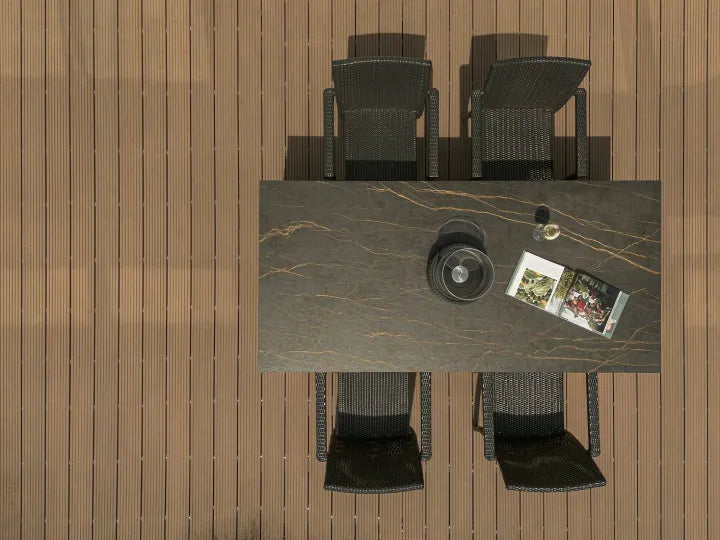


ما أفضل بديل لكوارتزيت Taj Mahal؟
أفضل بديل يعتمد على ما تريد الحفاظ عليه. اختر كوارتزيتًا طبيعيًا آخر أو الجرانيت إذا كان العمق الجيولوجي الفريد هو الأولوية. اختر الكوارتز الهندسي لسطح عمل داخلي قليل الصيانة وبمتطلبات تصنيع مألوفة. اختر ألواح البورسلان أو Dekton أو سطحًا فائق الدمج عندما تكون بيانات الحرارة أو الأشعة فوق البنفسجية أو الاستخدام الخارجي الخاصة بالمنتج حاسمة. واختر الحجر المُلبَّد للحصول على مظهر Taj Mahal دافئ ضمن مقاسات ألواح كبيرة ومتناسقة وتسلسل أسطح يمكن التخطيط له. قارن دائما العينات الفعلية والألواح الكاملة—وليس أسماء الألوان فقط.
كوارتزيت تاج محل شائع لأن حقله الكريمي، وحركته الناعمة ذات اللون التوب، وعروقه الذهبية المقيدة تشعر بالدفء دون أن تبدو داكنة أو مشغولة. المشكلة أن المشترين غالبا ما يبحثون عن "بديل" دون تحديد ما إذا كانوا بحاجة إلى مادة أقل صيانة، أو إمدادات مشروع أكثر توقعا، أو ميزانية تركيب أقل، أو تشطيب محدد، أو ببساطة لوحة ألوان مشابهة.
يقارن هذا الدليل بين خمسة مسارات للمواد: أحجار طبيعية متشابهة، كوارتز هندسي، ألواح بورسلان، أسطح ديكتون وغيرها من العلامات التجارية فائقة الدمج، والحجر المُلبَّد. يركز على قرارات المواصفات التي تغير النتيجة المركبة. ولا يدعي أن كل منتج ضمن فئة ما يؤدي بشكل متطابق.
اسم المنتج مثل "تاج محل" أو "تاج رويال" أو "كالاكاتا دافئة" يصف اتجاه التصميم وليس معيارا ماديا. تحقق من التركيب والبيانات التقنية الدقيقة للشركة المصنعة.
ما المظهر الذي يسعى المشترون إلى مطابقته
قبل مقارنة البدائل، اكتب الخصائص التي تجعل تاج محل جذابا لمشروعك. المذكرة المفيدة أكثر تحديدا من "حجر الكريمة".
- قاعدة ضوء دافئ: كريمي أو عاجي أو بيج فاتح بدلا من أزرق أبيض بارد.
- الحركة الهادئة: عمق غائم وعروق طويلة وناعمة بدلا من دراما عالية التباين.
- التنوع الطبيعي المظهر: حركة كافية لتشعر بأنها ممتازة دون أن تجعل كل وصلة صعبة.
- مرونة تنسيق الخزائن: التوافق مع الأبيض الدافئ، البلوط، الجوز، الرمادي، والنحاس.
- مقياس اللوح القابل للاستخدام: تغطية كافية للأنماط للجزر، أو الخلفيات، أو ألواح الجدران، أو المشاريع متعددة المناطق.

إذا كانت هذه هي متطلباتك الوحيدة، يمكن أن تنجح عدة بدائل. إذا كنت بحاجة أيضا إلى تشطيب جلدي، أو تعريض خارجي، أو دفعات متكررة، أو إصلاحات شبه غير مرئية، أو ميزانية تركيب صارمة، فإن القائمة القصيرة تتغير بسرعة.
بدائل كوارتزيت Taj Mahal: مقارنة سريعة
| فئة المادة | الطابع البصري | الختم والعناية | اتساق الإمداد | أفضل ملاءمة |
|---|---|---|---|---|
| حجر يشبه الطبيعي | عمق فريد وتنوع جيولوجي؛ أقرب طريق إلى لوح طبيعي حقا. | تعتمد الفحص، والختم، والعناية على الحجر المختار. | منخفض إلى متوسط؛ الموافقة وحجز الألواح الفعلية. | العمل السكني المخصص حيث لا يكون الطابع الطبيعي غير قابل للتفاوض. |
| الكوارتز الهندسي | تصاميم متسقة باللونين الكريمي والذهبي؛ عادة ما تكون أكثر تجانسا على مقياس اللوح الكاملة. | عادة لا يتم الختم بشكل دوري؛ اتبع إرشادات العلامة التجارية الخاصة بالحرارة والمواد الكيميائية. | متوسط إلى مرتفع ضمن خط إنتاج حالي. | المطابخ الداخلية تحتاج إلى ألوان متوقعة وسير عمل مألوف على سطح المطبخ. |
| لوح بورسلان | الحجر المطبوع يشكل في ألواح رفيعة كبيرة الحجم؛ علاج الحافة يحتاج إلى تخطيط. | عادة لا يتم الختم بشكل دوري؛ الجص والفواصل والتركيب لا تزال بحاجة إلى عناية. | الارتفاع عند التحكم في الدفعة، الوجه المثبت، والمخزون. | الجدران، الأرضيات، الأثاث، وأنظمة الأسطح المختارة. |
| ديكتون أو أي سطح فائق الدمج | تفسيرات خاصة بالعلامة التجارية مع وثائق تقنية محددة. | لا قاعدة شاملة؛ استخدم العلامة التجارية والمستندات اللونية بالضبط. | نسبة عالية ضمن المخزون المتاح والإنتاج الحالي. | مشاريع تقدر نظاما موثقا وعلامة تجارية وشبكة مصنعين معتمدة. |
| الحجر المُلبَّد | يمكن للوجوه الكبيرة المنسقة أن تعيد خلق حركة عاج دافئة وذهبية ناعمة. | عادة لا يتم الختم بشكل دوري؛ استخدم التصنيع المدرب والعناية الخاصة بالمنتج. | الارتفاع عند التخطيط لتوزيع الوجه، والدفعات، والمخزون البديل. | مطابخ منسقة، ضيافة، متاجر بالتجزئة، جدران، ومواصفات متعددة المناطق. |
لا يوجد صف هو الفائز الشامل. "الكوارتز"، "البورسلان"، "فائق المضغوط"، و"الحجر المُلبَّد" هي فئات تحتوي على منتجات بتركيبات مختلفة، وضمانات، وأبعاد، وتشطيبات، وشهادات، وقواعد تصنيع مختلفة. استخدم هذا الجدول لاختيار مسار، ثم تحقق من المنتج الدقيق.

1. أحجار طبيعية بمظهر مشابه
إذا كان هدف تاج محل هو إضفاء عمق جيولوجي حقيقي على مطبخ فريد، فقد يكون لوح طبيعي آخر هو الخيار الأكثر صدقا. قد يقترح الموردون كوارتزيت دافئ، دولوميت، كرات زجاجية، أو الحجر المُلبَّد مع حقول كريمة وحركة بيج أو ذهبية. تختلف أسماء التجارة حسب المحجر والمورد والسوق، لذا فإن الاسم وحده لا يعتبر تعريفا موثوقا.
لماذا تختار هذا المسار
- كل لوح له حركة فريدة وعمق بصري فريد.
- يمكن للصانع تخطيط تخطيط بناء على الجيولوجيا الفعلية.
- قد تتوفر تشطيبات مصقولة أو مصقولة أو جلدية حسب الحجر والمورد.
- الأصل الطبيعي للمادة هو جزء من قيمة المشروع.
ما الذي يجب التحقق منه
احجز الألواح الفعلية قبل الانتهاء من التصميم. اطلب من المورد تحديد فئة الحجارة، وشرح أي دعم من الراتنج أو الشبكة، والكشف عن الشقوق أو الإصلاحات، وذكر خطة الإغلاق والرعاية الموصى بها. اجعل المصنع يفحص الألواح بحثا عن العائلة، ومواقع الدرز، والمناطق الهشة، والقطعات، والتعزيزات.
البديل الطبيعي ليس تلقائيا أرخص من كوارتزيت تاج محل. درجة المادة، وندرتها، وحجم اللوح، والعائد القابل للاستخدام، والشحن، وتعقيد التصنيع، وأعمال الحواف، والتركيب، والختم، ومخاطر الاستبدال كلها تؤثر على السعر النهائي. استخدم دليل أسعار حجر تاج محل لبناء نطاق تكلفة مماثل.
2. كوارتز هندسي يشبه تاج محل
الكوارتز الهندسي هو نتيجة بحث شائعة ل "كوارتز يشبه كوارتزيت تاج محل". يمكنه أن يوفر قاعدة كريمة محكمة وعروق ذهبية أو رمادية مقيدة دون إغلاق دوري. العديد من صانعي الأسطح يعملون بالفعل معه، مما يسهل تحديد الأسعار المحلية وتركيبها للمطابخ الداخلية.
متى يكون الكوارتز مناسبًا
- أسطح العمل الداخلية حيث يكون اللون القابل للتكرار أهم من التفرد الجيولوجي.
- مشاريع تفضل شبكة تصنيع محلية مألوفة.
- المطابخ التي يريد فيها المالك روتينا بسيطا دون إغلاق دوري.
- تصاميم تقبل مظهرا أكثر توحيدا ومتجانسا من الألواح الكاملة.
ما الذي يجب التحقق منه عند اختيار الكوارتز
تحتوي منتجات الكوارتز على مواد رابطة بوليمرية، لذا لا تنقل الحرارة أو UV أو المطالبات الخارجية أو الكيميائية أو الحريق من فئة مختلفة. اطلب دليل العناية للعلامة التجارية الحالية، والقيود الداخلية أو الخارجية، وأقصى تطبيق مدعوم، وشروط الضمان، وتعليمات التصنيع المعتمدة. قد تبدو عينة صغيرة مقنعة بينما تبدو اللوح الكامل متكررة جدا، لذا قم بفحص صور اللوح الكامل أو اللوح المادي.
لمقارنة الأداء على مستوى الفئة، اقرأ أسطح الحجر المُلبَّد مقابل الكوارتز. هذا الدليل يملك المقارنة المادية الأعمق؛ تستخدم هذه المقالة هذا الاسم فقط للمساعدة في اختيار خيارات على طراز تاج محل.
3. ألواح البورسلان
يمكن للبورسلان كبير الحجم أن يعيد إنتاج صورة حجرية دافئة في ألواح رقيقة مناسبة للجدران والأرضيات وأسطح الأثاث وبعض أنظمة الأسطح السطحية. قد يكون هذا بديلا قويا عندما يمتد المشروع إلى ما هو أبعد من سطح عمل المطبخ ويحتاج إلى أسطح منسقة عبر عدة تطبيقات.
الصورة السطحية مطبوعة أو مزينة، لذا فإن تصميم الحواف مهم. قد تكشف الحافة المكشوفة البسيطة عن لون الجسم بدلا من استمرار نمط تاج محل. يجب حل تراكمات التيترات، والزخارف، وشرائط الحواف، وتفاصيل التقاطعات في العينات ورسومات الورش بدلا من الارتجال في الموقع.
قائمة تحقق لألواح البورسلان
- تأكد من أبعاد اللوحة الاسمية والقابلة للاستخدام.
- راجع كل وجه متاح والتكرار المخطط له.
- وافق على التشطيب الدقيق تحت إضاءة المشروع.
- تأكد من ملاءمة سطح المطبخ، الجدار، الأرضية، أو الواجهة للمنتج الدقيق.
- استخدم فني تركيب متمرس في الألواح الكبيرة الحجم والنظام المختار.
- تفاصيل الحواف، الزوايا، اللحامات، الاختراقات، والانتقالات قبل الطلب.
4. Dekton والأسطح فائقة الدمج الأخرى
ديكتون علامة تجارية، وليست مرادفا عاما لكل قطعة مصبوبة أو خزفية. غالبا ما يبحث المشترون عن "تاج محل ديكتون" لأنهم يريدون سطح مصنع موثق بمظهر دافئ مشابه. الطريقة الصحيحة هي مقارنة لون العلامة التجارية الحالي ومستنداته الفنية مع ظروف المشروع الفعلية.
راجع أبعاد اللوح المحددة للون، سمكها، تشطيبها، مجموعة الوجه، الضمان، دليل العناية، بيانات الخارجية أو UV، توجيه الحرارة، قيود الحواف، دليل التصنيع، التوافر المحلي، ومتطلبات المصنع المعتمد. لا تفترض أن كل لون في العلامة التجارية يشترك في نفس المظهر أو أن كل مادة تسمى "فائقة الدمج" تستخدم نفس العملية.
إذا كان مسار نظام العلامة التجارية مهما لكنك تريد مقارنة أوسع بين الموردين، راجع دليل بدائل ديكتون.
5. الحجر المُلبَّد بمظهر Taj Mahal
الحجر المُلبَّد يستحق الاختيار عندما يرغب المشتري في سطح كبير الحجم مصنع مع اتجاه تصميم تاج محل قابل للتكرار. يمكنه دعم تسلسل وجه مخطط عبر جزيرة أو محيط أو خلف أو جدار أو داخل تجاري. عادة لا يكون الختم الدوري جزءا من خطة العناية، لكن المادة لا تزال بحاجة إلى تنظيف صحيح، والتعامل معها، وتصميم الحواف، والدعم، والتصنيع الدقيق.


مسار مصنع واحد
لوح Funtek من الحجر المُلبَّد بمظهر Taj Mahal
تصميم عاجي دافئ، غائم، ذهبي ناعم في خيار بلاطة مصقول حاليا. إنه تفسير من الحجر المُلبَّد، وليس كوارتزيت طبيعي.
- خمسة صيغ مدرجة حتى 1600 × 3200 mm
- خيارات 6 و9 و12 وخيارات 15 mm السماكة
- ثلاثة وجوه منسقة معروضة حاليا
- تتوفر عينات مادية وعروض أسعار للمشاريع
حيث يتناسب خيار Funtek الحالي
منتج Funtek الحالي من الحجر المُلبَّد تاج محل مصقول ومدرج بصيغ 900 × 1800 و900 × 2600 و1200 × 2400 و1200 × 2600 و1600 × 3200 mm، مع خيارات 6 و9 و12 و15 mm وخيارات السماكة. يتم عرض ثلاثة وجوه منسقة حاليا. تتيح هذه الخيارات اختبار عائد البلاط وتخصيص الوجه مقابل رسم المشروع قبل الطلب.
هذا لا يجعله مطابقا للكوارتزيت الطبيعي. يتم تصنيع المظهر، ويجب تخطيط الوجوه المتكررة، وتحتاج الحواف المكشوفة إلى تفصيل، وقد تبقى الشقوق أو الشقوق ظاهرة بعد الإصلاح. اقرأ الكتاب المخصص دليل الحجر المُلبَّد تاج محل للمواصفات، وتركيبات المطبخ، والموافقة على العينات، وفحوصات التصنيع.
اختر البديل حسب أولويتك الحقيقية
| إذا كانت أولويتك هي... | ابدأ ب... | لكن تحقق... |
|---|---|---|
| عمق طبيعي فريد | الكوارتزيت الطبيعي المختار يدويا أو أي لوح طبيعي آخر | الهوية، الألواح الفعلية، الشقوق، الختم، العائلة، ومخاطر الاستبدال. |
| الألفة مع سطح العمل الداخلي | الكوارتز الهندسي | نمط الألواح الكاملة، حدود الحرارة/UV، الضمان، وإرشادات العلامة التجارية الحالية. |
| الجدران، الأرضيات، والألواح الرقيقة | الخزف كبير الحجم | تقييم التطبيق، تفاصيل الحواف، خبرة المثبت، وتكرار الوجه. |
| نظام العلامة التجارية الموثق | ديكتون أو منتج آخر يسمى فائق المضغوط | مستندات الألوان الدقيقة، المصنع المعتمد، المخزون، الضمان، والدعم المحلي. |
| وجوه منسقة عبر مشروع أكبر | الحجر المُلبَّد | الدفعة، خطة الوجه، السمك، الدعم، الحواف، التصنيع، ومساحة الاستبدال. |
| أقل تكلفة إنهاء | اقتبس عدة مسارات متاحة محليا من نفس الرسومات | المواد، النفايات، الشحن، التصنيع، التركيب، الصيانة، والمخاطر—وليس سعر البلاط فقط. |

فحص العينات لتجنّب الأخطاء المكلفة
الصور الإلكترونية تضغط الألوان، واللمعان، والحجم، والملمس. تتكون عملية العينة المفيدة من ثلاث طبقات:
- عينة مادية: تحقق من الدرجة السفلية، ملمس السطح، اللمعان، بصمات الأصابع، والتوافق مع الخزائن، الأرضيات، الجدران، المعادن، والإضاءة.
- مراجعة شاملة: تحقق من مقياس النمط، المناطق الهادئة، العروق الدرامية، عدد الوجوه، التكرار، الاتجاه، وتنوع الدفعات.
- التصميم المحدد: خصص القطع والوجوه للجزيرة، والممرات، والزخارف، ونهايات الشلالات، والفواصل، والمخارج، والقطع، والمناطق المحورية.
بالنسبة للحجر الطبيعي، يجب أن تستخدم المراجعة الكاملة الحزمة المحجوزة الفعلية. بالنسبة للسطح المصنع، اسأل عما إذا كانت العينة والصور تمثل الإنتاج الحالي وأي الوجوه سيتم توفيرها. إذا كان الاستبدال المستقبلي مهما، ناقش المواد الاحتياطية أو بدل الاستبدال قبل شحن الطلب.
قارن التكلفة الفعلية للتركيب، لا مجرد سعر ظاهر في نتائج البحث
قد يصبح الرقم المنخفض لكل قدم مربع أو لكل بلاطة مكلفا بعد الهدر، والشحن، والتصنيع، وأعمال الحواف، والدعامات، والقطع، والتركيب، وإعادة العمل. وعلى العكس، قد يكون سعر المواد الأعلى مقبولا إذا كان المورد يستطيع تقليل مخاطر التخطيط أو توفير النظام الموثق الدقيق الذي يحتاجه المشروع.
امنح كل مزايد نفس النطاق:
- الرسومات المنتهية، والقياسات، والكمية الكلية؛
- وظروف التطبيق والموقع؛
- المادة المفضلة، وشكل اللوح، والسمك، والتشطيب المفضل؛
- تخصيص الوجه، الدرز، مطابقة العروق، وتوقعات التكرار؛
- ملفات تعريف الحواف، القصاصات، الدعم، ومسؤولية التصنيع؛
- موقع التسليم، الوصول، التعبئة، مصطلحات الشحن، ونطاق التركيب؛
- الموعد النهائي النموذجي، وقت الانتظار، بدل الاستبدال، الضمان، والوثائق المطلوبة.
أفضل خيار من حيث القيمة هو الذي يفي بمتطلبات التصميم بعد احتساب مخاطر التصنيع والتسليم والتركيب والصيانة والاستبدال.
طلب قائمة قصيرة جاهزة للمشاريع
إذا كانت أولويتك هي مظهر تاج محل الدافئ مع بلاطة مصنعة وقابلة للتخطيط، أرسل Funtek التطبيق، والأبعاد، والكمية، والسمك المفضل، والوجهة، والجدول الزمني. أدرج مراجع للخزائن والأرضيات عندما يكون مطابقة الألوان مهمة. يجب أن يؤكد الرد توفر العينة الحالية، وتنسيقات اللوح، وصور الوجه، وحالة المخزون أو الإنتاج، والتعبئة، ووقت الانتظار، ونطاق عرض السعر.
إذا كان الجيولوجيا الطبيعية غير قابلة للنقاش، فإن المنتج المصنع Funtek ليس البديل المناسب. إذا كان تكرار الوجوه غير مقبول، قل ذلك مبكرا. الاستفسار المفيد هو فحص ملاءمة، وليس طلبا لإجبار كل مشروع على مادة واحدة.
هل تحتاج إلى مظهر Taj Mahal مع توريد ألواح أكثر قابلية للتخطيط؟
أرسل طلبك، الأبعاد، الكمية، تفضيل التشطيب، وجهتك، والجدول الزمني. يمكننا التحقق مما إذا كان خيار الحجر المُلبَّد المصقول الحالي مناسبا وتقديم تفاصيل العينة، والوجه، والتغليل، وعرض السعر.
الخلاصة
لا يوجد بديل واحد من كوارتزيت تاج محل يفوز بكل فئة. الحجر الطبيعي الذي يشبه الحجر يحافظ على التميز. الكوارتز الهندسي يقدم مسارا مألوفا لسطح المطبخ الداخلي. يمتد البورسلان المظهر ليشمل الألواح الرقيقة وتطبيقات متعددة. توفر Dekton والأسطح فائقة الدمج الأخرى أنظمة خاصة بالعلامة التجارية. تقدم الحجر المُلبَّد وجوه كبيرة الحجم منسقة وتوجيها مباشرا للعناية بدون ختم دوري.
ابدأ بترتيب المظهر، والأصل الطبيعي، والتشطيب، والتعرض للخارج، والتكرار، وشبكة التصنيع، وتوقعات الإصلاح، وتكلفة التركيب الكاملة. ثم قارن العينات الفعلية، والألواح الكاملة، والوثائق التقنية، والأسعار ذات الأبعاد. هكذا يصبح البحث عن "شيء يشبه تاج محل" قرارا شرائيا يمكن الدفاع عنه.
أدلة ذات صلة
- الحجر المُلبَّد تاج محل مقابل الكوارتزيت — مواصفات اللوح الحالية Funtek وسير عمل الموافقة.
- سعر حجر تاج محل — متغيرات التكلفة للألواح الطبيعية والأسطح النهائية.
- أسطح الحجر المُلبَّد مقابل الكوارتز — مقارنة تفصيلية للأسطح المصنعة.
- أفضل بدائل سطح الرخام — قارن بين الخيارات الواسعة ذات المظهر الدافئة والبيضاء الحجرية.