


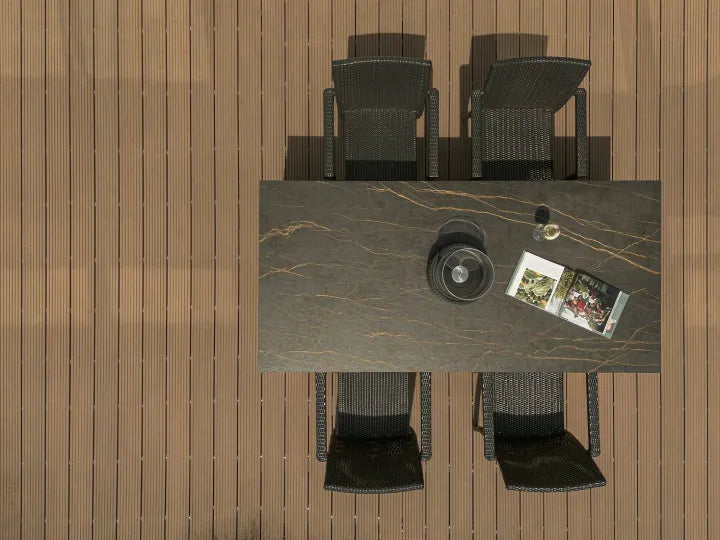


الحجر المُلبَّد مقابل الجرانيت مقابل الكوارتز وليس الترتيب من الأقوى إلى الأضعف. إنه خيار بين لوح معدني عالي النار وحجر طبيعي مستخرج وسطح هندسي مرتبط بالراتنج. عادةً ما يكون الحجر المُلبَّد هو أقوى طريق لأنظمة التنسيقات الكبيرة المستقرة UV، والجرانيت للطابع الطبيعي الفريد من نوعه والاستخدام المثبت للحجر الخارجي، والكوارتز لأسطح العمل الداخلية المألوفة منخفضة الصيانة.
ما هي أفضل مادة سطح العمل؟
بالنسبة للمطابخ الخارجية والأسطح المنسقة كبيرة الحجم، ابدأ بالحجر المُلبَّد المعتمد من الخارج. للحصول على التنوع الطبيعي وطبيعة الحجر المقاومة للحرارة، ابدأ بالجرانيت الذي تم اختباره بشكل مناسب. للحصول على سطح العمل داخلي يمكن التنبؤ به مع دعم تصنيع محلي واسع، ابدأ بالكوارتز. تعتمد الإجابة النهائية على المنتج الدقيق والتشطيب وتخطيط اللوحة وتصميم الحافة وطريقة التثبيت.

جدول مقارنة الحجر المُلبَّد مقابل الجرانيت والكوارتز
| عامل | حجر مُلبَّد | الجرانيت | الكوارتز المهندسة |
|---|---|---|---|
| تعبير | بلاطة معدنية مضغوطة وعالية النار؛ عادة لا يوجد رابط بوليمر راتنج | صخور نارية طبيعية مستخرجة ومقطعة إلى ألواح | الركام المعدني والأصباغ وراتنج البوليمر. صياغة تختلف |
| صلابة / خدوش | تتميز العديد من المنتجات بوجه صلب ومقاوم للتآكل؛ التحقق من ورقة البيانات | بشكل عام، يكون صلبًا، لكن التركيب المعدني والتشطيب يختلفان حسب البلاطة | قوي في الاستخدام الداخلي العادي؛ لا تفترض أن كل علامة تجارية متطابقة |
| حرارة | طريق ممتاز على مستوى الفئة؛ النظام الكامل لا يزال يهم | أداء قوي للحرارة من الحجر الطبيعي. لا تزال الصدمات الحرارية والمواد المانعة للتسرب مهمة | استخدام الركائز. تتمتع المنتجات المرتبطة بالراتنج بحساسية أكبر للحرارة المباشرة |
| UV / في الهواء الطلق | تكون قوية عندما يكون المنتج المحدد معتمدًا من الخارج | غالبا ما تكون مناسبة؛ يجب التحقق من اللون والتشطيب والمناخ والسداد | عادة ما يكون الكوارتز القياسي داخليًا فقط ما لم يتم تصنيفه خارجيًا بشكل صريح |
| امتصاص الماء | منخفضة جدًا للعديد من المنتجات؛ عادة لا يوجد ختم روتيني | متغير بالحجر. قد تكون هناك حاجة للاختبار والختم | سطح نهائي غير مسامي؛ عادة لا يوجد ختم روتيني |
| نمط | الوجوه المصممة ومطابقة العروق والمجموعات القابلة للتكرار | كل لوح فريد من نوعه؛ الشقوق والحركة جزء من المادة | ألوان متناسقة وعائلات نمطية متحكم فيها |
| التنسيقات | ألواح كبيرة وسماكات متعددة لأسطح العمل والجدران والأثاث | تعتمد أحجام الألواح على الكتلة والمحجر | أحجام الألواح الموجهة نحو سطح العمل والإنشاءات الشائعة 20–30 mm |
| التصنيع | الأدوات المتخصصة والتعامل والدعم وأدوات التحكم في الحواف | إنشاء سير العمل الحجري. الشقوق الخاصة بالبلاطة تحتاج إلى التخطيط | معرفة واسعة بسطح العمل الداخلي في العديد من الأسواق |
| قابلية الإصلاح | يمكن أن يظل الضرر العميق مرئيًا | قد تكون بعض الرقائق مملوءة بالراتنج؛ ليست مضمونة التطابق التام | يمكن أن تظل الإصلاحات مرئية؛ من الصعب عكس الضرر الناتج عن الحرارة |
| أفضل التطبيقات | أسطح العمل الداخلية والخارجية والجدران والأرضيات والأثاث وأنظمة الواجهات | سطح العمل، بالباطل ومشاريع الحجر الطبيعي في الهواء الطلق | سطح العمل داخلي، بالباطل، والحانات والبلاطات الخلفية |
السعر: المصنع والتصنيع والتركيب أرقام مختلفة
لا يوجد سعر FOB عالمي موثوق به لجميع الفئات الثلاث. يتغير الجرانيت مع المحجر واللون وإنتاجية الكتلة والدرجة. يتغير الكوارتز مع العلامة التجارية والتركيبة. يتغير الحجر المُلبَّد مع الحجم والسمك والسطح وتصميم الوجه والكمية. يجب أن يذكر عرض أسعار FOB المناسب التعبئة، والمنفذ، وIncoterm، والكمية، وتاريخ الصلاحية.
| طبقة الأسعار | حجر مُلبَّد | الجرانيت | كوارتز | كيفية استخدامه |
|---|---|---|---|---|
| مرجع المصنع/المواد | تم تحديد أمثلة كتالوج Funtek 900 × 1800 mm التي تم فحصها في يوليو 2026: حوالي دولار أمريكي21.60–$105.93/m²، باستثناء التصنيع والخدمات اللوجستية | طلب عرض أسعار للوحات المسماة؛ المحجر واللون والصف يهيمن | طلب عرض أسعار للعلامة التجارية/اللوح؛ تهيمن طبقة الصياغة والعلامة التجارية | مفيدة للمصادر الأولية فقط؛ إنه ليس سعر سطح العمل مثبت |
| نطاق التخطيط المثبت في الولايات المتحدة | حول US$60–$200/ft² | تتجمع مراجع التخطيط العامة حول حوالي دولار أمريكي45–$100/ft²، مع وجود أحجار نادرة أعلى | حول US$50–$200/ft² | يُستخدم فقط بعد مطابقة الرسم والنفايات والقصاصات والحواف والتسليم والتركيب |
| FOB طلب عرض أسعار | حدد رمز اللوح والحجم والسمك والتشطيب والكمية والإطار/الصندوق ومنفذ التحميل وIncoterm | حدد الاسم التجاري، والمحجر/الأصل، والدرجة، والسمك، والتشطيب، وصور البلاطة والحزمة | حدد العلامة التجارية/المصنع، المجموعة، حجم اللوح، السمك، النهاية، الكمية والشهادة | لا تقارن بلاطة FOB لمورد واحد مع السقف المثبت لمورد آخر |
للحصول على نموذج إقليمي وملكية مخصص مكون من مادتين، راجع تكلفة الحجر المُلبَّد مقابل الكوارتز. إذا كنت تريد زوجًا من الحجر الطبيعي، انظر سعر الحجر المُلبَّد مقابل الجرانيت.
مزايا كل مادة وحدودها
الحجر المُلبَّد: التحكم في التنسيق والتعرض
يصبح الحجر المُلبَّد مقنعًا عندما يريد المشروع نفس اللغة المرئية عبر سطح العمل أو نهاية الشلال أو لوحة الحائط أو وجه الخزانة أو العنصر الخارجي. تعمل المجموعات ذات الامتصاص المنخفض والقدرات الخارجية على تقليل بعض أعمال الصيانة الروتينية. المقايضة هي الانضباط في التصنيع: يمكن للقضبان الرفيعة والزوايا الداخلية الحادة والامتدادات غير المدعومة والنقل المهمل أن تحول الوجه القوي إلى سطح عمل ضعيف.
الجرانيت: الهوية الجيولوجية
الجرانيت هو الاختيار عندما يكون الاختلاف الطبيعي ميزة وليس عيبًا. لا يمكن إعادة إنتاج هيكلها المعدني ولونها وحركتها من لوح إلى آخر تمامًا. يناسب هذا التفرد المشترين الذين يوافقون على الحزمة الفعلية. والمقايضة هي التباين: يجب تقييم الامتصاص والشقوق وملء الراتنج واستجابة السداد وسلوك البقع للبلاطة المحددة بدلاً من الاستدلال عليها من كلمة "الجرانيت".
الكوارتز: الاتساق الداخلي المتحكم فيه
يعد الكوارتز فعالاً في المخططات الداخلية القابلة للتكرار وهو مألوف لدى العديد من مصنعي أسطح العمل. لا يحتاج عادةً إلى الختم ويقدم عائلات نمطية متسقة. والمقايضة هي مادة رابطة الراتنج: الحرارة المباشرة، والتعرض المستمر UV وبعض المواد الكيميائية تتطلب رعاية أكثر صرامة. تعامل مع أي مطالبة خارجية على أنها خاصة بالمنتج واطلب موافقة كتابية.
مصفوفة القرار حسب سيناريو المشروع
| سيناريو المشروع | أفضل نقطة انطلاق | لماذا | فحص حاسم |
|---|---|---|---|
| مطبخ خارجي تحت شمس قوية | حجر مُلبَّد معتمد من الخارج أو جرانيت مناسب | يقدم كلاهما حرارة موثوقة ومسارات UV | الموافقة على المنتج/اللوح، والدعم، والفواصل، والسداد، والمناخ |
| مطبخ عائلي داخلي قياسي | أي من الثلاثة | يمكن للجميع الأداء جيدًا عند تحديدهم بشكل صحيح | عادات المقلاة الساخنة والمصنع المحلي وعرض السعر الإجمالي المثبت |
| مشروع سكني متعدد الوحدات | الكوارتز أو مجموعة مُلبَّد قابلة للتكرار | يعد التحكم في النمط والدفعة أسهل من الألواح الطبيعية الفريدة | تحمل الدفعة والمخزون البديل وخطة ضمان الجودة |
| موجز فاخر من الحجر الطبيعي | الجرانيت | جيولوجيا وعمق فريد من نوعه | الموافقة على كل لوح، والتماس والميزة الطبيعية |
| سطح العمل بالإضافة إلى حزمة الجدار / الأثاث | حجر مُلبَّد | تدعم التنسيقات الكبيرة والسماكات المتعددة لغة مادة واحدة | الركائز والفواصل وطريق المناولة والقدرة على التصنيع |
| منطقة ذات أدوات متخصصة محدودة | الجرانيت أو الكوارتز المدعوم محليا | يفوق المثبت المؤهل الميزة المادية النظرية | المحفظة والأدوات والضمان وخطة الاستبدال |
السماكة والحواف والدعم
لا تقارن أرقام السُمك كما لو كانت تعني نفس البناء. يمكن توفير الحجر المُلبَّد في تنسيقات 6 أو 9 أو 12 أو 20 mm لأنظمة مختلفة جدا. غالبًا ما يتم تحديد الجرانيت والكوارتز على أنهما 20 أو 30 mm، على الرغم من اختلاف المعايير المحلية. يمكن أن يتفوق السطح الملبد الرقيق الموجود على الركيزة المصممة على اللوح السميك ضعيف الدعم؛ الحافة الميتريدية ذات المظهر السميك لا تعتبر تلقائيًا قسمًا صلبًا.
- استخدم الزوايا الداخلية الدائرية عند فتحات الحوض والموقد.
- تأكد من عرض السكة والأجزاء المتدلية ودعم الأجهزة واستواء الخزانة.
- الموافقة على عينات الحواف ومواقع التماس قبل القطع.
- التحقق من الوصول، ومعدات الرفع، ونصف قطر الدوران، وحماية الموقع.
- اسأل من يحمل ضمان التثبيت وما يستثنيه.
ثلاثة خيارات من الحجر المُلبَّد لمراجعة العينات

الرمادي السحابي الإيطالي
اتجاه رمادي مصقول للمقارنة مع الكوارتز المتحكم فيه والجرانيت الطبيعي البارد.
عرض كلاود جرايافتح المنتج →
Taj Mahal
اتجاه معدني دافئ للموجزات يأخذ في الاعتبار أيضًا الجرانيت البيج أو الكوارتزيت الطبيعي.
عرض Taj Mahalافتح المنتج →
Calacatta ذهبي
اتجاه رخامي مصمم للمشاريع التي تريد تكرارًا أكثر من الحجر الطبيعي.
عرض Calacatta الذهبيافتح المنتج →قائمة مراجعة المشتريات
- قم بتسمية المادة المحددة والشركة المصنعة أو المحجر والجمع واللون والتشطيب والسمك.
- اطلب أوراق البيانات الحالية وأدلة الرعاية والضمان وبيانات الاستخدام الخارجي.
- الموافقة على الألواح الفعلية أو دفعة الإنتاج وتوثيق التغيير المقبول.
- إصدار جدول رسم وسعر واحد لكل مورد.
- المواد المنفصلة، والنفايات، والتصنيع، والحواف، والقصاصات، والتعبئة، والشحن، والتسليم والتركيب المحلي.
- قم بمراجعة ملف الشركة المصنّعة ذات الصلة ومسؤوليتها عن الكسر أو إعادة التصنيع.
الخلاصة
لا يوجد سطح واحد يفوز بكل عمود. الحجر المُلبَّد هو النظام المعماري الأكثر تنوعًا، والجرانيت هو المادة الطبيعية الأكثر فردية، والكوارتز غالبًا ما يكون سير العمل الأكثر شيوعًا على سطح العمل الداخلي. اختر الشخص الذي تتطابق نقاط قوته مع التعرض والذي يمكن التحكم في مخاطره بواسطة فريق التوريد والتصنيع الفعلي.
قم ببناء عرض أسعار قابل للمقارنة من ثلاث مواد
شارك الرسم والتطبيق والتشطيب والسمك والكمية وتفاصيل الحواف والوجهة. يمكن لـ Funtek إعداد جانب الحجر المُلبَّد للمقارنة بمواد واضحة ونطاق لوجستي.