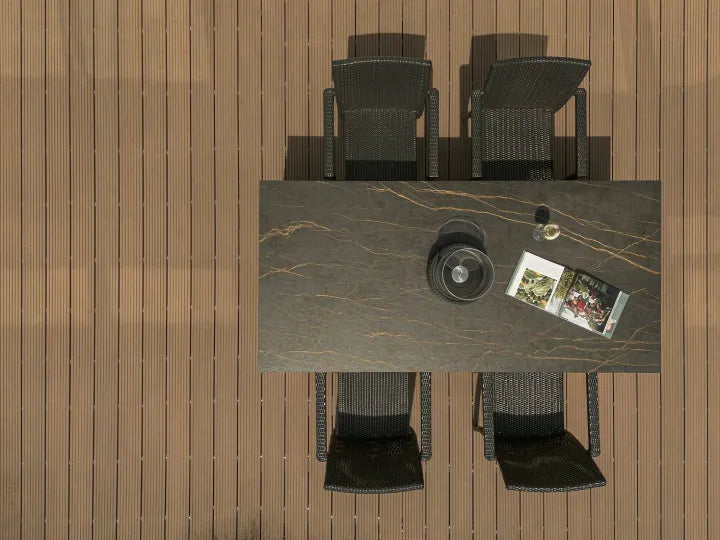
Where to Buy Sintered Stone Countertops: Slabs, Shipping & Fabrication

Learn whether to buy sintered stone countertops from a local fabricator, showroom, or slab supplier. Compare buying routes, quote requirements, slab planning, shipping, and what to confirm before ordering.
화이트 마블 질감 벽 배경 앞에 서 있는 블랙 Funtek 신터드 스톤 브랜드 티셔츠 차림의 여성 LuCharlotte 8 분 읽기 업데이트

Buying guide / Sintered stone countertops

The best place to buy sintered stone countertops depends on what you are actually buying: a finished countertop with local installation, or slabs that your own fabricator will cut, finish, and install.

You may already have cabinet drawings, rough countertop dimensions, or a color direction in mind. The practical questions start quickly: who measures the site, who confirms the cutouts, who fabricates the edge, who ships the slabs, and who takes responsibility if the material arrives without the right project information?

Best for homeowners Use a local fabricator or showroom when you need measurement, fabrication, and installation.
Best for project buyers Use a slab supplier when you need more control over size, finish, color, quantity, and shipping.
Best working model Keep installation local, then let the slab supplier support material selection and shipment planning.

Simple rule: if you need a finished countertop installed in your home, start local. If you already have a capable fabricator and need the right slabs, larger formats, project quantities, or overseas shipping support, talk to a slab supplier early.

Where should you buy a sintered stone countertop?

There is no single correct buying channel. The right route depends on whether you are buying a completed countertop service or buying slab material for a project.

Your situation Best place to start Why it works
You need a kitchen countertop measured and installed Local countertop fabricator or showroom They can visit the site, template, cut, finish, install, and handle on-site adjustments.
You already have a trusted fabricator Sintered stone slab supplier Your fabricator can confirm technical limits while the supplier helps with slab size, finish, color, and shipping.
You need larger slabs, matching colors, or project quantities Direct slab supplier plus local fabrication partner This route gives more control over slab planning, production, packing, and delivery timing.
You are sourcing for builders, designers, fabricators, or multiple rooms Supplier-led project review The order can be organized around drawings, slab layout, stock, shipment, and documentation.
Sintered stone slab samples and kitchen drawings for countertop planning
For a slab order, color selection should be reviewed together with drawings, thickness, cutouts, and the intended edge detail.

If you need a finished countertop, keep fabrication local

A finished countertop is not just a slab purchase. It normally includes site measurement, final template confirmation, sink and cooktop cutouts, edge finishing, seam work, moving heavy material through the property, and installation.

That is why local fabrication still matters. A local fabricator can check cabinet level, access conditions, wall irregularities, appliance changes, and final dimensions after the cabinets are ready.

Fabricator checking a sintered stone countertop before installation
Local measurement and installation should stay with a qualified fabricator, even when the slab material is sourced separately.
Ask before ordering Can my fabricator work with customer-supplied sintered stone?

Confirm acceptable slab sizes, thicknesses, handling requirements, edge details, and whether they need product information before cutting.

Avoid late changes Confirm sinks, cooktops, faucets, and outlets early.

Model numbers, technical drawings, and fixture dimensions reduce the risk of cutout changes after the slab plan is already approved.

If you already have a fabricator, buy slabs with a clearer specification

When the fabricator is already arranged, the supplier's job is to help you avoid vague slab buying. The order should connect the design target with slab size, thickness, finish, pattern direction, quantity, packing, and shipment planning.

Designer reviewing sintered stone slabs and drawings for a countertop project
A good supplier review connects the slab choice with the actual project plan, not just a color name.

What to send before asking for a quote

You do not need a complete technical package to start. A rough sketch or reference photo is useful as long as it gives enough context to review slab size, likely quantity, and possible handling issues.

What you can send What it helps us review
Cabinet, island, vanity, or furniture drawing Approximate slab quantity, seam risk, pattern direction, and whether a larger format may help.
Site photos or cabinet photos Access, handling, support, backsplash, wall conditions, and details for the local fabricator to check.
Preferred color, finish, or reference image Comparable slab designs, sample options, and finish suitability for the application.
Destination country, city, or port Freight direction, document needs, packing assumptions, customs planning, and delivery handoff.
Kitchen drawings, slab samples, and reference images for countertop sourcing
Drawings, photos, and reference images make it easier to review slab quantity, seams, and final visual direction.

What to confirm before ordering slabs

Slab size, quantity, and seam planning

Countertops should not be estimated only by square foot or square meter. Island dimensions, waterfall panels, backsplashes, cutouts, vein direction, and cutting loss can change the number of slabs required.

An initial slab layout can identify likely seams, extra material needs, and whether a larger slab format could reduce waste or improve the finished appearance.

Thickness, edge detail, and final look

Sintered stone is available in several thicknesses, including 6 mm, 9 mm, 12 mm, 15 mm, and 20 mm. The best option depends on application, support, overhang, edge detail, and the visual effect you want.

A thick-edge countertop may be built with mitered construction rather than a solid thick slab. Waterfall islands, mitered corners, and bookmatched directions should be discussed before the order is confirmed.

Pre-order checklist
  • Confirm whether the project needs finished installation or slab supply only.
  • Ask the local fabricator which slab size and thickness they can handle.
  • Review seam location, vein direction, waterfall panels, and extra material needs.
  • Confirm sink, cooktop, faucet, and outlet cutouts before final fabrication.
  • Clarify who handles freight, customs, unloading, and local delivery.

How to judge a sintered stone slab supplier

A reliable supplier should help you make the project easier to execute. The conversation should go beyond a color catalog and a price list.

Material clarity They can explain size, thickness, finish, and application fit.

Kitchen countertops, vanities, furniture, wall panels, and commercial surfaces may need different slab choices.

Project logic They can review drawings and flag risk before you order.

Helpful suppliers discuss seams, slab layout, pattern direction, edge detail, and fabricator questions early.

Sample support They can help you verify color and finish before commitment.

Sample review is especially important for marble-look designs, large surface areas, and multi-room projects.

Shipping readiness They can prepare packing, loading, and documentation details.

Large slabs need practical planning for freight, unloading, warehousing, and handoff to the local fabricator.

Shipping and packaging: where overseas buying gets real

Overseas slab buying can work well when the order is planned clearly. Problems usually happen when shipping, packing, customs, or delivery responsibilities are treated as afterthoughts.

Packed sintered stone slabs being loaded for overseas shipment
Packaging, loading, unloading equipment, and delivery handoff should be discussed before shipment is released.
Item to clarify Why it matters
Packing method A-frame, wooden crate, reinforcement, protective layers, and corner protection reduce transit and handling risk.
Freight route Port, vessel timing, consolidation, or container planning can affect cost and delivery schedule.
Importer and customs Someone must handle duties, taxes, customs clearance, port collection, and related responsibilities.
Final delivery point The slabs may need to go to a warehouse, showroom, fabricator, or project site, each with different unloading needs.

A practical sourcing workflow

The safest process is sequential: first confirm the buying route, then the project information, then the slab plan, then shipment and handoff.

Project drawings and slab samples for sintered stone countertop planning
Before a slab order is approved, drawings and material choices should be aligned with the fabricator's final review.
Step 1 Send what you have

Drawings, site photos, preferred colors, application details, and destination are enough for an initial review.

Step 2 Review slab options

Compare slab size, thickness, finish, color, availability, and whether a sample is needed.

Step 3 Check fabrication logic

Review seam locations, edge style, waterfall panels, appliance cutouts, and pattern direction.

Step 4 Confirm order details

Approve quantity, selected finish, terms, lead time, production or stock status, and documentation needs.

Step 5 Plan packing and shipment

Clarify freight route, packing method, loading, customs responsibility, and destination unloading.

Step 6 Fabricate and install locally

The local fabricator completes final site measurement, cutting, edge work, cutouts, and installation.

What Funtek can help prepare

Funtek is most useful when you already have a project direction and need slab supply support. We can help organize the material side so your local fabricator receives clearer information.

  • Slab recommendation by color, finish, size, thickness, and application.
  • Initial slab layout thinking for quantity, seams, vein direction, and waterfall panels.
  • Fabrication notes for edge style, mitered details, and visual priorities.
  • Packing and loading information for freight forwarders, warehouses, and fabricators.
  • Shipping document checklist for freight booking and import planning.

Start with a drawing, photo, or reference image

You do not need a complete specification package before contacting us. Send your rough dimensions, project photos, preferred color direction, destination city, and whether you already have a local fabricator. We can help identify the key slab, fabrication, and delivery questions before you commit to an order.

Request a project review
화이트 마블 질감 벽 배경 앞에 서 있는 블랙 Funtek 신터드 스톤 브랜드 티셔츠 차림의 여성

작성자 소개

LuCharlotte

신터드 스톤 스페셜리스트 & 기술 자문

LinkedIn에서 연결

LuCharlotte는 신터드 스톤 제조, 소재 테스트, 프로젝트 사양 검토에 대한 현장 경험을 바탕으로 글을 씁니다. 건축가, 디자이너, 가공업체, 프로젝트 구매자를 위해 표면 성능, 슬랩 규격, 가공 로직, 마감 선택, 적용 적합성에 관한 실무적인 가이드를 제공합니다. 기술적인 소재 결정을 더 명확하고 정확하며 검증하기 쉽게 만드는 것이 목표입니다.

자주 묻는 질문

01

Can I start if I only have a rough kitchen drawing?

Yes. A cabinet plan, hand sketch, site photo, or approximate dimensions can be enough for an initial slab and sourcing discussion. Final measurements still need local confirmation before cutting.

02

Can I buy slabs from overseas and use a local fabricator?

Yes, provided that the local fabricator is comfortable working with customer-supplied sintered stone and has confirmed the slab size, thickness, edge requirements, and handling conditions before you order.

03

Can you arrange freight and export packing?

Shipping, packing, loading, and documentation can be planned according to your destination, order quantity, preferred delivery arrangement, and local import requirements.

04

Who handles customs duties and taxes?

This depends on the agreed trade term and destination-country rules. Import responsibility, duties, taxes, clearance, port collection, and final delivery should all be clarified before shipment.

05

Can you help with mitered edges, waterfall panels, and cutout planning?

Yes. The intended countertop appearance and fabrication direction can be organized before ordering, then reviewed and finalized by the local fabricator based on actual site conditions.