









A standard stone resin shower tray is a practical choice when its outline, drain position and installed height fit the room. For a notch, an angled edge or an outlet that has to meet existing pipework, compare a trimmable tray with a sintered stone tray made to an approved drawing. Start with the same finished footprint, then compare where the drain lands, how much space the assembly needs and what the tray weighs.
A Like-for-Like 1,200 × 800 mm Comparison
Here is how a listed stone resin model compares with a made-to-order sintered stone example for the same nominal footprint. The weight difference matters for handling even though the two tray profiles are similar.
Swipe the table to compare both trays.
| What to compare | Hansel Meseta Stone resin |
Funtek White Vein Sintered stone |
|---|---|---|
| Footprint | Listed 1,200 × 800 mm model | 1,200 × 800 mm used for this example. Final size and shape are agreed on the drawing. |
| Tray height | 29 mm listed | Approx. 27–30 mm assembled. The slab used in the tray is 12 mm. |
| Tray weight | 36.9 kg listed | Approx. 50 kg at this size, estimated from 52 kg/m² |
| Drain coordination | Check the model's outlet location. The drain cover is included. The recommended McAlpine waste is sold separately. | Show the drain centre on the drawing and confirm the waste model and parts included in the quote. |
The White Vein weight is an estimate: 1.2 m × 0.8 m × 52 kg/m² = 49.9 kg. Order-specific construction and packing can change handling weight. These figures apply to the examples shown. See the Hansel Meseta specifications and Funtek White Vein specifications.


Check the Footprint and Drain Centre
Measure from the finished wall lines and check the shower-screen position before using a catalogue size. Then mark the existing waste centre from two adjacent edges and compare those offsets with the supplier's drawing. A 1,200 × 800 mm tray can fit the opening and still leave the drain in the wrong place. On a mirrored bathroom layout, label each handing explicitly and check the offsets again.

For a notch or an out-of-square opening, check where the finished edge needs to land. A cast tray may allow trimming within a specified area. For example, Nuovvo's Stone technical sheet permits width and length adjustments but advises against cutting on the drain side. It also notes that large cuts can reduce the fall and leave an uneven edge thickness. If the pipe position or cut-out sits outside a model's allowances, ask a made-to-drawing supplier to review the outline and drain together.


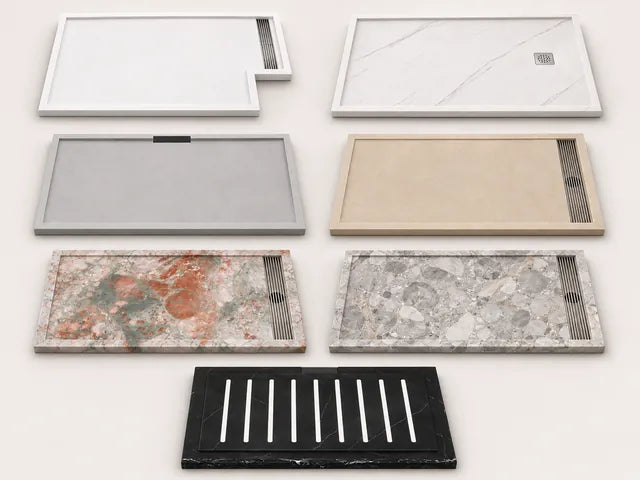
Check the visible cover and the waste body separately. A point strainer, a linear grille and a concealed slot differ at the surface. The installer also needs room below the tray for the specified waste and pipe connection. When you are ready to mark those details, use the custom shower tray technical guide for the plan, fall and section information to put on the drawing.


Plan for Finished Height and Handling Weight
A 29 mm tray can still sit proud of the bathroom floor. Check the finished floor level against the tray section, including the specified support and the space needed beneath the tray for the waste and pipe. If the brief calls for a flush threshold, ask the project installer to confirm the junction and available depth before approving either model.

At 1,200 × 800 mm the two examples differ by about 13 kg before packing. For a room with narrow access or stairs, check the carry route and agree how the tray will be moved and set down. For a multi-room order, ask for the confirmed unit weight and packed crate dimensions and weight so the site team can plan unloading and distribution.
Compare What Each Quote Includes
Price both options for the same finished size and delivery destination. Ask the supplier to itemise the tray, fabrication or trimming, drain cover, waste body and any support items they supply. Confirm packing and delivery separately. A per-square-metre reference and a retail price for a single tray may cover different parts of the order.
Shortlist a surface sample in the finish you would order. Veining and colour help with appearance, while the wet-slip evidence needs to match the proposed finish and test method. Ask for the relevant report when the project specifies a slip rating.
Which Shower Tray Should You Shortlist?
Keep the standard model if the outline and waste line up, the installation section works and the delivered price covers what you need. Where the outline is the only mismatch, check whether an approved trim will solve it. Where the drain has to move or the outline and fall need to be resolved together, get a drawing-based option priced against the same requirements.
To compare colours and covers for that option, browse Funtek's sintered stone shower trays. The collection shows point drains, exposed grilles and concealed slots on finished tray examples.

Ask About Shower Tray Options and Prices
Ask about colours, available samples or pricing for a finished tray. A short question or reference photo is enough to start.